Library
Browse and search books
10 novels found
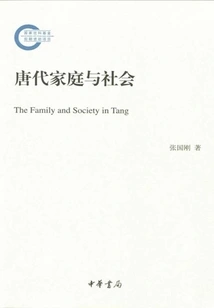
唐代家庭与社会
Zhang Guogang
This book is an academic monograph that studies family history and related social issues in the Tang Dynasty. The author collects various historical materials such as handed down documents, epitaph stone carvings, and unearthed documents, and conducts in-depth discussions on important issues such as family structure, marital status, family property analysis, livelihood and home furnishings in the Tang Dynasty with an empirical attitude. He also analyzes the relationship between husband and wife, parents and children, and various aspects of women's life It conducted a rigorous and detailed investigation in many aspects, made a high-level summary of social phenomena such as secular beliefs, family ethics, etiquette, marriage, and marriage, and extended the discussion on many aspects closely related to the family living environment, such as the legal system and rural social grassroots management. At the same time, the author pays attention to the construction of theory, starting from the three dimensions of social history, legal history, and economic history, and proposes a series of important concepts such as "dual system compound family form" and "the two-way movement of medieval ritual and legal culture downwards", which has laid a solid foundation for further in-depth related research.
This book is an academic monograph that studies family history and related social issues in the Tang Dynasty. The author collects various historical materials such as handed down documents, epitaph stone carvings, and unearthed documents, and conducts in-depth discussions on important issues such as family structure, marital status, family property analysis, livelihood and home furnishings in the Tang Dynasty with an empirical attitude. He also analyzes the relationship between husband and wife, parents and children, and various aspects of women's life It conducted a rigorous and detailed investigation in many aspects, made a high-level summary of social phenomena such as secular beliefs, family ethics, etiquette, marriage, and marriage, and extended the discussion on many aspects closely related to the family living environment, such as the legal system and rural social grassroots management. At the same time, the author pays attention to the construction of theory, starting from the three dimensions of social history, legal history, and economic history, and proposes a series of important concepts such as "dual system compound family form" and "the two-way movement of medieval ritual and legal culture downwards", which has laid a solid foundation for further in-depth related research.
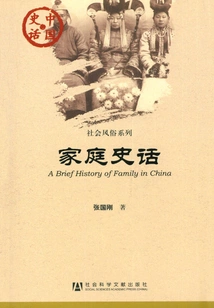
Family History
History家庭史话
Zhang Guogang
The family is a kinship group based on marriage and tied by blood relations. It is the basic life organization for people to live together and live together. Traditional China is a family-oriented society with "family and country isomorphic", and the family occupies an important position in society. This book is the first "History of Chinese Family". It discusses the entire process of the origin, foundation, development, transformation and decline of traditional Chinese families from the emergence of matrilineal families in the late Yangshao culture to modern times. It is believed that the traditional family emerged from scratch in the Pre-Qin Dynasty and gradually took shape; the period from the Spring and Autumn Period and the Warring States Period to the Wei, Jin, Southern and Northern Dynasties was the foundation and preliminary development stage of the traditional family. The traditional family form characterized by small nuclear families and linear families occupied the mainstream, and the livelihood model of small and fully comprehensive small-scale peasant families with the family as the unit gradually took shape; during the Sui, Tang and Five Dynasties, the traditional family ushered in its first prosperity During the Ming and Qing Dynasties, the development of production tools provided a material basis for small family production, and small families and large families coexisted at the same time; the Song, Liao, Jin, and Yuan dynasties were an important period for the modern transformation of traditional families. The three-generation family of five with a prime-age couple as the core became the main form of Chinese families thereafter; during the Ming and Qing dynasties, the traditional family reached its peak; after the Republic of China, the traditional family declined and the modern family emerged. It comprehensively displays the development and evolution history of Chinese families.
The family is a kinship group based on marriage and tied by blood relations. It is the basic life organization for people to live together and live together. Traditional China is a family-oriented society with "family and country isomorphic", and the family occupies an important position in society. This book is the first "History of Chinese Family". It discusses the entire process of the origin, foundation, development, transformation and decline of traditional Chinese families from the emergence of matrilineal families in the late Yangshao culture to modern times. It is believed that the traditional family emerged from scratch in the Pre-Qin Dynasty and gradually took shape; the period from the Spring and Autumn Period and the Warring States Period to the Wei, Jin, Southern and Northern Dynasties was the foundation and preliminary development stage of the traditional family. The traditional family form characterized by small nuclear families and linear families occupied the mainstream, and the livelihood model of small and fully comprehensive small-scale peasant families with the family as the unit gradually took shape; during the Sui, Tang and Five Dynasties, the traditional family ushered in its first prosperity During the Ming and Qing Dynasties, the development of production tools provided a material basis for small family production, and small families and large families coexisted at the same time; the Song, Liao, Jin, and Yuan dynasties were an important period for the modern transformation of traditional families. The three-generation family of five with a prime-age couple as the core became the main form of Chinese families thereafter; during the Ming and Qing dynasties, the traditional family reached its peak; after the Republic of China, the traditional family declined and the modern family emerged. It comprehensively displays the development and evolution history of Chinese families.
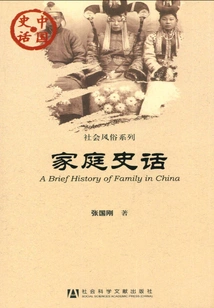
家庭史话(中国史话·社会风俗系列)
Zhang Guogang
The family is a kinship group based on marriage and tied by blood relations. It is the basic life organization for people to live together and live together. Traditional China is a family-oriented society with "family and country isomorphic", and the family occupies an important position in society. This book is the first "History of Chinese Family". It discusses the entire process of the origin, foundation, development, transformation and decline of traditional Chinese families from the emergence of matrilineal families in the late Yangshao culture to modern times. It is believed that the traditional family emerged from scratch in the Pre-Qin Dynasty and gradually took shape; the period from the Spring and Autumn Period and the Warring States Period to the Wei, Jin, Southern and Northern Dynasties was the foundation and preliminary development stage of the traditional family. The traditional family form characterized by small nuclear families and linear families occupied the mainstream, and the livelihood model of small and fully comprehensive small-scale peasant families with the family as the unit gradually took shape; during the Sui, Tang and Five Dynasties, the traditional family ushered in its first prosperity During the Ming and Qing Dynasties, the development of production tools provided a material basis for small family production, and small families and large families coexisted at the same time; the Song, Liao, Jin, and Yuan dynasties were an important period for the modern transformation of traditional families. The three-generation family of five with a prime-age couple as the core became the main form of Chinese families thereafter; during the Ming and Qing dynasties, the traditional family reached its peak; after the Republic of China, the traditional family declined and the modern family emerged. It comprehensively displays the development and evolution history of Chinese families.
The family is a kinship group based on marriage and tied by blood relations. It is the basic life organization for people to live together and live together. Traditional China is a family-oriented society with "family and country isomorphic", and the family occupies an important position in society. This book is the first "History of Chinese Family". It discusses the entire process of the origin, foundation, development, transformation and decline of traditional Chinese families from the emergence of matrilineal families in the late Yangshao culture to modern times. It is believed that the traditional family emerged from scratch in the Pre-Qin Dynasty and gradually took shape; the period from the Spring and Autumn Period and the Warring States Period to the Wei, Jin, Southern and Northern Dynasties was the foundation and preliminary development stage of the traditional family. The traditional family form characterized by small nuclear families and linear families occupied the mainstream, and the livelihood model of small and fully comprehensive small-scale peasant families with the family as the unit gradually took shape; during the Sui, Tang and Five Dynasties, the traditional family ushered in its first prosperity During the Ming and Qing Dynasties, the development of production tools provided a material basis for small family production, and small families and large families coexisted at the same time; the Song, Liao, Jin, and Yuan dynasties were an important period for the modern transformation of traditional families. The three-generation family of five with a prime-age couple as the core became the main form of Chinese families thereafter; during the Ming and Qing dynasties, the traditional family reached its peak; after the Republic of China, the traditional family declined and the modern family emerged. It comprehensively displays the development and evolution history of Chinese families.
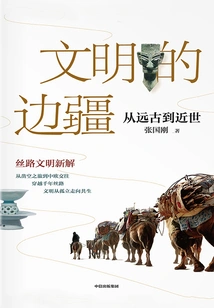
文明的边疆:从远古到近世
Zhang Guogang
From ancient times to the 18th century, particularly grand exchanges and mutual learning among civilizations took place along the Silk Road that traversed Asia and Europe. The opening up of the Silk Road began with the mutual attraction between civilizations. The fundamental driving force behind its ability to last for thousands of years lies in mankind's shared desire for wealth and yearning for a beautiful civilization. "Frontiers of Civilization: From Ancient Times to Modern Times" is a new interpretation of Silk Road civilization. The book examines the civilizational exchanges of various Eurasian peoples on the Silk Road from a large-scale, long-term, and historical perspective, and divides this three-thousand-year history into four grand chapters: from the prehistoric Silk Road to the hollowing out, the ancient East and the West met for the first time; the gods entered China during the Han and Tang Dynasties, and the four major civilization systems The convergence of borders in the Western Regions began to form a diverse trade and cultural exchange network; during the Song and Ming Dynasties, spices came from the east, porcelain went to the west, and Chinese products reached Central Asia and as far away as Europe via the Maritime Silk Road; in the late Ming and Qing Dynasties, missionaries came from the east, kicking off the mutual learning of civilizations between China and Europe from imagining foreign countries to the East-West debate. At this point, the Silk Road finally closely connected the three continents of Asia, Africa and Europe, that is, the civilized world before modern times.
From ancient times to the 18th century, particularly grand exchanges and mutual learning among civilizations took place along the Silk Road that traversed Asia and Europe. The opening up of the Silk Road began with the mutual attraction between civilizations. The fundamental driving force behind its ability to last for thousands of years lies in mankind's shared desire for wealth and yearning for a beautiful civilization. "Frontiers of Civilization: From Ancient Times to Modern Times" is a new interpretation of Silk Road civilization. The book examines the civilizational exchanges of various Eurasian peoples on the Silk Road from a large-scale, long-term, and historical perspective, and divides this three-thousand-year history into four grand chapters: from the prehistoric Silk Road to the hollowing out, the ancient East and the West met for the first time; the gods entered China during the Han and Tang Dynasties, and the four major civilization systems The convergence of borders in the Western Regions began to form a diverse trade and cultural exchange network; during the Song and Ming Dynasties, spices came from the east, porcelain went to the west, and Chinese products reached Central Asia and as far away as Europe via the Maritime Silk Road; in the late Ming and Qing Dynasties, missionaries came from the east, kicking off the mutual learning of civilizations between China and Europe from imagining foreign countries to the East-West debate. At this point, the Silk Road finally closely connected the three continents of Asia, Africa and Europe, that is, the civilized world before modern times.
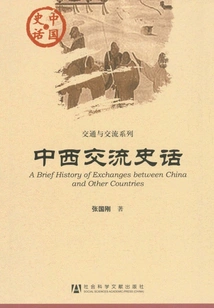
中西交流史话
Zhang Guogang
The middle and lower reaches of the Yellow River are the core areas for the formation and development of Chinese civilization, and it gradually spread. The relative independence in physical geography plays an important role in the stability and sustainable development of Chinese civilization, but it has never been closed. There are continuous exchanges with the Buddhist culture of South Asia, the Islamic culture of West Asia and North Africa, and the Christian culture of Europe to the west. Zhang Qian's passage to the Western Regions in the Han Dynasty, the gathering of religious culture from the Western Regions in Chang'an during the Tang Dynasty, the establishment of a great empire across Asia and Europe in the Yuan Dynasty, and the arrival of Western commercial and religious forces from the east in the Ming and Qing Dynasties were the four major climaxes of cultural exchanges between China and the West. This book traces the footsteps of our ancestors and tells the historical process of the exchange, collision and mutual nourishment between ancient Chinese civilization and Western civilization through records and cultural relics such as King Mu of Zhou Dynasty's Western Tour, Monk Tang's Journey to the West, Genghis Khan's Western Expeditions, and Zheng He's Voyages to the West.
The middle and lower reaches of the Yellow River are the core areas for the formation and development of Chinese civilization, and it gradually spread. The relative independence in physical geography plays an important role in the stability and sustainable development of Chinese civilization, but it has never been closed. There are continuous exchanges with the Buddhist culture of South Asia, the Islamic culture of West Asia and North Africa, and the Christian culture of Europe to the west. Zhang Qian's passage to the Western Regions in the Han Dynasty, the gathering of religious culture from the Western Regions in Chang'an during the Tang Dynasty, the establishment of a great empire across Asia and Europe in the Yuan Dynasty, and the arrival of Western commercial and religious forces from the east in the Ming and Qing Dynasties were the four major climaxes of cultural exchanges between China and the West. This book traces the footsteps of our ancestors and tells the historical process of the exchange, collision and mutual nourishment between ancient Chinese civilization and Western civilization through records and cultural relics such as King Mu of Zhou Dynasty's Western Tour, Monk Tang's Journey to the West, Genghis Khan's Western Expeditions, and Zheng He's Voyages to the West.
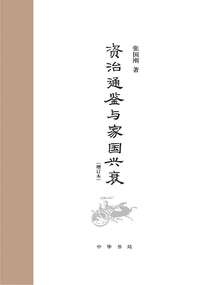
《资治通鉴》与家国兴衰(增订本)
Zhang Guogang
"Zi Zhi Tong Jian" is an important classic for understanding Chinese history and historical wisdom. It has always been a must-read classic for emperors, generals, ministers and scholars to govern the country and study. Zhang Guogang, a senior professor of liberal arts at Tsinghua University, has devoted himself to studying "Zi Zhi Tong Jian" for decades. With the breadth of vision that spans Eastern and Western cultures and the depth of thinking that spans ancient and modern history, he carefully selected 23 key points in "Zi Zhi Tong Jian" that affect the process of Chinese history. "Zi Zhi Tong Jian" and the Rise and Fall of the Family and Country starts from the text of "Zi Zhi Tong Jian", examines the key nodes that affect the family and country's political affairs, and briefly and comprehensively tells the history of China from the division of three families into the Jin Dynasty to the end of the Five Dynasties and Ten Kingdoms. There are many historical scenes in the book that are loyal to the original text. The reappearance, the characters' words and deeds, as well as Professor Zhang Guogang's unique, profound and interesting analysis and lectures, transform a vast classical masterpiece into a concise and accessible popular history book. It can be called a classic for contemporary people to interpret historical masterpieces.
"Zi Zhi Tong Jian" is an important classic for understanding Chinese history and historical wisdom. It has always been a must-read classic for emperors, generals, ministers and scholars to govern the country and study. Zhang Guogang, a senior professor of liberal arts at Tsinghua University, has devoted himself to studying "Zi Zhi Tong Jian" for decades. With the breadth of vision that spans Eastern and Western cultures and the depth of thinking that spans ancient and modern history, he carefully selected 23 key points in "Zi Zhi Tong Jian" that affect the process of Chinese history. "Zi Zhi Tong Jian" and the Rise and Fall of the Family and Country starts from the text of "Zi Zhi Tong Jian", examines the key nodes that affect the family and country's political affairs, and briefly and comprehensively tells the history of China from the division of three families into the Jin Dynasty to the end of the Five Dynasties and Ten Kingdoms. There are many historical scenes in the book that are loyal to the original text. The reappearance, the characters' words and deeds, as well as Professor Zhang Guogang's unique, profound and interesting analysis and lectures, transform a vast classical masterpiece into a concise and accessible popular history book. It can be called a classic for contemporary people to interpret historical masterpieces.
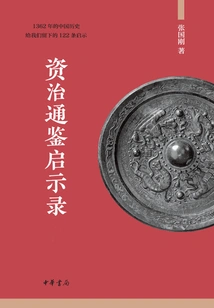
资治通鉴启示录(全二册)
Zhang Guogang
"Zi Zhi Tong Jian" "collects great wealth, has a large body and a refined mind". Mao Zedong read it seventeen times during his lifetime and praised it as a rare and good book. Professor Zhang Guogang repeatedly studied "Zi Zhi Tong Jian" and gained a deep understanding of its essence. He made a comprehensive and detailed interpretation of the fate of important figures and the ins and outs of major historical events in the book, and deeply excavated the historical wisdom and modern revelations about self-cultivation, governance, conduct, selection and employment, family tradition and tutoring, etc., And formed "Zi Zhi Tong Jian Revelation". "Zizhi Tongjian Revelation" not only systematically presents the glory of the great unification of the Qin and Han Dynasties, the Sui and Tang Dynasties, and the twists and turns of the divisions and chaos in the Warring States, Wei, Jin, Southern and Northern Dynasties, and the Five Dynasties and Ten Kingdoms, but also deeply analyzes the rigidity and flexibility in reform, advancement and retreat in life and work, oddity and righteousness in military struggle, lightness and weight in the balance of power, leniency and strictness in controlling subordinates, squareness and roundness in political career... It is a must-read for all stages of life growth. The book is divided into eight parts: "Zhou Ji", "Qin Ji", "Han Ji", "Wei Ji? The author also extracted some inspiring sentences from the article about self-cultivation, conduct, governance, etc., Totaling 122 items, and placed them in a gray bottom frame on the right side of the page, so that readers can better understand the modern value of "Zi Zhi Tong Jian".
"Zi Zhi Tong Jian" "collects great wealth, has a large body and a refined mind". Mao Zedong read it seventeen times during his lifetime and praised it as a rare and good book. Professor Zhang Guogang repeatedly studied "Zi Zhi Tong Jian" and gained a deep understanding of its essence. He made a comprehensive and detailed interpretation of the fate of important figures and the ins and outs of major historical events in the book, and deeply excavated the historical wisdom and modern revelations about self-cultivation, governance, conduct, selection and employment, family tradition and tutoring, etc., And formed "Zi Zhi Tong Jian Revelation". "Zizhi Tongjian Revelation" not only systematically presents the glory of the great unification of the Qin and Han Dynasties, the Sui and Tang Dynasties, and the twists and turns of the divisions and chaos in the Warring States, Wei, Jin, Southern and Northern Dynasties, and the Five Dynasties and Ten Kingdoms, but also deeply analyzes the rigidity and flexibility in reform, advancement and retreat in life and work, oddity and righteousness in military struggle, lightness and weight in the balance of power, leniency and strictness in controlling subordinates, squareness and roundness in political career... It is a must-read for all stages of life growth. The book is divided into eight parts: "Zhou Ji", "Qin Ji", "Han Ji", "Wei Ji? The author also extracted some inspiring sentences from the article about self-cultivation, conduct, governance, etc., Totaling 122 items, and placed them in a gray bottom frame on the right side of the page, so that readers can better understand the modern value of "Zi Zhi Tong Jian".
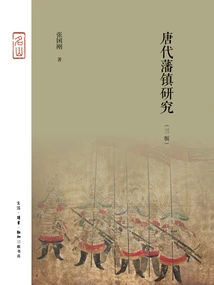
唐代藩镇研究(第3版)
Zhang Guogang
The separatist regime of vassal towns was a chronic disease that plagued the Tang court for more than a century after the middle and late Tang Dynasty, but the separatist regime of vassal towns is not the entire content of the study of vassal towns. This book covers the formation of feudal towns and the conditions for their existence, the types of feudal towns and the characteristics of unrest, and the political and financial interaction between feudal towns and the central government. It basically outlines the true appearance of feudal towns in the Tang Dynasty, and supplements and clarifies issues that have been ignored or vaguely understood by the academic community in the past. It is a representative work on the study of feudal towns in the Tang Dynasty with exemplary significance.
The separatist regime of vassal towns was a chronic disease that plagued the Tang court for more than a century after the middle and late Tang Dynasty, but the separatist regime of vassal towns is not the entire content of the study of vassal towns. This book covers the formation of feudal towns and the conditions for their existence, the types of feudal towns and the characteristics of unrest, and the political and financial interaction between feudal towns and the central government. It basically outlines the true appearance of feudal towns in the Tang Dynasty, and supplements and clarifies issues that have been ignored or vaguely understood by the academic community in the past. It is a representative work on the study of feudal towns in the Tang Dynasty with exemplary significance.
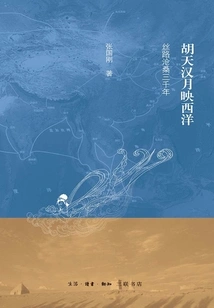
Hu Tianhan's Moon Reflects the Western Ocean: Three Thousand Years of Vicissitudes on the Silk Road
History胡天汉月映西洋:丝路沧桑三千年
Zhang Guogang
The "Silk Road" has broad connotations. It was the largest passage on the Eurasian continent in pre-modern times, connecting various important civilization regions in history. Chinese civilization has lasted for thousands of years. In the process of collision and integration of Eastern culture and foreign culture, it has inspired and formed a more splendid and diverse civilization. From a historical and cultural perspective, this book focuses on the historical evolution of the "Belt and Road Initiative" from ancient times, Han to Tang, Song to Ming, late Ming to mid-Qing. Through characters, events, artifacts, art and other aspects, it deeply explains the conflict and integration between the universality and particularity of civilization, and understands the contribution and influence of Chinese culture on world civilization.
The "Silk Road" has broad connotations. It was the largest passage on the Eurasian continent in pre-modern times, connecting various important civilization regions in history. Chinese civilization has lasted for thousands of years. In the process of collision and integration of Eastern culture and foreign culture, it has inspired and formed a more splendid and diverse civilization. From a historical and cultural perspective, this book focuses on the historical evolution of the "Belt and Road Initiative" from ancient times, Han to Tang, Song to Ming, late Ming to mid-Qing. Through characters, events, artifacts, art and other aspects, it deeply explains the conflict and integration between the universality and particularity of civilization, and understands the contribution and influence of Chinese culture on world civilization.
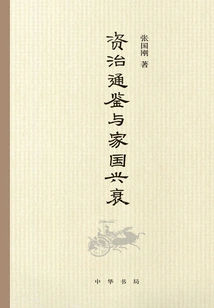
资治通鉴与家国兴衰
Zhang Guogang
Starting from the text of "Zi Zhi Tong Jian", this book examines the key nodes that affect the great politics of the country and the country, and succinctly and concisely tells the history of China from the separation of the three families in the Spring and Autumn Period to the end of the Tang Dynasty. There are many historical scenes and characters reproduced in the book that are faithful to the original text. The concise words and deeds, as well as Professor Zhang Guogang's unique, profound and interesting analysis and lectures, transform a voluminous classical masterpiece into a concise and accessible popular history book. It can be called a classic for contemporary people to interpret historical masterpieces. Professor Zhang Guogang has devoted himself to studying "Zi Zhi Tong Jian" for decades. With the breadth of vision that spans Eastern and Western cultures and the depth of thinking that spans ancient and modern history, he carefully selected twenty key points in "Zi Zhi Tong Jian" that affect the process of Chinese history. He examines the essence of traditional culture from a contemporary perspective, traces political gains and losses, the rise and fall of dynasties, and explores ways to cultivate one's family, manage the world, and govern the country.
Starting from the text of "Zi Zhi Tong Jian", this book examines the key nodes that affect the great politics of the country and the country, and succinctly and concisely tells the history of China from the separation of the three families in the Spring and Autumn Period to the end of the Tang Dynasty. There are many historical scenes and characters reproduced in the book that are faithful to the original text. The concise words and deeds, as well as Professor Zhang Guogang's unique, profound and interesting analysis and lectures, transform a voluminous classical masterpiece into a concise and accessible popular history book. It can be called a classic for contemporary people to interpret historical masterpieces. Professor Zhang Guogang has devoted himself to studying "Zi Zhi Tong Jian" for decades. With the breadth of vision that spans Eastern and Western cultures and the depth of thinking that spans ancient and modern history, he carefully selected twenty key points in "Zi Zhi Tong Jian" that affect the process of Chinese history. He examines the essence of traditional culture from a contemporary perspective, traces political gains and losses, the rise and fall of dynasties, and explores ways to cultivate one's family, manage the world, and govern the country.