Library
Browse and search books
14 novels found
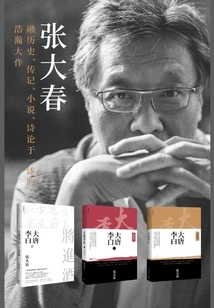
Tang Dynasty Li Bai Series Set of Three Volumes (youth Tour + Phoenix Terrace + General Wine)
Literature大唐李白系列套装三册(少年游+凤凰台+将进酒)
Zhang Dachun
The three-volume set of the Li Bai series of the Tang Dynasty includes "Li Bai of the Tang Dynasty: Youth Travel", "Li Bai of the Tang Dynasty: Phoenix Terrace", and "Li Bai of the Tang Dynasty: Going to Wine". A poet who was born as a star and had the sound of immortality, but only his name remained; an era that claimed to be prosperous but destroyed poetry with vanity. Li Bai changed Tang poetry, but missed the era; and how could the entire Tang Dynasty miss him? Writer Zhang Dachun's vast masterpiece that integrates history, biography, novels, and poetry theory, was listed among the top ten best books in Taiwan's "China Times Open Book" in 2013
The three-volume set of the Li Bai series of the Tang Dynasty includes "Li Bai of the Tang Dynasty: Youth Travel", "Li Bai of the Tang Dynasty: Phoenix Terrace", and "Li Bai of the Tang Dynasty: Going to Wine". A poet who was born as a star and had the sound of immortality, but only his name remained; an era that claimed to be prosperous but destroyed poetry with vanity. Li Bai changed Tang poetry, but missed the era; and how could the entire Tang Dynasty miss him? Writer Zhang Dachun's vast masterpiece that integrates history, biography, novels, and poetry theory, was listed among the top ten best books in Taiwan's "China Times Open Book" in 2013
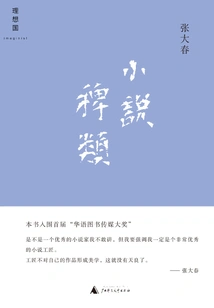
Novel Barnyard
Literature小说稗类
Zhang Dachun
Zhang Dachun is one of the best contemporary Chinese novelists. He boldly said that he is "probably the master with the most comprehensive equipment and the most varied techniques among Chinese novelists" (Liang Wendao). In this work, readers will see that he is knowledgeable about hundreds of schools of thought and has a clear structure. Starting from Zhuangzi, Zhang Dachun shows off his skills by imitating Marquez, parodying Sima Zhongyuan... And he is extremely capable of playing ruffian and mocking. It is rare that he is so knowledgeable and knowledgeable about hundreds of schools of thought, and it is even rarer that he has such a clear structure and a unique view of novels.
Zhang Dachun is one of the best contemporary Chinese novelists. He boldly said that he is "probably the master with the most comprehensive equipment and the most varied techniques among Chinese novelists" (Liang Wendao). In this work, readers will see that he is knowledgeable about hundreds of schools of thought and has a clear structure. Starting from Zhuangzi, Zhang Dachun shows off his skills by imitating Marquez, parodying Sima Zhongyuan... And he is extremely capable of playing ruffian and mocking. It is rare that he is so knowledgeable and knowledgeable about hundreds of schools of thought, and it is even rarer that he has such a clear structure and a unique view of novels.
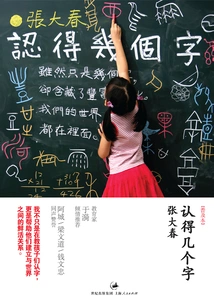
Recognize a Few Words
Literature认得几个字
Zhang Dachun
"Recognize a Few Words" is a warm and funny new work by the famous novelist Zhang Dachun after "Listening to My Father". It is a collection of prose sketches composed of 89 independent short essays. In the article, Zhang Dachun uses a father's tone and perspective to explain Chinese characters to the children in daily interactions with them. Zhang Dachun used simple and lively language to select 89 words that were unfamiliar to children in the most common life situations. From the simple to the deep, he traced back to the source, and finally returned to the children's life situations. Zhang Dachun's profound knowledge of philology and history, as well as his deep humanistic care, as well as the children's innocent childlike speech, all gave these seemingly familiar Chinese characters accurate, vivid, and even unexpected annotations. In the writings of novelist Zhang Dachun, these daily teachings by fathers to their children and the conversations between children and their fathers also generate infinite fun. It can be said to be both an interesting family classroom and a meaningful emotional education.
"Recognize a Few Words" is a warm and funny new work by the famous novelist Zhang Dachun after "Listening to My Father". It is a collection of prose sketches composed of 89 independent short essays. In the article, Zhang Dachun uses a father's tone and perspective to explain Chinese characters to the children in daily interactions with them. Zhang Dachun used simple and lively language to select 89 words that were unfamiliar to children in the most common life situations. From the simple to the deep, he traced back to the source, and finally returned to the children's life situations. Zhang Dachun's profound knowledge of philology and history, as well as his deep humanistic care, as well as the children's innocent childlike speech, all gave these seemingly familiar Chinese characters accurate, vivid, and even unexpected annotations. In the writings of novelist Zhang Dachun, these daily teachings by fathers to their children and the conversations between children and their fathers also generate infinite fun. It can be said to be both an interesting family classroom and a meaningful emotional education.
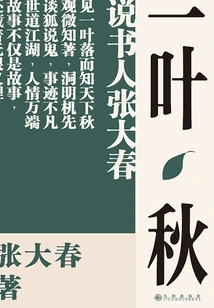
One Autumn Leaf
General Fiction一叶秋
Zhang Dachun
This book is the third in the "Spring, Summer, Autumn, and Winter" series of novels based on Chinese legendary notes by writer Zhang Dachun. After the performance of "The Young Master of the Spring Lamp", where the heroes of the city are happy and the eccentricities of intellectual officialdom are sorted out in "Battle of Xia Yang", the writer Zhang Dachun once again demonstrated his extremely skillful narrative skills in the bookstore, weaving the notebook materials of Chinese legends, and tracing the interesting legends that were buried and hidden in the gaps between official history and legends. The twelve stories in this book are about people who are "aware of the current affairs" and understand the principles of blessings and disasters in the turbulent world and at the time of change. There are also ghosts, monsters and foxes from all walks of life, each showing their magical powers; encounters between immortals and mortals lead to extraordinary deeds.
This book is the third in the "Spring, Summer, Autumn, and Winter" series of novels based on Chinese legendary notes by writer Zhang Dachun. After the performance of "The Young Master of the Spring Lamp", where the heroes of the city are happy and the eccentricities of intellectual officialdom are sorted out in "Battle of Xia Yang", the writer Zhang Dachun once again demonstrated his extremely skillful narrative skills in the bookstore, weaving the notebook materials of Chinese legends, and tracing the interesting legends that were buried and hidden in the gaps between official history and legends. The twelve stories in this book are about people who are "aware of the current affairs" and understand the principles of blessings and disasters in the turbulent world and at the time of change. There are also ghosts, monsters and foxes from all walks of life, each showing their magical powers; encounters between immortals and mortals lead to extraordinary deeds.
Li Bai of the Tang Dynasty·will Enter the Wine
General Fiction大唐李白·将进酒
Zhang Dachun
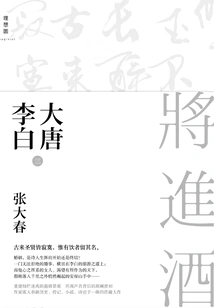
The poet's unspeakable lightness of life - Li Bai's love and marriage, the famous writer Zhang Dachun's masterpiece - "Li Bai of the Tang Dynasty", which integrates modern novel skills and classical cultural literacy - "Li Bai of the Tang Dynasty" "Will Enter the Wine" is the third part of the "Li Bai of the Tang Dynasty" series by Taiwanese writer Zhang Dachun. After learning skills in the mountains and crying for the first time in "Youth Journey" and "Phoenix Terrace", Li Bai's life entered the slow but crucial second movement - marriage. In the third year after leaving Shu, Li Bai changed his name to "Five Birds", spent a large sum of money in a restaurant, and had a night banquet in the Peach Garden. Wherever he wandered, he was greeted with songs. However, the young mistress, who was in love with her, has disappeared without a trace; and behind the marriage, which has an unlimited future, there is an inhumane and sophisticated calculation. At the same time, Yang Yuhuan, who was "raised in a boudoir unknown to others" thousands of miles away, and An Lushan, who rose up in the barren mountains and harsh waters, also had their own minds and would rise to the top with the emperor's appreciation...
The poet's unspeakable lightness of life - Li Bai's love and marriage, the famous writer Zhang Dachun's masterpiece - "Li Bai of the Tang Dynasty", which integrates modern novel skills and classical cultural literacy - "Li Bai of the Tang Dynasty" "Will Enter the Wine" is the third part of the "Li Bai of the Tang Dynasty" series by Taiwanese writer Zhang Dachun. After learning skills in the mountains and crying for the first time in "Youth Journey" and "Phoenix Terrace", Li Bai's life entered the slow but crucial second movement - marriage. In the third year after leaving Shu, Li Bai changed his name to "Five Birds", spent a large sum of money in a restaurant, and had a night banquet in the Peach Garden. Wherever he wandered, he was greeted with songs. However, the young mistress, who was in love with her, has disappeared without a trace; and behind the marriage, which has an unlimited future, there is an inhumane and sophisticated calculation. At the same time, Yang Yuhuan, who was "raised in a boudoir unknown to others" thousands of miles away, and An Lushan, who rose up in the barren mountains and harsh waters, also had their own minds and would rise to the top with the emperor's appreciation...
Southern Winter
Literature南国之冬
Zhang Dachun
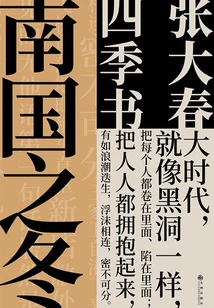
The great era is like a black hole, drawing and trapping everyone in it; it embraces everyone, like waves rising over and over again, and the foam is connected and inseparable. After performing "The Young Master of the Spring Lamp", the heroes of the city were enjoying themselves, sorting out the eccentricities of intellectuals and officialdom in "Battle of Xia Yang", and visiting all the ghosts, monsters, foxes and immortals in "One Autumn Leaf", the writer Zhang Dachun finally brought the "Spring, Summer, Autumn and Winter" series to a successful conclusion fifteen years later. The opening chapter of "Winter in the South" continues the fox ghosts and fairy tales of "One Autumn Leaf", introducing historical legends from the legends of gods and ghosts. The author's interactions with many filmmakers discuss the true and false, the true and the false, and connect the historical legends and anecdotes that may appear in the movie. The opening chapter "Blood Bait" talks about life, while the last chapter "Leaving the Soul" is about the soul leaving the body, going from life to death, and resurrecting from the dead, and finally returns to the essence of a legendary novel.
The great era is like a black hole, drawing and trapping everyone in it; it embraces everyone, like waves rising over and over again, and the foam is connected and inseparable. After performing "The Young Master of the Spring Lamp", the heroes of the city were enjoying themselves, sorting out the eccentricities of intellectuals and officialdom in "Battle of Xia Yang", and visiting all the ghosts, monsters, foxes and immortals in "One Autumn Leaf", the writer Zhang Dachun finally brought the "Spring, Summer, Autumn and Winter" series to a successful conclusion fifteen years later. The opening chapter of "Winter in the South" continues the fox ghosts and fairy tales of "One Autumn Leaf", introducing historical legends from the legends of gods and ghosts. The author's interactions with many filmmakers discuss the true and false, the true and the false, and connect the historical legends and anecdotes that may appear in the movie. The opening chapter "Blood Bait" talks about life, while the last chapter "Leaving the Soul" is about the soul leaving the body, going from life to death, and resurrecting from the dead, and finally returns to the essence of a legendary novel.
Recognize a Few Words
Literature认得几个字
Zhang Dachun
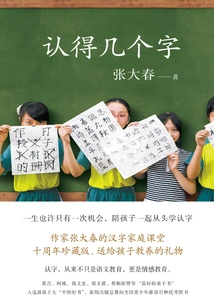
When it comes to reading, we often think too simply. "Recognize a Few Words" is the Chinese character family classroom of the writer Zhang Dachun. It contains 89 classic essays and records the parent-child time he spent teaching his two children to read. He seizes every possible opportunity in daily life, teaches a pair of children to read with good intentions, inherits the history, cultural connotation and profound upbringing carried by Chinese characters, and inspires children to feel the joy of using words to confirm the world. Chinese characters come from the classics, continue to develop and evolve, and move into our lives. Zhang Dachun used his profound knowledge of philology and strong humanistic care to make these Chinese characters rejuvenate, making them interesting and thought-provoking. "Recognize a few words" is not only an interesting and beneficial Chinese character culture class, but also a meaningful emotional education and life education class. Although it is just a few words, it contains rich culture, and our world is all in it.
When it comes to reading, we often think too simply. "Recognize a Few Words" is the Chinese character family classroom of the writer Zhang Dachun. It contains 89 classic essays and records the parent-child time he spent teaching his two children to read. He seizes every possible opportunity in daily life, teaches a pair of children to read with good intentions, inherits the history, cultural connotation and profound upbringing carried by Chinese characters, and inspires children to feel the joy of using words to confirm the world. Chinese characters come from the classics, continue to develop and evolve, and move into our lives. Zhang Dachun used his profound knowledge of philology and strong humanistic care to make these Chinese characters rejuvenate, making them interesting and thought-provoking. "Recognize a few words" is not only an interesting and beneficial Chinese character culture class, but also a meaningful emotional education and life education class. Although it is just a few words, it contains rich culture, and our world is all in it.
Li Bai of the Tang Dynasty·youth Tour
General Fiction大唐李白·少年游
Zhang Dachun
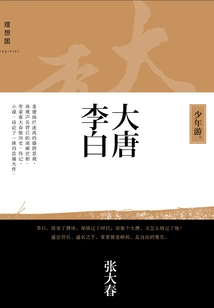
Li Bai changed Tang poetry, but missed the era; and how could the entire Tang Dynasty miss him? A poet who is a star and has the sound of immortality, but only his name remains; an era that claims to be prosperous but destroys poetry with vanity! The "Li Bai of the Tang Dynasty" series is a culmination of writer Zhang Dachun's modern novel skills and classical cultural literacy. It plans to recreate the life of the poet Li Bai and the rise and fall of the Tang Dynasty in a million words. The first part, "Youth Travel", combs through Li Bai's early travels, unravels the mystery of the poet's life experience and apprenticeship, and outlines the colorful world of the prosperous Tang Dynasty.
Li Bai changed Tang poetry, but missed the era; and how could the entire Tang Dynasty miss him? A poet who is a star and has the sound of immortality, but only his name remains; an era that claims to be prosperous but destroys poetry with vanity! The "Li Bai of the Tang Dynasty" series is a culmination of writer Zhang Dachun's modern novel skills and classical cultural literacy. It plans to recreate the life of the poet Li Bai and the rise and fall of the Tang Dynasty in a million words. The first part, "Youth Travel", combs through Li Bai's early travels, unravels the mystery of the poet's life experience and apprenticeship, and outlines the colorful world of the prosperous Tang Dynasty.
Zhan Xia Yang
Literature战夏阳
Zhang Dachun
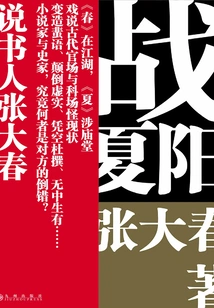
This book is the second in the "Spring, Summer, Autumn, and Winter" series of novels based on Chinese legendary notes by author Zhang Dachun. Continuing the extremely skillful but contemporary bookstore narrative technique in the previous work "The Young Master of Spring Deng", the novelist further focuses on the vast and deep rivers, lakes and forests, and the noisy market and bookshops to the temples and private schools. The strange, ugly and embarrassing situations in the officialdom and examination halls of the modern times are all characters with different agendas. They also present the complex spectrum of the rise and fall of the intellectual and powerful classes in modern China. At the same time, it raises a question: Which one is the fault of the other, novelist or historian?
This book is the second in the "Spring, Summer, Autumn, and Winter" series of novels based on Chinese legendary notes by author Zhang Dachun. Continuing the extremely skillful but contemporary bookstore narrative technique in the previous work "The Young Master of Spring Deng", the novelist further focuses on the vast and deep rivers, lakes and forests, and the noisy market and bookshops to the temples and private schools. The strange, ugly and embarrassing situations in the officialdom and examination halls of the modern times are all characters with different agendas. They also present the complex spectrum of the rise and fall of the intellectual and powerful classes in modern China. At the same time, it raises a question: Which one is the fault of the other, novelist or historian?
Li Bai of the Tang Dynasty·phoenix Stage
General Fiction大唐李白·凤凰台
Zhang Dachun
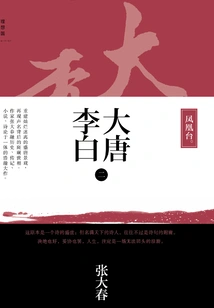
This was originally a prosperous age of poetry; but poets who are famous all over the world are often just appendages of poetry! "Li Bai of the Tang Dynasty" series - Taiwanese writer Zhang Dachun tells you about the study and wandering years of the poet Li Bai. "Phoenix Terrace" is the second tetralogy in the "Li Bai of the Tang Dynasty" series by Taiwanese writer Zhang Dachun. Following "Youth Travel", it tells the story of young Li Bai's traveling life along the Yangtze River after leaving Shu. In this volume, which can be called "Li Bai's Wandering Years", Li Bai and Fa Xiaowu guide their way to Yuzhou, pass through Wushan, pass through Jingmen, and reach Jiangling; they meet Taoist Sima Chengzhen, resolve the quarrels between Dongting Qiantang and Jingyang, and have many adventures, all of which are wonderful foreshadowings for him to approach the Mingjun in the temple step by step.
This was originally a prosperous age of poetry; but poets who are famous all over the world are often just appendages of poetry! "Li Bai of the Tang Dynasty" series - Taiwanese writer Zhang Dachun tells you about the study and wandering years of the poet Li Bai. "Phoenix Terrace" is the second tetralogy in the "Li Bai of the Tang Dynasty" series by Taiwanese writer Zhang Dachun. Following "Youth Travel", it tells the story of young Li Bai's traveling life along the Yangtze River after leaving Shu. In this volume, which can be called "Li Bai's Wandering Years", Li Bai and Fa Xiaowu guide their way to Yuzhou, pass through Wushan, pass through Jingmen, and reach Jiangling; they meet Taoist Sima Chengzhen, resolve the quarrels between Dongting Qiantang and Jingyang, and have many adventures, all of which are wonderful foreshadowings for him to approach the Mingjun in the temple step by step.
Novel Barnyard
Literature小说稗类
Zhang Dachun
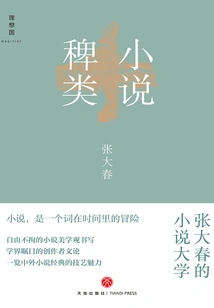
What exactly is a novel? How to read novels? How to write a novel? "Novel Barnyard" is a novel aesthetic written by the writer Zhang Dachun. 28 Articles analyze the system, origin, rhetoric, cause and effect, reference, etc. Of the novel, forming a complete genealogy of novel creation. Writing with a free and informal novel aesthetic, you can see the technical charm of classic Chinese and foreign novels. Zhang Dachun's personal insights when writing novels can often be seen in the book, which provides novel creators with a passage to the secret realm of novels and is also an interesting novel reading guide. In Zhang Dachun's view, novels have no preset purpose and "do not solve the major problems of life, nor do they reduce them." They only take readers to travel, have adventures, and imagine.
What exactly is a novel? How to read novels? How to write a novel? "Novel Barnyard" is a novel aesthetic written by the writer Zhang Dachun. 28 Articles analyze the system, origin, rhetoric, cause and effect, reference, etc. Of the novel, forming a complete genealogy of novel creation. Writing with a free and informal novel aesthetic, you can see the technical charm of classic Chinese and foreign novels. Zhang Dachun's personal insights when writing novels can often be seen in the book, which provides novel creators with a passage to the secret realm of novels and is also an interesting novel reading guide. In Zhang Dachun's view, novels have no preset purpose and "do not solve the major problems of life, nor do they reduce them." They only take readers to travel, have adventures, and imagine.
Article Freely
Literature文章自在
Zhang Dachun
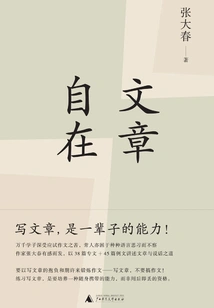
Writing articles is a lifelong skill! Feeling the various shortcomings of Chinese language teaching and examination-oriented writing, writer Zhang Dachun continued "Knowing a Few Words" to talk about the art of writing. This book uses more than 70 articles to interpret the art of writing. It not only discusses his views on article writing and current Chinese education, analyzes various bad speaking habits that ordinary people are accustomed to without noticing, but also demonstrates various writing techniques. At the same time, one article each of ancient and modern famous writers such as Su Xun, Lu Xun, Hu Shi, Liang Shiqiu, and Mao Jian is quoted to further elaborate on the wit and beautiful language of the articles.
Writing articles is a lifelong skill! Feeling the various shortcomings of Chinese language teaching and examination-oriented writing, writer Zhang Dachun continued "Knowing a Few Words" to talk about the art of writing. This book uses more than 70 articles to interpret the art of writing. It not only discusses his views on article writing and current Chinese education, analyzes various bad speaking habits that ordinary people are accustomed to without noticing, but also demonstrates various writing techniques. At the same time, one article each of ancient and modern famous writers such as Su Xun, Lu Xun, Hu Shi, Liang Shiqiu, and Mao Jian is quoted to further elaborate on the wit and beautiful language of the articles.
Tathagata Seeing Words
Literature见字如来
Zhang Dachun
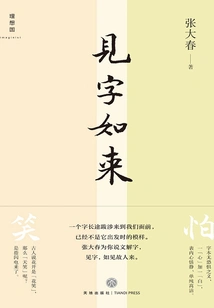
Zhang Dachun, who considers himself to have no prose writing experience, accepted a column invitation from Reader's Digest six years ago because he was willing to learn from the column "Correction of Words" hosted by his predecessor, Mr. Liang Shiqiu, in the magazine. By re-identifying words, he could write stories about the origins of words, and at the same time contribute to the decline of Chinese character culture in this era. Seeing the word is like seeing an old friend coming. The forty-six essays and explanations of Chinese characters included in this book, each one has a "victory first episode", which talks about the scenery and encounters of the writer's encounter with characters in his life. The following article is an explanation and even extension of the shape, sound, meaning and phrases of Chinese characters: if a person is open-minded and not afraid of "fat" and "drunk", the universe is vast, and the long journey of the word "brigade"... ... Words and words, tempered by time, are no longer just textual elements in a collection of classics and history, but also constitute the vivid life experience of a generation; writers often return to the context in which they first learned or used these words, and reveal, explore, and remember those words that are integrated with the facts of life and may disappear with the wind. For anyone, life only goes through once; but words can bring it back countless times - as long as you are willing to read it.
Zhang Dachun, who considers himself to have no prose writing experience, accepted a column invitation from Reader's Digest six years ago because he was willing to learn from the column "Correction of Words" hosted by his predecessor, Mr. Liang Shiqiu, in the magazine. By re-identifying words, he could write stories about the origins of words, and at the same time contribute to the decline of Chinese character culture in this era. Seeing the word is like seeing an old friend coming. The forty-six essays and explanations of Chinese characters included in this book, each one has a "victory first episode", which talks about the scenery and encounters of the writer's encounter with characters in his life. The following article is an explanation and even extension of the shape, sound, meaning and phrases of Chinese characters: if a person is open-minded and not afraid of "fat" and "drunk", the universe is vast, and the long journey of the word "brigade"... ... Words and words, tempered by time, are no longer just textual elements in a collection of classics and history, but also constitute the vivid life experience of a generation; writers often return to the context in which they first learned or used these words, and reveal, explore, and remember those words that are integrated with the facts of life and may disappear with the wind. For anyone, life only goes through once; but words can bring it back countless times - as long as you are willing to read it.
Mr. Chun Deng
General Fiction春灯公子
Zhang Dachun
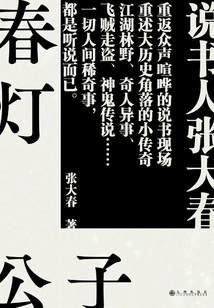
Young Master Chun Deng's banquet for celebrities is an annual event. This event has been going on for many years, and it is almost the same as an ordinary annual ceremony. However, the origin of the person hosting the banquet is a mystery, and the location of the banquet is just like a peach blossom garden. It can no longer be found in the real space and in the memories of the previous participants. The only surviving evidence is the twenty "titles" of poems and lyrics that have been circulated. These titles are said to have come from the climax of the Spring Lantern Banquet: the speaker was secretly selected from among the guests at the banquet and spent a year pondering the story in order to stun the listeners and make the prince admire the story.
Young Master Chun Deng's banquet for celebrities is an annual event. This event has been going on for many years, and it is almost the same as an ordinary annual ceremony. However, the origin of the person hosting the banquet is a mystery, and the location of the banquet is just like a peach blossom garden. It can no longer be found in the real space and in the memories of the previous participants. The only surviving evidence is the twenty "titles" of poems and lyrics that have been circulated. These titles are said to have come from the climax of the Spring Lantern Banquet: the speaker was secretly selected from among the guests at the banquet and spent a year pondering the story in order to stun the listeners and make the prince admire the story.