Library
Browse and search books
2 novels found
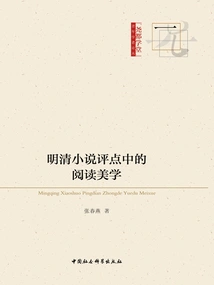
明清小说评点中的阅读美学
Zhang Chunyan
The rise of novel criticism in the Ming and Qing Dynasties marked the consciousness of novel reading. Novel reading is different from traditional reading of classics and history. The novel itself is highly entertaining. Novel reading can be called an aesthetic activity in essence. This book's research on the criticism of novels of the Ming and Qing Dynasties revolves around the aesthetic experience of reading. It is believed that the discussion of the aesthetic experience of reading constitutes the most core significance and value theory in the criticism of novels of the Ming and Qing Dynasties. In the process of reading the text, the reviewer took the reading aesthetic experience as the core. On the one hand, he analyzed the generation mechanism of aesthetic experience in the reading process from the reader's perspective, and tried to establish an ideal reading paradigm; on the other hand, he explored the interactive relationship between the text and the reader's aesthetic experience, and completed the construction of the novel art theory on this basis.
The rise of novel criticism in the Ming and Qing Dynasties marked the consciousness of novel reading. Novel reading is different from traditional reading of classics and history. The novel itself is highly entertaining. Novel reading can be called an aesthetic activity in essence. This book's research on the criticism of novels of the Ming and Qing Dynasties revolves around the aesthetic experience of reading. It is believed that the discussion of the aesthetic experience of reading constitutes the most core significance and value theory in the criticism of novels of the Ming and Qing Dynasties. In the process of reading the text, the reviewer took the reading aesthetic experience as the core. On the one hand, he analyzed the generation mechanism of aesthetic experience in the reading process from the reader's perspective, and tried to establish an ideal reading paradigm; on the other hand, he explored the interactive relationship between the text and the reader's aesthetic experience, and completed the construction of the novel art theory on this basis.
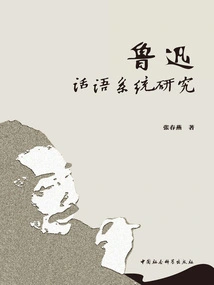
A Study on Lu Xun's Discourse System
Literature鲁迅话语系统研究
Zhang Chunyan
This book takes Lu Xun's discourse as a whole as the research object, and systematically describes and condenses the multiple "schemas" in Lu Xun's discourse from multiple dimensions: the dual structure model of national discourse and personal discourse, the "relational body" of the "iron house" and the "time". The "empty body" model, the "returnee-old friend-story" structural model of the homecoming novel, the "double vortex" dynamic derivative schema of Lu Xun's discourse practice, the life philosophy schema of "outside the body - resistance to the world\u002F within the body - introspection", etc. On this basis, it deeply explores the occurrence of Lu Xun's discourse, the practice of Lu Xun's discourse, the origin of Lu Xun's discourse system, the isomorphism of Lu Xun's discourse model and survival mode, etc., And promotes the systematization of Lu Xun's discourse research. Among them, this book creatively reinterprets the "two centers" of Lu Xun's discourse using the "double vortex" diagram, discovers the systematic relationship and dynamic derivation of Lu Xun's discourse, and thus redraws Lu Xun's spiritual image with reflexivity as the center and paradox as balance.
This book takes Lu Xun's discourse as a whole as the research object, and systematically describes and condenses the multiple "schemas" in Lu Xun's discourse from multiple dimensions: the dual structure model of national discourse and personal discourse, the "relational body" of the "iron house" and the "time". The "empty body" model, the "returnee-old friend-story" structural model of the homecoming novel, the "double vortex" dynamic derivative schema of Lu Xun's discourse practice, the life philosophy schema of "outside the body - resistance to the world\u002F within the body - introspection", etc. On this basis, it deeply explores the occurrence of Lu Xun's discourse, the practice of Lu Xun's discourse, the origin of Lu Xun's discourse system, the isomorphism of Lu Xun's discourse model and survival mode, etc., And promotes the systematization of Lu Xun's discourse research. Among them, this book creatively reinterprets the "two centers" of Lu Xun's discourse using the "double vortex" diagram, discovers the systematic relationship and dynamic derivation of Lu Xun's discourse, and thus redraws Lu Xun's spiritual image with reflexivity as the center and paradox as balance.