Library
Browse and search books
4 novels found
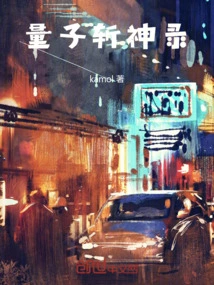
Quantum God Killing Record
Suspense and Supernatural量子斩神录
Zhang Chengzhi
There is a six-pointed star-shaped mental hospital floating in the depths of the Pacific Ocean. On the day Lin Shen was forcibly taken into custody, the smart wall of the ward burned a scarab totem on his palm. This genius boy who can dismantle a quantum computer with his bare hands discovered that the so-called treatment equipment is actually a technological variation of the ancient Egyptian "heart weighing" ritual - whenever the moon phase coincides with theta star of Orion, memory devourers will crawl out of the ventilation ducts of the hospital. Those monsters flowing with non-trivial solutions to the Riemann Hypothesis are eating away at human civilization into the ruins of the Sierpinski Triangle. Jiang Ye's 43rd life restarted amidst the rust of the ventilation ducts. This time and space wanderer with nanomachines embedded in his wrist can observe the four-dimensional hypercube projection in his right eye, but the original memory of the Tunguska explosion is sealed in his left eye. When his blood produced a nuclear fusion reaction with Lin Shen's wound, the top-secret files from twenty years ago were automatically decrypted: buried under the Sheshan Mountain in Shanghai was the "God-Killer Petri Dish" recorded in the Sumerian King List, and the genetic chain of the two of them was entwined with the missing page 37 of the Cthulhu Mythos. Lin Shen saw 3,600 ways to die in the quantum computer array, and Jiang Ye's holographic wings reflected the tombstones of human civilization... The multiple-choice question given by fate always carries the smell of blood: become an observer and anchor human civilization, or turn into a paradox and kill the God of Time and Space with your own hands?
There is a six-pointed star-shaped mental hospital floating in the depths of the Pacific Ocean. On the day Lin Shen was forcibly taken into custody, the smart wall of the ward burned a scarab totem on his palm. This genius boy who can dismantle a quantum computer with his bare hands discovered that the so-called treatment equipment is actually a technological variation of the ancient Egyptian "heart weighing" ritual - whenever the moon phase coincides with theta star of Orion, memory devourers will crawl out of the ventilation ducts of the hospital. Those monsters flowing with non-trivial solutions to the Riemann Hypothesis are eating away at human civilization into the ruins of the Sierpinski Triangle. Jiang Ye's 43rd life restarted amidst the rust of the ventilation ducts. This time and space wanderer with nanomachines embedded in his wrist can observe the four-dimensional hypercube projection in his right eye, but the original memory of the Tunguska explosion is sealed in his left eye. When his blood produced a nuclear fusion reaction with Lin Shen's wound, the top-secret files from twenty years ago were automatically decrypted: buried under the Sheshan Mountain in Shanghai was the "God-Killer Petri Dish" recorded in the Sumerian King List, and the genetic chain of the two of them was entwined with the missing page 37 of the Cthulhu Mythos. Lin Shen saw 3,600 ways to die in the quantum computer array, and Jiang Ye's holographic wings reflected the tombstones of human civilization... The multiple-choice question given by fate always carries the smell of blood: become an observer and anchor human civilization, or turn into a paradox and kill the God of Time and Space with your own hands?
Commentary·xin Kang
Literature解说·信康
Zhang Chengzhi
Recalling the literary environment of the 1980s, many people will feel a sense of nostalgia. At a time when everything is flourishing, modern art is like a strong wind, making us all intoxicated by its bath. Wearing worn-out boots and still suffering from frost scars, I had a strong desire to make up for the shortcomings in my upbringing. When I returned to the city, I felt weak. I hoped to capture "modernity" in order to obtain a new mount. At that time, I was particularly concerned about form, technique, and language. Although I was working on it, I was always wondering whether these technical and conceptual things were truly modern in the sense of modernism. The era of coercion has brought us from the 1960s to the 1980s, a period of transformation and renewal. I changed from a professional herder to a professional writer. "Modern" dominated the Chinese literary world at that time.
Recalling the literary environment of the 1980s, many people will feel a sense of nostalgia. At a time when everything is flourishing, modern art is like a strong wind, making us all intoxicated by its bath. Wearing worn-out boots and still suffering from frost scars, I had a strong desire to make up for the shortcomings in my upbringing. When I returned to the city, I felt weak. I hoped to capture "modernity" in order to obtain a new mount. At that time, I was particularly concerned about form, technique, and language. Although I was working on it, I was always wondering whether these technical and conceptual things were truly modern in the sense of modernism. The era of coercion has brought us from the 1960s to the 1980s, a period of transformation and renewal. I changed from a professional herder to a professional writer. "Modern" dominated the Chinese literary world at that time.
Mikasa Park
General Fiction三笠公园
Zhang Chengzhi
Your theory of strength and victory has failed. Only after a miserable defeat like hell on earth can you understand the theory that there is no winner except the truth. The shadowy, infinitely powerful master will not allow a dream of a strong country that cuts off the hopes of others; it will not realize the prospect of a nation that tramples on the dignity and survival of others. If we count the time since the founding of the country under the pressure of the black ships and the nation's choice of hegemony, Japan's dream of becoming a powerful nation has only lasted less than a hundred years. The great Japanese spirit, the longed-for Japanese spirit, was defeated not by the atomic bomb, not by black iron or material weapons, but by the spirit. In the face of historical truth and eternal morality, Japan failed.
Your theory of strength and victory has failed. Only after a miserable defeat like hell on earth can you understand the theory that there is no winner except the truth. The shadowy, infinitely powerful master will not allow a dream of a strong country that cuts off the hopes of others; it will not realize the prospect of a nation that tramples on the dignity and survival of others. If we count the time since the founding of the country under the pressure of the black ships and the nation's choice of hegemony, Japan's dream of becoming a powerful nation has only lasted less than a hundred years. The great Japanese spirit, the longed-for Japanese spirit, was defeated not by the atomic bomb, not by black iron or material weapons, but by the spirit. In the face of historical truth and eternal morality, Japan failed.
Asian "isms
General Fiction亚细亚的“主义”
Zhang Chengzhi
One night in the summer of last year (2007), I suddenly received a call from Qinghai. He is a young cadre of the Hui ethnic group in the Qinghai Provincial Committee of the Chinese People's Political Consultative Conference. He informed me that the day after tomorrow, a burial ceremony for the ashes of Yukio Hattori will be held in Xining. By then, many Mongolian and Tibetan teachers and students of all ethnic groups who have returned to Han who have received Hattori's assistance, as well as Hattori's wife and children, will arrive in Xining. Knowing that I was a living friend of the deceased, he hoped that I could attend. I pondered for a while. The old man's white hair was flowing and his rosy voice came to mind. The next night, I flew to Xining. In the morning, at Fenghuang Mountain in Xining, a rare ceremony began. I witnessed the remains of a Japanese being slowly placed into the grave, surrounded by the lama's purple cassock and the snow-white hat of the Hui people.
One night in the summer of last year (2007), I suddenly received a call from Qinghai. He is a young cadre of the Hui ethnic group in the Qinghai Provincial Committee of the Chinese People's Political Consultative Conference. He informed me that the day after tomorrow, a burial ceremony for the ashes of Yukio Hattori will be held in Xining. By then, many Mongolian and Tibetan teachers and students of all ethnic groups who have returned to Han who have received Hattori's assistance, as well as Hattori's wife and children, will arrive in Xining. Knowing that I was a living friend of the deceased, he hoped that I could attend. I pondered for a while. The old man's white hair was flowing and his rosy voice came to mind. The next night, I flew to Xining. In the morning, at Fenghuang Mountain in Xining, a rare ceremony began. I witnessed the remains of a Japanese being slowly placed into the grave, surrounded by the lama's purple cassock and the snow-white hat of the Hui people.