Library
Browse and search books
28 novels found

Cute Baby Zaizai is Busy Telling Fortunes. the Police Station is Waiting for Me to Improve My Performance
Modern Romance萌宝崽崽忙算命,警局等我刷业绩
Zhang Cheng
[Fortune telling + police station case solving + group pet + heroine without cp + cute baby + micro-suspense] Zhu Xian ran away from the Taoist temple to look for her biological mother, but she was abducted by human traffickers when her biological mother was not found. The traffickers thought they had found a treasure. If the person was good-looking and had a sweet mouth, he would be able to sell it for a good price. Unexpectedly, within half a day, Zhu Xian was sent to the police station. I thought this was Zhu Xun's limit, but on the third day after entering the police station, Zhu Xian solved a six-year-old case. Mingqin, the captain of the criminal investigation team, looked at the girl licking a lollipop in front of him: "What else can you not do?" Zhu Xian thought about it seriously: "I don't know how to twist the bottle cap myself." The food at the police station is 10,000 times better than that at the Taoist Temple. The sister at the police station is a hundred times gentler than the master. Zhu Xian decided not to look for her biological mother yet, but to finish solving the backlog of cases in the police station first. The workaholic Mingqin looked at her: "Zhu Xian, besides the case, what else can you do?" Zhu Xian tilted her head and thought for a while, with a serious look on her face: "I'm sure there will be braised pork in the cafeteria today!" Since then, the Municipal Bureau's Criminal Investigation Brigade has added a non-staff consultant-- Zhu Xian loves to eat lollipops and can make three bowls of rice in one meal. It's just that Zhu Xian, who had planned all his plans, failed to calculate one thing. --Her biological mother has been staring at her from the dark for a long time.
[Fortune telling + police station case solving + group pet + heroine without cp + cute baby + micro-suspense] Zhu Xian ran away from the Taoist temple to look for her biological mother, but she was abducted by human traffickers when her biological mother was not found. The traffickers thought they had found a treasure. If the person was good-looking and had a sweet mouth, he would be able to sell it for a good price. Unexpectedly, within half a day, Zhu Xian was sent to the police station. I thought this was Zhu Xun's limit, but on the third day after entering the police station, Zhu Xian solved a six-year-old case. Mingqin, the captain of the criminal investigation team, looked at the girl licking a lollipop in front of him: "What else can you not do?" Zhu Xian thought about it seriously: "I don't know how to twist the bottle cap myself." The food at the police station is 10,000 times better than that at the Taoist Temple. The sister at the police station is a hundred times gentler than the master. Zhu Xian decided not to look for her biological mother yet, but to finish solving the backlog of cases in the police station first. The workaholic Mingqin looked at her: "Zhu Xian, besides the case, what else can you do?" Zhu Xian tilted her head and thought for a while, with a serious look on her face: "I'm sure there will be braised pork in the cafeteria today!" Since then, the Municipal Bureau's Criminal Investigation Brigade has added a non-staff consultant-- Zhu Xian loves to eat lollipops and can make three bowls of rice in one meal. It's just that Zhu Xian, who had planned all his plans, failed to calculate one thing. --Her biological mother has been staring at her from the dark for a long time.
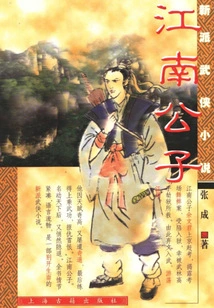
Young Master Jiangnan
General Fiction江南公子
Zhang Cheng
Yu Wenjun, a young master from the south of the Yangtze River, went to Beijing to take the exam, exposed the fraud in the examination room, and was imprisoned. Fortunately, he was rescued by a martial arts master. From then on, he entered the martial arts and entered the world. Because of his extremely high talent and repeated encounters with adventures, he developed superb martial arts and was able to seek revenge. Finally, he challenged himself at Taoyuan Villa and became famous in one fell swoop. However, he was indifferent to fame and fortune and retired to famous mountains and rivers. The book is full of twists and turns, interpreting a series of breathtaking battles between emotions and hatred, character and destiny, and showing the world of martial arts and society. There is not only benevolence and love, but also conspiracy and greed; there is not only the conflict between justice and ambition, but also the entanglement of emotion and luck. The author "sharpens his sword for ten years" and dedicates himself to readers to enjoy the masterpieces of martial arts novels.
Yu Wenjun, a young master from the south of the Yangtze River, went to Beijing to take the exam, exposed the fraud in the examination room, and was imprisoned. Fortunately, he was rescued by a martial arts master. From then on, he entered the martial arts and entered the world. Because of his extremely high talent and repeated encounters with adventures, he developed superb martial arts and was able to seek revenge. Finally, he challenged himself at Taoyuan Villa and became famous in one fell swoop. However, he was indifferent to fame and fortune and retired to famous mountains and rivers. The book is full of twists and turns, interpreting a series of breathtaking battles between emotions and hatred, character and destiny, and showing the world of martial arts and society. There is not only benevolence and love, but also conspiracy and greed; there is not only the conflict between justice and ambition, but also the entanglement of emotion and luck. The author "sharpens his sword for ten years" and dedicates himself to readers to enjoy the masterpieces of martial arts novels.
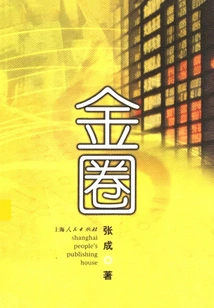
Golden Circle
General Fiction金圈
Zhang Cheng
The novel focuses on the early ecology of China's capital market. It uses Zhao Jianchang, the CEO of Chaofeng Company, as the main line to develop a narrative on his journey to pursue his capital dream. The book depicts diverse and vivid images of capital market participants. It carefully restores professional scenes such as the early corporate listing process, equity acquisition operations, and stock market makers' trading, and incorporates professional terms such as K-line analysis, price-earning ratio calculations, and reverse trading, allowing readers to intuitively experience the complex logic of capital operations. It also uses the "golden circle" as a metaphor to expose problems such as power rent-seeking, information asymmetry, and illegal operations in the capital market, and explores the conflict between "industrial spirit" and "capital pursuit of profit," and the confrontation between "rule construction" and "human greed."
The novel focuses on the early ecology of China's capital market. It uses Zhao Jianchang, the CEO of Chaofeng Company, as the main line to develop a narrative on his journey to pursue his capital dream. The book depicts diverse and vivid images of capital market participants. It carefully restores professional scenes such as the early corporate listing process, equity acquisition operations, and stock market makers' trading, and incorporates professional terms such as K-line analysis, price-earning ratio calculations, and reverse trading, allowing readers to intuitively experience the complex logic of capital operations. It also uses the "golden circle" as a metaphor to expose problems such as power rent-seeking, information asymmetry, and illegal operations in the capital market, and explores the conflict between "industrial spirit" and "capital pursuit of profit," and the confrontation between "rule construction" and "human greed."
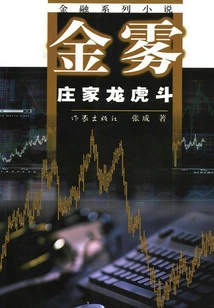
Golden Mist: Banker's Dragon and Tiger Fight
General Fiction金雾:庄家龙虎斗
Zhang Cheng
The novel intercepts some typical events in securities speculation, and through a series of thrilling plots such as making a banker, withdrawing a banker, chasing bankers, and joining a banker, it vividly reproduces the unpredictable changes and turbulence of the stock market, revealing the little-known ghostly tricks of bankers in the story, and the endless illegal activities of bankers and listed companies working together to manipulate the stock market. The novel successfully created the images of the protagonist Shen Qiang, securities department boss Huang Liheng, institutional banker Chairman Jin, trader Su Min and many other stock market trendsetters. The characters have distinct and vivid personalities, the story plot has twists and turns, the language is plain and fluent, and the highly professional banker's operating methods are described in detail, which is very visual and contagious. It is a rare novel for both readers who are familiar with the stock market and those who are not familiar with it.
The novel intercepts some typical events in securities speculation, and through a series of thrilling plots such as making a banker, withdrawing a banker, chasing bankers, and joining a banker, it vividly reproduces the unpredictable changes and turbulence of the stock market, revealing the little-known ghostly tricks of bankers in the story, and the endless illegal activities of bankers and listed companies working together to manipulate the stock market. The novel successfully created the images of the protagonist Shen Qiang, securities department boss Huang Liheng, institutional banker Chairman Jin, trader Su Min and many other stock market trendsetters. The characters have distinct and vivid personalities, the story plot has twists and turns, the language is plain and fluent, and the highly professional banker's operating methods are described in detail, which is very visual and contagious. It is a rare novel for both readers who are familiar with the stock market and those who are not familiar with it.
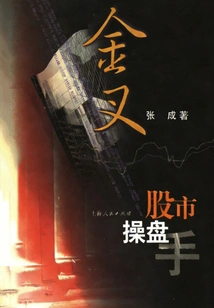
Golden Cross: Stock Market Trader
General Fiction金叉:股市操盘手
Zhang Cheng
This book contains clues about the illegal manipulation of 0.86 Stocks by the Jin Group in contacting several securities companies. It reflects the thrilling scenes and shocking contents of the fierce battle between bulls and bears in the stock market. It outlines the different experiences and attitudes of decision-makers and stock investors in the stock market, reveals the connection between their fate and the stock market turmoil, and also reveals to a certain extent the problems existing in the initial stage of my country's stock market. This is a financial novel that caters to the public's psychology and is highly readable.
This book contains clues about the illegal manipulation of 0.86 Stocks by the Jin Group in contacting several securities companies. It reflects the thrilling scenes and shocking contents of the fierce battle between bulls and bears in the stock market. It outlines the different experiences and attitudes of decision-makers and stock investors in the stock market, reveals the connection between their fate and the stock market turmoil, and also reveals to a certain extent the problems existing in the initial stage of my country's stock market. This is a financial novel that caters to the public's psychology and is highly readable.
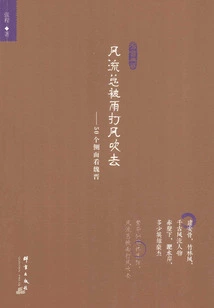
风流总被雨打风吹去:50个侧面看魏晋
Zhang Cheng
This book examines the history of the Wei and Jin Dynasties from 50 angles, uses 50 special articles to explain historical knowledge in depth, restores the true face of history, and integrates the latest results of current historical research on this period of history, archaeology, anthropology, and sociology. It is a popular history book with a huge amount of information in the form of narrative and discussion.
This book examines the history of the Wei and Jin Dynasties from 50 angles, uses 50 special articles to explain historical knowledge in depth, restores the true face of history, and integrates the latest results of current historical research on this period of history, archaeology, anthropology, and sociology. It is a popular history book with a huge amount of information in the form of narrative and discussion.
Antique Romance
General Fiction古董韵事
Zhang Cheng
When the days came to 1999, old man Li Xinwei felt a particularly strong sense of urgency, because newspapers, TV and radio were all promoting and discussing an important topic - the cross-century. We have heard and seen that people all over the world are busy crossing the century, and the people in Shuanghekou are no exception. They are also busy crossing the century. Of course, old man Xin Wei doesn't know how to cross the river in this century. He has been driving an old ferry on the narrow channel of the Shuanghekou for many years to transport passing pedestrians. This old ferry is old, the sun is old, the rustling autumn wind is also old, only people are new, and some people are getting newer. Old man Xin Wei thinks that others are new, but he is still old, unbearably old. He is taciturn and no one knows what he is thinking. There is no transparency. No wonder people in Shuanghekou call him "Wei Gu".
When the days came to 1999, old man Li Xinwei felt a particularly strong sense of urgency, because newspapers, TV and radio were all promoting and discussing an important topic - the cross-century. We have heard and seen that people all over the world are busy crossing the century, and the people in Shuanghekou are no exception. They are also busy crossing the century. Of course, old man Xin Wei doesn't know how to cross the river in this century. He has been driving an old ferry on the narrow channel of the Shuanghekou for many years to transport passing pedestrians. This old ferry is old, the sun is old, the rustling autumn wind is also old, only people are new, and some people are getting newer. Old man Xin Wei thinks that others are new, but he is still old, unbearably old. He is taciturn and no one knows what he is thinking. There is no transparency. No wonder people in Shuanghekou call him "Wei Gu".
My First Group Leader
General Fiction我的第一个团小组长
Zhang Cheng
When I was young, everyone seemed to have someone they particularly admired. The person I admire the most was my first group leader. It can be regarded as fate. My group leader and I happened to be born in the same year and month, and we participated in the revolution at the same time and place. It was a fiery and boiling era. From north to south, from the vast northwest plateau to the surging Yellow River and Yangtze River, the whole of China is burning with fire-like passion. The mighty People's Liberation Army has successfully crossed the river, and most of China has been liberated. The Chinese people are in high spirits and preparing to welcome the glorious birth of New China. It was under such a situation that my first regiment leader and I came to work at the grain station directly under the jurisdiction of the East China Branch Headquarters in City B. City B is located in the middle reaches of the Huaihe River. It is the chokepoint of the Jinpu Railway and a transportation hub on the Huaihe River.
When I was young, everyone seemed to have someone they particularly admired. The person I admire the most was my first group leader. It can be regarded as fate. My group leader and I happened to be born in the same year and month, and we participated in the revolution at the same time and place. It was a fiery and boiling era. From north to south, from the vast northwest plateau to the surging Yellow River and Yangtze River, the whole of China is burning with fire-like passion. The mighty People's Liberation Army has successfully crossed the river, and most of China has been liberated. The Chinese people are in high spirits and preparing to welcome the glorious birth of New China. It was under such a situation that my first regiment leader and I came to work at the grain station directly under the jurisdiction of the East China Branch Headquarters in City B. City B is located in the middle reaches of the Huaihe River. It is the chokepoint of the Jinpu Railway and a transportation hub on the Huaihe River.
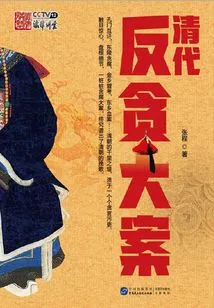
清代反贪大案
Zhang Cheng
"Anti-Corruption Cases in the Qing Dynasty" is a masterpiece that is both academic and interesting. The author vividly describes the major corruption cases that occurred in the Qing Dynasty: the Confucian quarrel between Confucius and his disciples triggered the exploration of morality and the status of descendants of sages; the case of Chen Huizu triggered the debate between corrupt officials and thieves; the harassment of the inn involved picketing and corruption incidents; the adventurous examination in Jinxiang reflected the rise of social classes due to changes in social class. The great turmoil; the Ministry of War's loss of seals, falsification of donations, and theft of the treasury reflected the corruption of lower-level officials; the Huang Yulin case was the epitome of the game between salt merchants and the government in the Qing Dynasty; the Dongling corruption, the reckless and corrupt officials dared to extend their black hands to the emperor's tomb; the Dongxiang murder case, the shaping of this unjust case and the ordinary can be described as twists and turns. The various ills brought to society by corrupt behaviors such as embezzlement and misappropriation, bribery and bribery, bending the law for personal gain, selling one's position and title, conveying benefits, party affiliation and dissent, dereliction of duty, and perfunctory duties are also shown in this book, which can give future generations an opportunity to learn from history. The content of this book is clear. It is not only a popular book that everyone can read, but also an interesting book with educational significance. The publication of this book will bring good social value and social influence, and it is recommended to be published.
"Anti-Corruption Cases in the Qing Dynasty" is a masterpiece that is both academic and interesting. The author vividly describes the major corruption cases that occurred in the Qing Dynasty: the Confucian quarrel between Confucius and his disciples triggered the exploration of morality and the status of descendants of sages; the case of Chen Huizu triggered the debate between corrupt officials and thieves; the harassment of the inn involved picketing and corruption incidents; the adventurous examination in Jinxiang reflected the rise of social classes due to changes in social class. The great turmoil; the Ministry of War's loss of seals, falsification of donations, and theft of the treasury reflected the corruption of lower-level officials; the Huang Yulin case was the epitome of the game between salt merchants and the government in the Qing Dynasty; the Dongling corruption, the reckless and corrupt officials dared to extend their black hands to the emperor's tomb; the Dongxiang murder case, the shaping of this unjust case and the ordinary can be described as twists and turns. The various ills brought to society by corrupt behaviors such as embezzlement and misappropriation, bribery and bribery, bending the law for personal gain, selling one's position and title, conveying benefits, party affiliation and dissent, dereliction of duty, and perfunctory duties are also shown in this book, which can give future generations an opportunity to learn from history. The content of this book is clear. It is not only a popular book that everyone can read, but also an interesting book with educational significance. The publication of this book will bring good social value and social influence, and it is recommended to be published.
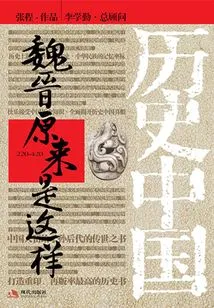
魏晋原来是这样
Zhang Cheng
"Historical China" is the most comprehensive chronological history of China in history. Each volume examines this period of history from 50 angles. It uses 50 special articles to explain historical knowledge in depth and restore the true face of history. It also integrates the results of current history, archaeology, anthropology, and sociology research. It tells the history from ancient times to before the founding of the People's Republic of China in the form of narratives and discussions. A detailed chronology of the time period is appended at the end of each volume. It is an encyclopedia-style popular history reading with a huge amount of information. "Historical China" is a masterpiece of Chinese history and "an encyclopedia of Chinese history that all Chinese can understand."
"Historical China" is the most comprehensive chronological history of China in history. Each volume examines this period of history from 50 angles. It uses 50 special articles to explain historical knowledge in depth and restore the true face of history. It also integrates the results of current history, archaeology, anthropology, and sociology research. It tells the history from ancient times to before the founding of the People's Republic of China in the form of narratives and discussions. A detailed chronology of the time period is appended at the end of each volume. It is an encyclopedia-style popular history reading with a huge amount of information. "Historical China" is a masterpiece of Chinese history and "an encyclopedia of Chinese history that all Chinese can understand."
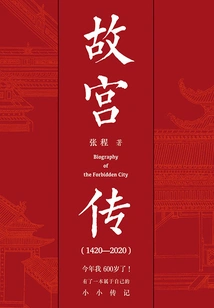
Legend of the Forbidden City
History故宫传
Zhang Cheng
The Forbidden City in Beijing is the royal palace of China's Ming and Qing dynasties, formerly known as the Forbidden City. This book is divided into fifteen chapters. It is a combination of narrative and discussion prose, supplemented by numerous real-life photos and pictures of cultural relics in the collection. It mainly tells the history of the Forbidden City in Beijing, its architectural layout, the functions of the main palaces, the manifestation of imperial power in the various buildings of the Forbidden City and the palace system, and its overall value. It specifically involves the emperor's governance, ministers assisting and participating in politics, the education of the prince, the diet and daily life of various people in the palace, the guards of the Forbidden City, and the treasures hidden in the palace. It is a systematic description of the culture of the Forbidden City. It is also a relatively detailed review of the historical value of the Forbidden City's architecture and palace management system.
The Forbidden City in Beijing is the royal palace of China's Ming and Qing dynasties, formerly known as the Forbidden City. This book is divided into fifteen chapters. It is a combination of narrative and discussion prose, supplemented by numerous real-life photos and pictures of cultural relics in the collection. It mainly tells the history of the Forbidden City in Beijing, its architectural layout, the functions of the main palaces, the manifestation of imperial power in the various buildings of the Forbidden City and the palace system, and its overall value. It specifically involves the emperor's governance, ministers assisting and participating in politics, the education of the prince, the diet and daily life of various people in the palace, the guards of the Forbidden City, and the treasures hidden in the palace. It is a systematic description of the culture of the Forbidden City. It is also a relatively detailed review of the historical value of the Forbidden City's architecture and palace management system.
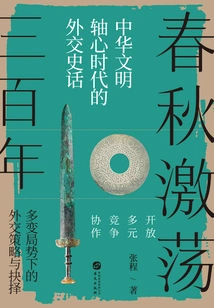
春秋激荡三百年
Zhang Cheng
During the Spring and Autumn Period, our ancestors had used idealism or realism to analyze the diplomacy at that time. Western diplomatic concepts or theories such as hegemony, power, superpowers, bipolarity, multipolarity, one superpower and multiple powers, multilateral diplomacy, and national interests can all find echoes in the Spring and Autumn Period. Comprehensively demonstrate the "openness, diversity, competition, and collaboration" of the Spring and Autumn Period, and interpret diplomatic strategies and choices in changing situations.
During the Spring and Autumn Period, our ancestors had used idealism or realism to analyze the diplomacy at that time. Western diplomatic concepts or theories such as hegemony, power, superpowers, bipolarity, multipolarity, one superpower and multiple powers, multilateral diplomacy, and national interests can all find echoes in the Spring and Autumn Period. Comprehensively demonstrate the "openness, diversity, competition, and collaboration" of the Spring and Autumn Period, and interpret diplomatic strategies and choices in changing situations.
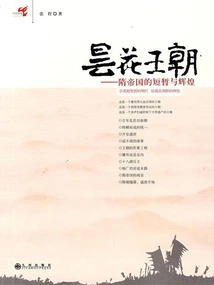
昙花王朝:隋帝国的短暂与辉煌
Zhang Cheng
The Sui Dynasty made a high-profile debut at noon in the Chinese Empire, but ended in a hurry, writing a period of brilliant glory in Chinese history that was as fragile and short-lived as an epiphyllum. This is a dynasty that was overwhelmed by its grand ambitions, a dynasty that continues to ferment controversy, and a dynasty that has been discredited but left a rich legacy. "Ephemeral Epiphyllum: The Transience and Glory of the Sui Empire" contains the struggles of Emperor Wen of Sui Dynasty Yang Jian, the joyful songs of all nations coming to court, the ambition of Emperor Yang Guang of Sui Dynasty, the ups and downs of Prime Minister Yang Su's family, the hesitation of Tang Gong Li Yuan and the appearance of Cheng Yaojin... This is a tragedy of an empire that took on too many historical responsibilities and collapsed.
The Sui Dynasty made a high-profile debut at noon in the Chinese Empire, but ended in a hurry, writing a period of brilliant glory in Chinese history that was as fragile and short-lived as an epiphyllum. This is a dynasty that was overwhelmed by its grand ambitions, a dynasty that continues to ferment controversy, and a dynasty that has been discredited but left a rich legacy. "Ephemeral Epiphyllum: The Transience and Glory of the Sui Empire" contains the struggles of Emperor Wen of Sui Dynasty Yang Jian, the joyful songs of all nations coming to court, the ambition of Emperor Yang Guang of Sui Dynasty, the ups and downs of Prime Minister Yang Su's family, the hesitation of Tang Gong Li Yuan and the appearance of Cheng Yaojin... This is a tragedy of an empire that took on too many historical responsibilities and collapsed.
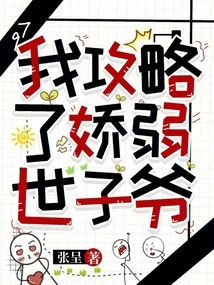
I Conquered the Delicate Prince
Ancient Romance我攻略了娇弱世子爷
Zhang Cheng
Before meeting Qin Lin. Xu Zhen has only one purpose: to live and learn until old age. The meaning of Xu Zhen's existence is: to survive. * After meeting Qin Lin. Xu Zhen's purpose is: to bully him severely. The meaning of existence becomes: find ways to make Qin Lin cry. * Fragment one Xu Zhen had a good reputation in Lincheng as a quiet little lady, but the day after she arrived in the capital, her good reputation of seventeen years was ruined. She openly grabbed Qin Xiaohou by his sleeve and said, "How much does it cost to sell you to me?" From then on, Xu Zhen became a violent overlord. Fragment 2 Xu Zhen asked people to kidnap Qin Lin to a small corner. "My name is Xu Zhen, Xu Zhen from the couple, Zhen from Mu Zhen." Xu Zhen grabbed Qin Lin's sleeve and introduced himself quietly. Qin Lin blinked twice, indicating that he had been kidnapped. "It's your turn." Qin Lin immediately said: "My name is Qin Lin." Xu Zhen nodded expressionlessly: "Yes, very good!" Then Qin Lin returned to the place where he was kidnapped. Qin Lin: Oh my God, who is this person? Is there something wrong with him? Fragment three Xu Zhen: Can I kiss you? Qin Lin: No... Qin Lin, whose mouth was blocked before he finished speaking, said it was difficult for him. After the kiss. Xu Zhen: Be good and I will come see you another day Qin Lin:...... Your behavior is very much like a free prostitute! ! ! ! * The cute female protagonist with facial paralysis VS the yandere big baby of the male protagonist 1V1 Lightning protection: the heroine travels through the book and the hero is reborn
Before meeting Qin Lin. Xu Zhen has only one purpose: to live and learn until old age. The meaning of Xu Zhen's existence is: to survive. * After meeting Qin Lin. Xu Zhen's purpose is: to bully him severely. The meaning of existence becomes: find ways to make Qin Lin cry. * Fragment one Xu Zhen had a good reputation in Lincheng as a quiet little lady, but the day after she arrived in the capital, her good reputation of seventeen years was ruined. She openly grabbed Qin Xiaohou by his sleeve and said, "How much does it cost to sell you to me?" From then on, Xu Zhen became a violent overlord. Fragment 2 Xu Zhen asked people to kidnap Qin Lin to a small corner. "My name is Xu Zhen, Xu Zhen from the couple, Zhen from Mu Zhen." Xu Zhen grabbed Qin Lin's sleeve and introduced himself quietly. Qin Lin blinked twice, indicating that he had been kidnapped. "It's your turn." Qin Lin immediately said: "My name is Qin Lin." Xu Zhen nodded expressionlessly: "Yes, very good!" Then Qin Lin returned to the place where he was kidnapped. Qin Lin: Oh my God, who is this person? Is there something wrong with him? Fragment three Xu Zhen: Can I kiss you? Qin Lin: No... Qin Lin, whose mouth was blocked before he finished speaking, said it was difficult for him. After the kiss. Xu Zhen: Be good and I will come see you another day Qin Lin:...... Your behavior is very much like a free prostitute! ! ! ! * The cute female protagonist with facial paralysis VS the yandere big baby of the male protagonist 1V1 Lightning protection: the heroine travels through the book and the hero is reborn
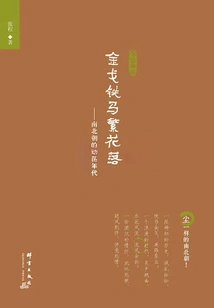
金戈铁马繁花落:南北朝的动荡年代
Zhang Cheng
The Northern and Southern Dynasties were a chaotic era of great destruction, but also a prosperous era of great integration; it was an iron-blooded era that had been divided for two hundred years, and it was also a glorious time when heroes appeared in large numbers. This book reproduces the history of China from the confrontation between the north and the south, the division between the east and the west, and finally the unification of China in the 5th and 6th centuries. The book contains the rise, decline and demise of the grassland nation Tuoba Xianbei, the metamorphosis of the emperors of the Southern Dynasties who were defeated by power for generations, the hard struggle and frustration of Gao Huan, a soldier at the border, the tenderness of the misty rain in the south of the Yangtze River and the death of his soul in the gentle countryside, and the struggle, confusion and transformation of a nation. This is a tragic song during a critical period of the formation of the Chinese nation, and it is worth revisiting and remembering by every Chinese.
The Northern and Southern Dynasties were a chaotic era of great destruction, but also a prosperous era of great integration; it was an iron-blooded era that had been divided for two hundred years, and it was also a glorious time when heroes appeared in large numbers. This book reproduces the history of China from the confrontation between the north and the south, the division between the east and the west, and finally the unification of China in the 5th and 6th centuries. The book contains the rise, decline and demise of the grassland nation Tuoba Xianbei, the metamorphosis of the emperors of the Southern Dynasties who were defeated by power for generations, the hard struggle and frustration of Gao Huan, a soldier at the border, the tenderness of the misty rain in the south of the Yangtze River and the death of his soul in the gentle countryside, and the struggle, confusion and transformation of a nation. This is a tragic song during a critical period of the formation of the Chinese nation, and it is worth revisiting and remembering by every Chinese.
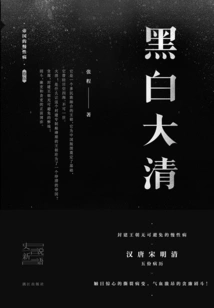
帝国的慢性病:黑白大清
Zhang Cheng
The "Chronic Diseases of the Empire" series consists of five volumes, namely "The Wanderings of the Han Dynasty", "The Melancholy of the Tang Dynasty", "Lice on the Beautiful Robes of the Song Dynasty", "The Ming Dynasty on Ice and Fire" and "The Qing Dynasty in Black and White". This series tells the stories of several major dynasties in Chinese history in popular language, revealing the inevitable institutional flaws of the feudal dynasties and drawing lessons from them. This book focuses on more than ten famous cases in the Qing Dynasty, revealing the ups and downs and inherent political shortcomings experienced by the last dynasty of Chinese feudal society in its more than 260 years of history. Among these cases, there are financial cases involving important officials, such as the Jiangzhou deficit case, the Weining Lead Factory case, the Fujian corruption den case, etc., And there are also unjust private cases that are inseparable from the dark political ecology, such as the Hezhou murder case, the Shuntian rural trial case, the Yang Naiwu Xiaobaicai case, etc. The book has a vivid writing style, strong logic, and provides detailed historical information. It is a work worth reading for history lovers.
The "Chronic Diseases of the Empire" series consists of five volumes, namely "The Wanderings of the Han Dynasty", "The Melancholy of the Tang Dynasty", "Lice on the Beautiful Robes of the Song Dynasty", "The Ming Dynasty on Ice and Fire" and "The Qing Dynasty in Black and White". This series tells the stories of several major dynasties in Chinese history in popular language, revealing the inevitable institutional flaws of the feudal dynasties and drawing lessons from them. This book focuses on more than ten famous cases in the Qing Dynasty, revealing the ups and downs and inherent political shortcomings experienced by the last dynasty of Chinese feudal society in its more than 260 years of history. Among these cases, there are financial cases involving important officials, such as the Jiangzhou deficit case, the Weining Lead Factory case, the Fujian corruption den case, etc., And there are also unjust private cases that are inseparable from the dark political ecology, such as the Hezhou murder case, the Shuntian rural trial case, the Yang Naiwu Xiaobaicai case, etc. The book has a vivid writing style, strong logic, and provides detailed historical information. It is a work worth reading for history lovers.
Rekindling Old Feelings
General Fiction旧情复燃
Zhang Cheng
Just after the Dragon Boat Festival, the temperature has risen sharply, indicating that the summer in Jiangnan is coming. Leng Yanbing felt particularly irritable, not only because of the high temperature, but also because someone called him to meet him last night. The caller was his first girlfriend, a beautiful woman named Liu Xiaomin. Ordinarily, he should be happy to have such an affair, but he couldn't be happy and was even afraid to see her. Because before the Chinese New Year last year, Leng Yanbing reported a case of selling counterfeit money. When the report was made, Yan Bing did not know the details of the suspect. He only knew that it was a boss named Tang. Later, the public security personnel went to the hotel and arrested Boss Tang. Du Jie, the accountant in Leng Yanbing's construction team, told Yan Bing angrily, "Tang Wenqian was arrested, did you really report it?"
Just after the Dragon Boat Festival, the temperature has risen sharply, indicating that the summer in Jiangnan is coming. Leng Yanbing felt particularly irritable, not only because of the high temperature, but also because someone called him to meet him last night. The caller was his first girlfriend, a beautiful woman named Liu Xiaomin. Ordinarily, he should be happy to have such an affair, but he couldn't be happy and was even afraid to see her. Because before the Chinese New Year last year, Leng Yanbing reported a case of selling counterfeit money. When the report was made, Yan Bing did not know the details of the suspect. He only knew that it was a boss named Tang. Later, the public security personnel went to the hotel and arrested Boss Tang. Du Jie, the accountant in Leng Yanbing's construction team, told Yan Bing angrily, "Tang Wenqian was arrested, did you really report it?"
Institutions and Favors
History制度与人情
Zhang Cheng
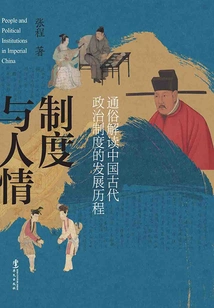
Where there are people, there is politics, and where there are people, there are systems. The political system is an inevitable product of the development of human society. Institutional history is the container of historiography, and understanding the history of Chinese political institutions is the basic skill for learning ancient history. Ancient China's political system has a long history and far-reaching influence. Institutions were an important force in shaping ancient Chinese society, and their influence affects us in the 21st century. This book revolves around the political system of ancient China, including the emperor and imperial power, the palace and the court, the central and local governments, and specifically involves the money and grain taxation system, the military system, the talent selection system, etc. "Think about politics in the pile of old papers, and look at the world outside the history of institutions." This is a popular interpretation of the development process of ancient Chinese political systems.
Where there are people, there is politics, and where there are people, there are systems. The political system is an inevitable product of the development of human society. Institutional history is the container of historiography, and understanding the history of Chinese political institutions is the basic skill for learning ancient history. Ancient China's political system has a long history and far-reaching influence. Institutions were an important force in shaping ancient Chinese society, and their influence affects us in the 21st century. This book revolves around the political system of ancient China, including the emperor and imperial power, the palace and the court, the central and local governments, and specifically involves the money and grain taxation system, the military system, the talent selection system, etc. "Think about politics in the pile of old papers, and look at the world outside the history of institutions." This is a popular interpretation of the development process of ancient Chinese political systems.
大谋略:三国外交智慧书
Zhang Cheng
乱世四百年(魏晋+南北朝+隋朝 全3册)
Zhang Cheng
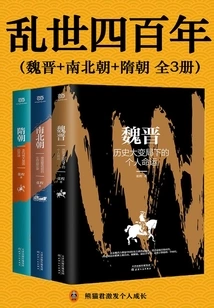
Four hundred years of chaos! Only by understanding China in troubled times can we understand the logic of China's historical evolution! From the Wei, Jin, Southern and Northern Dynasties to the end of the Sui Dynasty, China fell into the second great division in history, with a sharp decline in population and destabilization of the Central Plains. Wake up at dawn! Competition in the Central Plains, cultural collisions, national integration, imperial examinations, three provinces and six tribes... The rapid shocks of the troubled times laid the political foundation for the prosperous Tang Dynasty. Yan Jiulin, Li Haobai, Lu Zheng, and Nanmen Prefect sincerely recommend! Reader comments: "For people who are not interested in history or can't remember allusions, this book is simply a treasure." "Trilogy of Troubled Times" includes: "Wei and Jin: Personal Destiny under Great Historical Changes", "Southern and Northern Dynasties: Apocalypse of Survival before the Dawn of the Empire", "Sui Dynasty: The Beginning of a Great Empire", read Wei, Jin, Southern and Northern Dynasties, and Sui Dynasty together! Read 400 years of troubled history in one go.
Four hundred years of chaos! Only by understanding China in troubled times can we understand the logic of China's historical evolution! From the Wei, Jin, Southern and Northern Dynasties to the end of the Sui Dynasty, China fell into the second great division in history, with a sharp decline in population and destabilization of the Central Plains. Wake up at dawn! Competition in the Central Plains, cultural collisions, national integration, imperial examinations, three provinces and six tribes... The rapid shocks of the troubled times laid the political foundation for the prosperous Tang Dynasty. Yan Jiulin, Li Haobai, Lu Zheng, and Nanmen Prefect sincerely recommend! Reader comments: "For people who are not interested in history or can't remember allusions, this book is simply a treasure." "Trilogy of Troubled Times" includes: "Wei and Jin: Personal Destiny under Great Historical Changes", "Southern and Northern Dynasties: Apocalypse of Survival before the Dawn of the Empire", "Sui Dynasty: The Beginning of a Great Empire", read Wei, Jin, Southern and Northern Dynasties, and Sui Dynasty together! Read 400 years of troubled history in one go.
曲江宴:唐人的社交与人生选择
Zhang Cheng
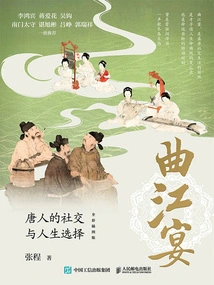
By the Qujiang Pool, poetic gatherings were held one after another, recreating the spring outing scenes of celebrities such as Han Yu, Zhang Ji, and Bai Juyi in the Tang Dynasty. Poems that have been passed down through the ages bring people into a world full of poetry. What were the key social circles and turning points in Li Bai's life? How should he choose between pursuing an official career or pursuing a scholarly career? Du Fu's life was full of ups and downs. Who was in his circle of friends? How does he socialize upward through the different stages of youth, middle age, and old age? How did literary giants Liu Yuxi and Bai Juyi develop into a deep friendship that spans time and space from their first encounter in Yangzhou? When encountering low points in life, how do poets maintain a sense of relaxation and enterprising spirit, and never give up in the face of difficulties? Being born into an imperial family and being a relative of the emperor, are you destined to live a life of peace of mind? People in the Tang Dynasty are actually free to divorce? Is his view on marriage more avant-garde than imagined? Will Tangren delay retirement? Are they worried about personal pension issues? The book not only shows the achievements of celebrities in the Tang Dynasty, but also touches the depth of their emotions, making historical figures vivid and three-dimensional.
By the Qujiang Pool, poetic gatherings were held one after another, recreating the spring outing scenes of celebrities such as Han Yu, Zhang Ji, and Bai Juyi in the Tang Dynasty. Poems that have been passed down through the ages bring people into a world full of poetry. What were the key social circles and turning points in Li Bai's life? How should he choose between pursuing an official career or pursuing a scholarly career? Du Fu's life was full of ups and downs. Who was in his circle of friends? How does he socialize upward through the different stages of youth, middle age, and old age? How did literary giants Liu Yuxi and Bai Juyi develop into a deep friendship that spans time and space from their first encounter in Yangzhou? When encountering low points in life, how do poets maintain a sense of relaxation and enterprising spirit, and never give up in the face of difficulties? Being born into an imperial family and being a relative of the emperor, are you destined to live a life of peace of mind? People in the Tang Dynasty are actually free to divorce? Is his view on marriage more avant-garde than imagined? Will Tangren delay retirement? Are they worried about personal pension issues? The book not only shows the achievements of celebrities in the Tang Dynasty, but also touches the depth of their emotions, making historical figures vivid and three-dimensional.
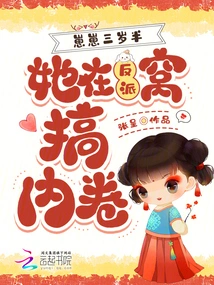
崽崽三岁半,她在反派窝搞内卷
Zhang Cheng
[Through the book + relaxed and funny + villain + micro-strategy + group portrait + HE] Meng Huo originally wanted to destroy the apocalypse, but he accidentally crossed into a novel and became the villain's son. Meng Huo, who had planned to overthrow the dynasty since he was born, found that there was no way to achieve his goal of destruction in the village. So he went to Beijing to find his biological father, the villain, and used the villain's power to destroy the world. As a result, the development of the plot was corrected by a strange combination of circumstances. Meng Huo never expected that in the process of pursuing the villain, she would actually change the direction of the plot. She led everyone on the path where villains do not look like villains and righteous people do not look like righteous people. Meng Huo relied on his own power to carry out the viciousness to the end, and then made all the villains take a warning and prepared a good teaching material to guide the positive characters. Meng Huo's biological mother (bandit leader): Lin Zhen planned to train the child to be the next leader of the village when he was born. She was originally worried that the child would be indecisive and unsuitable to be the leader of the village. Later, she discovered that the child had more clever ideas than a honeycomb. Lin Zhen was afraid that the child would become a danger to the place. Lin Zhen could only lead the village to abandon the dark side and turn to the bright side in order to rectify Meng Huo. Meng Huo's biological father (the villain): This kid is a bit evil, and he must lead by example, so he must teach through words and deeds, so the villain gradually changed his ways. Uncle Meng Huo (the traitorous minister): There is something wrong with this child. He needs to be enlightened and taught. The only child of this generation of the Meng family cannot be destroyed in their hands. The Last Meng Huo: You mean, by the end of the co-writing, I was the only villain left.
[Through the book + relaxed and funny + villain + micro-strategy + group portrait + HE] Meng Huo originally wanted to destroy the apocalypse, but he accidentally crossed into a novel and became the villain's son. Meng Huo, who had planned to overthrow the dynasty since he was born, found that there was no way to achieve his goal of destruction in the village. So he went to Beijing to find his biological father, the villain, and used the villain's power to destroy the world. As a result, the development of the plot was corrected by a strange combination of circumstances. Meng Huo never expected that in the process of pursuing the villain, she would actually change the direction of the plot. She led everyone on the path where villains do not look like villains and righteous people do not look like righteous people. Meng Huo relied on his own power to carry out the viciousness to the end, and then made all the villains take a warning and prepared a good teaching material to guide the positive characters. Meng Huo's biological mother (bandit leader): Lin Zhen planned to train the child to be the next leader of the village when he was born. She was originally worried that the child would be indecisive and unsuitable to be the leader of the village. Later, she discovered that the child had more clever ideas than a honeycomb. Lin Zhen was afraid that the child would become a danger to the place. Lin Zhen could only lead the village to abandon the dark side and turn to the bright side in order to rectify Meng Huo. Meng Huo's biological father (the villain): This kid is a bit evil, and he must lead by example, so he must teach through words and deeds, so the villain gradually changed his ways. Uncle Meng Huo (the traitorous minister): There is something wrong with this child. He needs to be enlightened and taught. The only child of this generation of the Meng family cannot be destroyed in their hands. The Last Meng Huo: You mean, by the end of the co-writing, I was the only villain left.
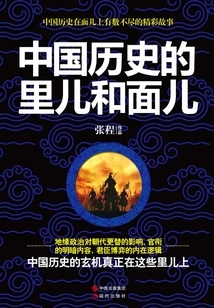
中国历史的里儿和面儿
Zhang Cheng
There are countless wonderful stories in Chinese history, which provide great inspiration to people today. The entrepreneurial wisdom narrated by Xiong Zhuangshan, the rules of survival in the workplace reflected in the way of being a minister, the nobility of human nature reflected in the face of morality and interests... The wisdom that people can learn from history is endless. If you are familiar with the above content, you can be called a history "enthusiast", but if you want to achieve the gorgeous upgrade of a "quasi-expert", you must also understand the "understanding" of Chinese history. For example, what kind of strategic significance does the southwest region often have in the confrontation between the north and the south of China? Why are China's "official positions" and "power" often unequal? Why has the controversial imperial examination system become the main means of selecting officials in China for more than a thousand years, and what positive role does it play in the achievements of Chinese civilization? These are contents that are not easy to see or understand from other books, but they have always played a decisive role in the regular trend of Chinese history.
There are countless wonderful stories in Chinese history, which provide great inspiration to people today. The entrepreneurial wisdom narrated by Xiong Zhuangshan, the rules of survival in the workplace reflected in the way of being a minister, the nobility of human nature reflected in the face of morality and interests... The wisdom that people can learn from history is endless. If you are familiar with the above content, you can be called a history "enthusiast", but if you want to achieve the gorgeous upgrade of a "quasi-expert", you must also understand the "understanding" of Chinese history. For example, what kind of strategic significance does the southwest region often have in the confrontation between the north and the south of China? Why are China's "official positions" and "power" often unequal? Why has the controversial imperial examination system become the main means of selecting officials in China for more than a thousand years, and what positive role does it play in the achievements of Chinese civilization? These are contents that are not easy to see or understand from other books, but they have always played a decisive role in the regular trend of Chinese history.
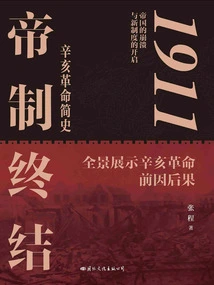
1911: End of the Empire
History1911:帝制终结
Zhang Cheng
This book takes the Revolution of 1911 as the core event and tells the history and social changes of China from 1908 to 1912; it begins with Emperor Xuantong's accession to the throne and ends with the Nanjing Provisional Government's move north. Before the Revolution of 1911, there were reformists in China. Reformists should also have a progressive side. The Wucheng Reform was oppressed at that time. Why? It is hated by die-hards just because it is progressive. Sun Yat-sen went a step further than the reformists. He openly called for a bourgeois democratic revolution, overthrew the rule of the Qing Dynasty, ended China's two thousand years of feudal monarchy, established the Republic of China and the Provisional Revolutionary Government, and formulated a "Provisional Constitution." After the Revolution of 1911, whoever wanted to be emperor again would not be able to do so.
This book takes the Revolution of 1911 as the core event and tells the history and social changes of China from 1908 to 1912; it begins with Emperor Xuantong's accession to the throne and ends with the Nanjing Provisional Government's move north. Before the Revolution of 1911, there were reformists in China. Reformists should also have a progressive side. The Wucheng Reform was oppressed at that time. Why? It is hated by die-hards just because it is progressive. Sun Yat-sen went a step further than the reformists. He openly called for a bourgeois democratic revolution, overthrew the rule of the Qing Dynasty, ended China's two thousand years of feudal monarchy, established the Republic of China and the Provisional Revolutionary Government, and formulated a "Provisional Constitution." After the Revolution of 1911, whoever wanted to be emperor again would not be able to do so.
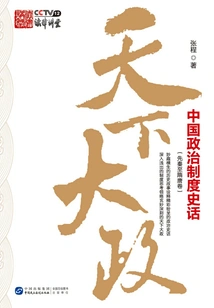
天下大政:中国政治制度史话(先秦至隋唐卷)
Zhang Cheng
There were many great political systems created in ancient China, and this book uses popular language and concise explanations to show readers the political systems of ancient China. The content of the pre-Qin period focuses on the elaboration of political concepts and institutional concepts, while the content after the Qin and Han dynasties focuses on the description and analysis of specific political systems. We are not the parties involved, and it is always easy to point out the gains and losses of the time with the superiority or arrogance of latecomers. If you gossip on the outside, nothing is difficult in the world; if you talk after the fact, no one is perfect in ancient or modern times. The author tries his best to put himself in the situation and analyze the system to grasp the spirit of courage and innovation and development of the ancients contained in the system, which is of great practical significance and historical value.
There were many great political systems created in ancient China, and this book uses popular language and concise explanations to show readers the political systems of ancient China. The content of the pre-Qin period focuses on the elaboration of political concepts and institutional concepts, while the content after the Qin and Han dynasties focuses on the description and analysis of specific political systems. We are not the parties involved, and it is always easy to point out the gains and losses of the time with the superiority or arrogance of latecomers. If you gossip on the outside, nothing is difficult in the world; if you talk after the fact, no one is perfect in ancient or modern times. The author tries his best to put himself in the situation and analyze the system to grasp the spirit of courage and innovation and development of the ancients contained in the system, which is of great practical significance and historical value.
外交力:三国的深层逻辑
Zhang Cheng
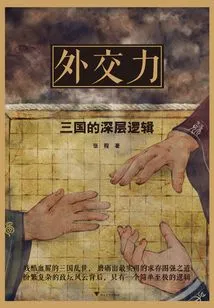
In the troubled times of the Three Kingdoms, where the heroes are divided, how can the strong become bigger and bigger, and finally achieve unified hegemony with an overwhelming advantage? How can the weak avoid war and avoid the strong, and grow up in the cracks without being eliminated? What does the strength of the heroes of the Three Kingdoms depend on? This book takes a unique approach, using modern diplomatic theory to interpret the history of the Three Kingdoms, and attempts to reconstruct the magnificent history of the Three Kingdoms from the perspective of diplomatic strategy. In the author's opinion, the entire history of the Three Kingdoms is a history of evolution in an offensive and defensive battle of off-site strategies. Both Cao Cao and Liu Bei were at a disadvantage in the initial stage, but they eventually managed to divide the world into three parts with their excellent diplomatic strategies. The changes in the territory of the Three Kingdoms mainly rely on not force or battlefield strategy, but a grand diplomatic strategy with a more ambitious pattern.
In the troubled times of the Three Kingdoms, where the heroes are divided, how can the strong become bigger and bigger, and finally achieve unified hegemony with an overwhelming advantage? How can the weak avoid war and avoid the strong, and grow up in the cracks without being eliminated? What does the strength of the heroes of the Three Kingdoms depend on? This book takes a unique approach, using modern diplomatic theory to interpret the history of the Three Kingdoms, and attempts to reconstruct the magnificent history of the Three Kingdoms from the perspective of diplomatic strategy. In the author's opinion, the entire history of the Three Kingdoms is a history of evolution in an offensive and defensive battle of off-site strategies. Both Cao Cao and Liu Bei were at a disadvantage in the initial stage, but they eventually managed to divide the world into three parts with their excellent diplomatic strategies. The changes in the territory of the Three Kingdoms mainly rely on not force or battlefield strategy, but a grand diplomatic strategy with a more ambitious pattern.
中国历史的经验与教训
Zhang Cheng
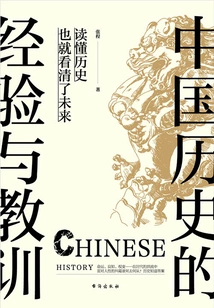
Chinese history is rich in connotation, extensive and profound, and contains profound wisdom. However, historical phenomena are complicated and difficult for ordinary readers to grasp the whole picture. This book selects a number of classic historical cases, including both horizontal event interpretation and vertical institutional analysis. The horizontal and vertical combinations are like a dense and well-organized network, gradually presenting the essence of ancient Chinese history. With the author's broad vision and keen observation, we can gain insight into the historical truth, learn from history, and illuminate the present.
Chinese history is rich in connotation, extensive and profound, and contains profound wisdom. However, historical phenomena are complicated and difficult for ordinary readers to grasp the whole picture. This book selects a number of classic historical cases, including both horizontal event interpretation and vertical institutional analysis. The horizontal and vertical combinations are like a dense and well-organized network, gradually presenting the essence of ancient Chinese history. With the author's broad vision and keen observation, we can gain insight into the historical truth, learn from history, and illuminate the present.
南北朝原来是这样
Zhang Cheng
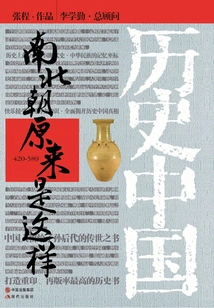
The rise of heroes, social turmoil, the emergence of talented people, constant weirdos, national fusion, and cultural collision... The Southern and Northern Dynasties were a chaotic era of great destruction, but also a prosperous era of great integration; it was an iron-blooded era that had been divided for two hundred years, and it was also a glorious time when heroes appeared in large numbers. This book reproduces the history of China from the confrontation between the north and the south, the division between the east and the west, and finally the unification of China in the 5th and 6th centuries. The book contains the rise, decline and demise of the grassland nation Tuoba Xianbei, the metamorphosis of the emperors of the Southern Dynasties who were defeated by power for generations, the hard struggle and frustration of Gao Huan, a soldier at the border, the tenderness of the misty rain in the south of the Yangtze River and the death of his soul in the gentle countryside, and the struggle, confusion and transformation of a nation. This is a tragic song during a critical period of the formation of the Chinese nation, and it is worth revisiting and remembering by every Chinese.
The rise of heroes, social turmoil, the emergence of talented people, constant weirdos, national fusion, and cultural collision... The Southern and Northern Dynasties were a chaotic era of great destruction, but also a prosperous era of great integration; it was an iron-blooded era that had been divided for two hundred years, and it was also a glorious time when heroes appeared in large numbers. This book reproduces the history of China from the confrontation between the north and the south, the division between the east and the west, and finally the unification of China in the 5th and 6th centuries. The book contains the rise, decline and demise of the grassland nation Tuoba Xianbei, the metamorphosis of the emperors of the Southern Dynasties who were defeated by power for generations, the hard struggle and frustration of Gao Huan, a soldier at the border, the tenderness of the misty rain in the south of the Yangtze River and the death of his soul in the gentle countryside, and the struggle, confusion and transformation of a nation. This is a tragic song during a critical period of the formation of the Chinese nation, and it is worth revisiting and remembering by every Chinese.