Library
Browse and search books
3 novels found
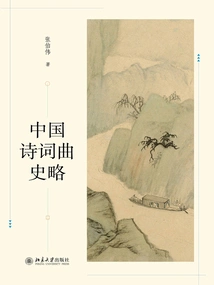
中国诗词曲史略
Zhang Bowei
This book is composed of upper and lower parts. The first part is a brief history of poetry, starting from the formation of the original concept of poetry, the Book of Songs and the Songs of Chu, and discusses ethnic minority poets and foreign Chinese poetry; the second part is a brief history of ci and music, which examines the transition from poetry to ci, and from ci to music, and compares the similarities and differences in form, content and style of poetry, ci and music, and outlines the development of the history of ci and music.
This book is composed of upper and lower parts. The first part is a brief history of poetry, starting from the formation of the original concept of poetry, the Book of Songs and the Songs of Chu, and discusses ethnic minority poets and foreign Chinese poetry; the second part is a brief history of ci and music, which examines the transition from poetry to ci, and from ci to music, and compares the similarities and differences in form, content and style of poetry, ci and music, and outlines the development of the history of ci and music.
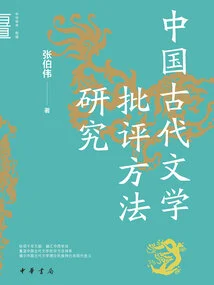
中国古代文学批评方法研究
Zhang Bowei
If we take Mencius's "poetry" method as the starting point, then Chinese literary criticism has a history of about 2,300 years. So, before Western academics entered China, how did the Chinese conduct literary criticism? This book traces back more than 2,000 years of history, combs through numerous documents, and summarizes three methods that best embody the spirit of traditional literary criticism, namely the "meaning against will" method influenced by Confucianism, the "inference of origin and flow" method influenced by academic tradition, and the "image criticism" method influenced by Zhuang Zen thought. It also explores the formation and development of six critical forms, including text selections, excerpts, poetic styles, poems on poetry, poetry talks, and comments, which are both practical and practical. Through the overall grasp and research of ancient Chinese literary criticism methods, its hidden system is resurfaced, and the continuously improved and enriched history of this system is presented. In the process of reappearance and presentation, the national characteristics and modern significance of ancient Chinese literary theory are revealed.
If we take Mencius's "poetry" method as the starting point, then Chinese literary criticism has a history of about 2,300 years. So, before Western academics entered China, how did the Chinese conduct literary criticism? This book traces back more than 2,000 years of history, combs through numerous documents, and summarizes three methods that best embody the spirit of traditional literary criticism, namely the "meaning against will" method influenced by Confucianism, the "inference of origin and flow" method influenced by academic tradition, and the "image criticism" method influenced by Zhuang Zen thought. It also explores the formation and development of six critical forms, including text selections, excerpts, poetic styles, poems on poetry, poetry talks, and comments, which are both practical and practical. Through the overall grasp and research of ancient Chinese literary criticism methods, its hidden system is resurfaced, and the continuously improved and enriched history of this system is presented. In the process of reappearance and presentation, the national characteristics and modern significance of ancient Chinese literary theory are revealed.
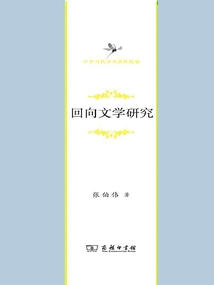
回向文学研究(中华当代学术著作辑要)
Zhang Bowei
"Back to Literary Research" is an academic work that explores literary research itself. This book summarizes the gains and losses of literary research in the modern academic context over the past hundred years, points out shortcomings, and explores new paths. The author points out that under the cultural background of globalization, Chinese academics need to deal with three points: returning to literature-based research; literary research needs to establish "techniques"; and civilization and cultural circles should be the basic units of research. This book is divided into four series, namely "Biezai Pseudo-Style and Fengya: A Tribute to the Forefathers", "How Much Do Poets Know about Guan Nao: Criticizing the Tradition", "The Six Classics Enable Me to Reveal a New View: A New Theory of Classics", and "Surely Dongguo Interpretation Poems: Inside and Outside the Yu Territory". Each series contains four or five articles on related topics. The first volume analyzes the history of modern Chinese academics since the 20th century, and points out from a high position that the shortcomings of contemporary academics are the lack of literature-based research, and mostly impressionistic and empirical criticism. Inheriting the research methods of "using poetry to prove history" and "using poetry to discuss poetry" pioneered by senior scholars such as Chen Yinke and Cheng Qianfan, we call for literary research to return to its roots and create new ones, establishing "laws" that belong to Chinese literature itself, rather than relying on the Western academic discourse framework. The second volume discusses the modern value of traditional Chinese literary criticism, proving that it is instructive for current literary research to return to literary standards. The third volume is a study of the works of Tao Yuanming and other writers, aiming to implement the operational possibility of "returning to literary research" and provide an example for the study of literary ontology. The fourth volume breaks through the limitations of domestic academic circles and examines literary research from the perspective of Chinese cultural circles such as China, Japan, and Korea.
"Back to Literary Research" is an academic work that explores literary research itself. This book summarizes the gains and losses of literary research in the modern academic context over the past hundred years, points out shortcomings, and explores new paths. The author points out that under the cultural background of globalization, Chinese academics need to deal with three points: returning to literature-based research; literary research needs to establish "techniques"; and civilization and cultural circles should be the basic units of research. This book is divided into four series, namely "Biezai Pseudo-Style and Fengya: A Tribute to the Forefathers", "How Much Do Poets Know about Guan Nao: Criticizing the Tradition", "The Six Classics Enable Me to Reveal a New View: A New Theory of Classics", and "Surely Dongguo Interpretation Poems: Inside and Outside the Yu Territory". Each series contains four or five articles on related topics. The first volume analyzes the history of modern Chinese academics since the 20th century, and points out from a high position that the shortcomings of contemporary academics are the lack of literature-based research, and mostly impressionistic and empirical criticism. Inheriting the research methods of "using poetry to prove history" and "using poetry to discuss poetry" pioneered by senior scholars such as Chen Yinke and Cheng Qianfan, we call for literary research to return to its roots and create new ones, establishing "laws" that belong to Chinese literature itself, rather than relying on the Western academic discourse framework. The second volume discusses the modern value of traditional Chinese literary criticism, proving that it is instructive for current literary research to return to literary standards. The third volume is a study of the works of Tao Yuanming and other writers, aiming to implement the operational possibility of "returning to literary research" and provide an example for the study of literary ontology. The fourth volume breaks through the limitations of domestic academic circles and examines literary research from the perspective of Chinese cultural circles such as China, Japan, and Korea.