Library
Browse and search books
1 novel found
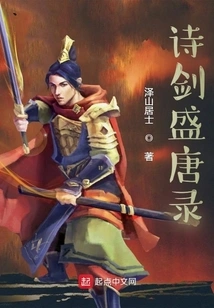
诗剑盛唐录
Zeshan Layman
After several bloody palace coups, Li Longji rose to become a great leader. He appointed Yao Chong, Song Jing, Zhang Shuo, Zhang Jiuling, Xiao Song, Wang Jun, Wang Zhongsi and other sage generals to work hard and work hard to achieve the great cause of the prosperous age and create the rule of Kaiyuan. In the early years of Tianbao, Li Longji, the descendant of the former prince Li Jiancheng, who was enshrined in the Imperial Academy, approached Li Longji, eager to take the opportunity to avenge his ancestor. It can be seen that he created a prosperous age and was deeply favored, so he finally put aside his hatred and stayed away from the temple. However, Li Longji enjoyed peace for a long time, and gradually lost his ambition to make progress and neglected the government affairs. As a result, Li Linfu and Yang Guozhong took control of the government affairs and persecuted loyal people, causing chaos in the government and the country's situation. An Lushan and Shi Siming launched a large-scale rebellion in the name of killing the traitorous prime minister, and soon pointed their swords at Chang'an. Li Longji listened to the slander and killed Gao Xianzhi and Feng Changqing, the generals of Qiancheng, and trapped Ge Shuhan in a desperate situation. In the end, he abandoned the capital and fled to Shu to protect himself. The huge prosperous empire suddenly collapsed, and half of the country fell into the hands of ruthless thieves. The glory of the prosperous age built from iron-blooded machinations almost collapsed in the destruction of the vicious and cunning people. In order to turn the tide before it fell, and to support the building before it collapsed, generals Li Guangbi, Guo Ziyi, and Pugu Huai'en overcame obstacles and conquered cities and territories to regain their territory; ministers Li Mi, Zhang Hao, and Gao Shi strategized Zhang Xun, Xu Yuan, and Nan Jiyun defended Suiyang, composing a magnificent poem to defend the Yangtze River and Huaihe River, and a tragic song of counterinsurgency resounded across the land of the North. Meng Huaiyue thoroughly studied "Tui Bei Tu", looked back on the past events of the prosperous Tang Dynasty, and wrote about the iron-blooded tenderness, majestic romance, bravery and heroism of the Chinese Empire with a "poetry" and a "sword"...
After several bloody palace coups, Li Longji rose to become a great leader. He appointed Yao Chong, Song Jing, Zhang Shuo, Zhang Jiuling, Xiao Song, Wang Jun, Wang Zhongsi and other sage generals to work hard and work hard to achieve the great cause of the prosperous age and create the rule of Kaiyuan. In the early years of Tianbao, Li Longji, the descendant of the former prince Li Jiancheng, who was enshrined in the Imperial Academy, approached Li Longji, eager to take the opportunity to avenge his ancestor. It can be seen that he created a prosperous age and was deeply favored, so he finally put aside his hatred and stayed away from the temple. However, Li Longji enjoyed peace for a long time, and gradually lost his ambition to make progress and neglected the government affairs. As a result, Li Linfu and Yang Guozhong took control of the government affairs and persecuted loyal people, causing chaos in the government and the country's situation. An Lushan and Shi Siming launched a large-scale rebellion in the name of killing the traitorous prime minister, and soon pointed their swords at Chang'an. Li Longji listened to the slander and killed Gao Xianzhi and Feng Changqing, the generals of Qiancheng, and trapped Ge Shuhan in a desperate situation. In the end, he abandoned the capital and fled to Shu to protect himself. The huge prosperous empire suddenly collapsed, and half of the country fell into the hands of ruthless thieves. The glory of the prosperous age built from iron-blooded machinations almost collapsed in the destruction of the vicious and cunning people. In order to turn the tide before it fell, and to support the building before it collapsed, generals Li Guangbi, Guo Ziyi, and Pugu Huai'en overcame obstacles and conquered cities and territories to regain their territory; ministers Li Mi, Zhang Hao, and Gao Shi strategized Zhang Xun, Xu Yuan, and Nan Jiyun defended Suiyang, composing a magnificent poem to defend the Yangtze River and Huaihe River, and a tragic song of counterinsurgency resounded across the land of the North. Meng Huaiyue thoroughly studied "Tui Bei Tu", looked back on the past events of the prosperous Tang Dynasty, and wrote about the iron-blooded tenderness, majestic romance, bravery and heroism of the Chinese Empire with a "poetry" and a "sword"...