Library
Browse and search books
18 novels found
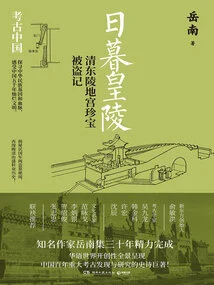
日暮皇陵:清东陵地宫珍宝被盗记
Yuenan
In July 1928, warlord Sun Dianying led his troops to break into the two underground palaces of Qianlong and Cixi, cut open the coffins and dumped the corpses, and looted all the priceless treasures, leading to an earth-shattering case in the history of Chinese and foreign civilizations. Looking back on this period of history, we can't help but have a strong interest in the Qing Tombs and try to restore the scene at that time. On this basis, this book carefully outlines real historical scenes that have been sealed for more than half a century. It introduces in detail the establishment and scale of the imperial mausoleums of the Qing Dynasty and the burial process of the emperors and concubines. It vividly reproduces the tortuous process of the prosperity and decline of China's last feudal dynasty.
In July 1928, warlord Sun Dianying led his troops to break into the two underground palaces of Qianlong and Cixi, cut open the coffins and dumped the corpses, and looted all the priceless treasures, leading to an earth-shattering case in the history of Chinese and foreign civilizations. Looking back on this period of history, we can't help but have a strong interest in the Qing Tombs and try to restore the scene at that time. On this basis, this book carefully outlines real historical scenes that have been sealed for more than half a century. It introduces in detail the establishment and scale of the imperial mausoleums of the Qing Dynasty and the burial process of the emperors and concubines. It vividly reproduces the tortuous process of the prosperity and decline of China's last feudal dynasty.
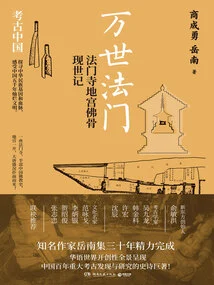
The Eternal Dharma Gate: the Appearance of Buddha Bones in the Underground Palace of Famen Temple
History万世法门:法门寺地宫佛骨现世记
Yuenan
This book is a long documentary work based on the archaeological discoveries and excavation materials of the underground palace of Famen Temple, and focuses on the emergence of Buddha finger relics and related events. It presents readers with a long scroll with voluminous volumes, twists and turns, profound artistic conception and beautiful pictures. It not only looks at the history of Buddhism, but also combines it with the history of our country to examine in detail the origins of Buddhism presented by Famen Temple and the rise and fall of Chinese history.
This book is a long documentary work based on the archaeological discoveries and excavation materials of the underground palace of Famen Temple, and focuses on the emergence of Buddha finger relics and related events. It presents readers with a long scroll with voluminous volumes, twists and turns, profound artistic conception and beautiful pictures. It not only looks at the history of Buddhism, but also combines it with the history of our country to examine in detail the origins of Buddhism presented by Famen Temple and the rise and fall of Chinese history.
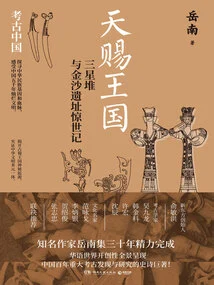
天赐王国:三星堆与金沙遗址惊世记
Yuenan
A jade pit suddenly appeared in the peaceful Moon Bay, and the Yan family dug for treasure late at night. Secrets are leaked on the streets of Chengdu, brilliant treasures are rising and falling in the billowing dust, and a rusty mysterious door full of temptation and hope is about to open... In the 1920s and 1930s, artifact burial pits were discovered in Guanghan County, Sichuan, and a large number of jade artifacts were dug out, thus unveiling a corner of the mysterious veil of Sanxingdui. The real large-scale excavation of the Sanxingdui site began in the 1980s. Its rich artifact burial pits attracted the world's attention and showed people the remains of ancient Shu culture. The discovery of the Jinsha site in 2001 provides the possibility for us to further interpret the Sanxingdui culture. This book describes the discovery and excavation of the Sanxingdui Culture in Guanghan, Sichuan, as well as the discovery and excavation process of the Jinsha Site that is closely related to the Sanxingdui Culture in recent years.
A jade pit suddenly appeared in the peaceful Moon Bay, and the Yan family dug for treasure late at night. Secrets are leaked on the streets of Chengdu, brilliant treasures are rising and falling in the billowing dust, and a rusty mysterious door full of temptation and hope is about to open... In the 1920s and 1930s, artifact burial pits were discovered in Guanghan County, Sichuan, and a large number of jade artifacts were dug out, thus unveiling a corner of the mysterious veil of Sanxingdui. The real large-scale excavation of the Sanxingdui site began in the 1980s. Its rich artifact burial pits attracted the world's attention and showed people the remains of ancient Shu culture. The discovery of the Jinsha site in 2001 provides the possibility for us to further interpret the Sanxingdui culture. This book describes the discovery and excavation of the Sanxingdui Culture in Guanghan, Sichuan, as well as the discovery and excavation process of the Jinsha Site that is closely related to the Sanxingdui Culture in recent years.
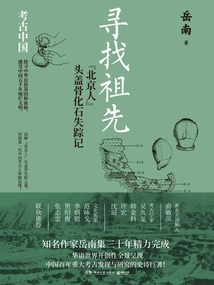
寻找祖先:“北京人”头盖骨化石失踪记
Yuenan
Was the disappearance of the "Peking Man" fossils stolen or destroyed? Did it sink to the bottom of the sea, or has it turned into dust and smoke? This mystery has troubled and stirred in people's hearts for a long time... In 1929, the skull of the "Chinese Peking Man" unearthed in Zhoukoudian, Beijing, caused a sensation in the world at that time, and was hailed as "a shock to mankind on the entire earth!" But what is extremely absurd is that in the smoke and dust of the years, The "Peking Man" who had been wronged in the fog for 500,000 years only appeared for 12 years before suddenly and mysteriously disappeared... For more than half a century, this mystery has puzzled anthropologists from all over the world and troubled mankind, but mankind has never given up the search for the "Peking Man". After arduous searches, the author recorded the entire process of the discovery, excavation, transfer, disappearance and search of the skull fossils of "Peking Man" in a long documentary.
Was the disappearance of the "Peking Man" fossils stolen or destroyed? Did it sink to the bottom of the sea, or has it turned into dust and smoke? This mystery has troubled and stirred in people's hearts for a long time... In 1929, the skull of the "Chinese Peking Man" unearthed in Zhoukoudian, Beijing, caused a sensation in the world at that time, and was hailed as "a shock to mankind on the entire earth!" But what is extremely absurd is that in the smoke and dust of the years, The "Peking Man" who had been wronged in the fog for 500,000 years only appeared for 12 years before suddenly and mysteriously disappeared... For more than half a century, this mystery has puzzled anthropologists from all over the world and troubled mankind, but mankind has never given up the search for the "Peking Man". After arduous searches, the author recorded the entire process of the discovery, excavation, transfer, disappearance and search of the skull fossils of "Peking Man" in a long documentary.
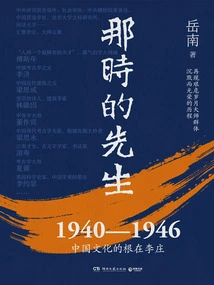
那时的先生:1940—1946中国文化的根在李庄
Yuenan
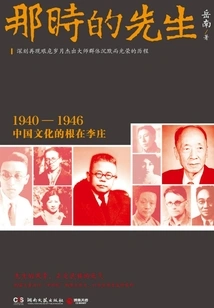
The first work of the series by Yue Nan, a master of historical documentary literature, with a new edition revised in 2024. Reproduce the years of the Anti-Japanese War, the master group, the silent and glorious process! The work uses documentary techniques, deep emotions, and smooth writing to panoramically reproduce the arduous life and academic journey of the scholars in Lizhuang, highlighting the domineering scholar leader Fu Sinian, the upright archaeological master Li Ji, and the painstaking construction work. The distinctive personalities of the architectural master Liang Sicheng, the stoic poet Lin Huiyin, the aloof talented woman You Shou, the academically obsessed Dong Zuobin, Liang Siyong and other teachers, as well as their spirit of helping each other in the face of poverty, disease, banditry and even death threats, the poor and the strong spirit. During the six most difficult years in China, they stayed true to their motherland, burning ashes and keeping the sundial, spreading their legacy widely. They won world-wide honors in the field of humanities and continued to develop the lifeline of Chinese culture. The work also focuses on the detailed exploration of the truth of historical events such as the "Institute Cannibalism Incident", the conflict between Fu and Li, the dispute between the Tongji president and professors, and the robbery of national treasures. It also conducts a profound analysis of the personnel disputes and the systems of the institute and the university. At the same time, it also describes the legendary history, customs and customs of Lizhuang Town, as well as the different life destinies of local bureaucrats and gentry before and after the Anti-Japanese War. It also discloses the characters and events many years ago in detail, which makes people recall and sigh.
The first work of the series by Yue Nan, a master of historical documentary literature, with a new edition revised in 2024. Reproduce the years of the Anti-Japanese War, the master group, the silent and glorious process! The work uses documentary techniques, deep emotions, and smooth writing to panoramically reproduce the arduous life and academic journey of the scholars in Lizhuang, highlighting the domineering scholar leader Fu Sinian, the upright archaeological master Li Ji, and the painstaking construction work. The distinctive personalities of the architectural master Liang Sicheng, the stoic poet Lin Huiyin, the aloof talented woman You Shou, the academically obsessed Dong Zuobin, Liang Siyong and other teachers, as well as their spirit of helping each other in the face of poverty, disease, banditry and even death threats, the poor and the strong spirit. During the six most difficult years in China, they stayed true to their motherland, burning ashes and keeping the sundial, spreading their legacy widely. They won world-wide honors in the field of humanities and continued to develop the lifeline of Chinese culture. The work also focuses on the detailed exploration of the truth of historical events such as the "Institute Cannibalism Incident", the conflict between Fu and Li, the dispute between the Tongji president and professors, and the robbery of national treasures. It also conducts a profound analysis of the personnel disputes and the systems of the institute and the university. At the same time, it also describes the legendary history, customs and customs of Lizhuang Town, as well as the different life destinies of local bureaucrats and gentry before and after the Anti-Japanese War. It also discloses the characters and events many years ago in detail, which makes people recall and sigh.
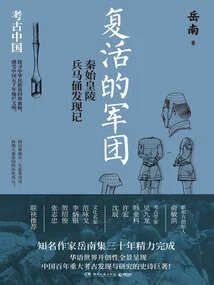
复活的军团:秦始皇陵兵马俑发现记
Yuenan
This book truly reconstructs the detailed process of the discovery and excavation of the Terracotta Warriors and Horses in Qin Shi Huang's Mausoleum, and uses it as a clue to comprehensively explore the merits and demerits of Qin Shi Huang's life, the rise and fall of the Qin Empire, and a series of grievances and problems caused by the unearthing of precious cultural relics. This series is the most painstaking and satisfying work in Yue Nan's creative career. It not only reproduces the grace of the Qin Empire and once again illuminates a glorious and magnificent history, but also explains a majestic and magnificent civilization from the vast background of mankind. His consistent profound insights and open-minded grace throughout the text are shocking and admirable!
This book truly reconstructs the detailed process of the discovery and excavation of the Terracotta Warriors and Horses in Qin Shi Huang's Mausoleum, and uses it as a clue to comprehensively explore the merits and demerits of Qin Shi Huang's life, the rise and fall of the Qin Empire, and a series of grievances and problems caused by the unearthing of precious cultural relics. This series is the most painstaking and satisfying work in Yue Nan's creative career. It not only reproduces the grace of the Qin Empire and once again illuminates a glorious and magnificent history, but also explains a majestic and magnificent civilization from the vast background of mankind. His consistent profound insights and open-minded grace throughout the text are shocking and admirable!
From the Shining Stars to the Departure of the Master
General Fiction从群星闪耀到大师远去
Yuenan
Historically, "our nation cannot base itself on the Central Plains and prefers to settle on the Yangtze River, which is called Nandu". There was Nandu in Jin Dynasty, there was Nandu in Song Dynasty, and there was Nandu in Ming Dynasty. "No one who crossed south could return to the north." In the last century, in order to resist the Japanese invasion, the government of the Republic of China moved south to Chongqing, and a large number of students also "migrated south". The teachers and students gathered at Southwest Associated University performed the love and hatred between individuals and their country, and continued to write the legend of Chinese culture. Here, we select some chapters from "March to the South and Return to the North" to introduce the process of a large number of intellectuals migrating south after the Anti-Japanese War. We also use the stories of Lin Huiyin, Liang Sicheng, Jin Yuelin, Bing Xin and others to gain insight into the social atmosphere at that time and the magnanimity and mind of a generation of literati. The records of the deaths of Hu Shi, Chen Yinke, etc. Reveal the fate of the last batch of cultural masters after the southern migration, and remember their integrity in practicing "the will of freedom and the spirit of independence."
Historically, "our nation cannot base itself on the Central Plains and prefers to settle on the Yangtze River, which is called Nandu". There was Nandu in Jin Dynasty, there was Nandu in Song Dynasty, and there was Nandu in Ming Dynasty. "No one who crossed south could return to the north." In the last century, in order to resist the Japanese invasion, the government of the Republic of China moved south to Chongqing, and a large number of students also "migrated south". The teachers and students gathered at Southwest Associated University performed the love and hatred between individuals and their country, and continued to write the legend of Chinese culture. Here, we select some chapters from "March to the South and Return to the North" to introduce the process of a large number of intellectuals migrating south after the Anti-Japanese War. We also use the stories of Lin Huiyin, Liang Sicheng, Jin Yuelin, Bing Xin and others to gain insight into the social atmosphere at that time and the magnanimity and mind of a generation of literati. The records of the deaths of Hu Shi, Chen Yinke, etc. Reveal the fate of the last batch of cultural masters after the southern migration, and remember their integrity in practicing "the will of freedom and the spirit of independence."
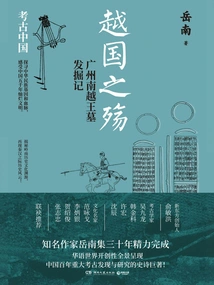
越国之殇:广州南越王墓发掘记
Yuenan
This book tells the story of the discovery and excavation of the tomb of Zhao Hu (眜), the second generation king of the South Vietnam Kingdom, in Xianggang Mountain, Guangzhou in the 1980s. The author uses documentary literature techniques to lay out the entire excavation process in layers, cutting into the historical background of the Qin and Han Dynasties, events in the South Vietnam Kingdom, and historical figures in South Vietnam at key places. The plot is vivid and fascinating. The author Yue Nan is good at describing the archaeological excavation process in a literary way, integrating history and new archaeological discoveries, which is different from boring archaeological excavation reports and traditional documentary literature. With a rigorous attitude and well-organized writing techniques, this book connects the archaeological excavation process with the historical sea and recreates ancient Chinese civilization for readers, making the archaeological process an object of public reading.
This book tells the story of the discovery and excavation of the tomb of Zhao Hu (眜), the second generation king of the South Vietnam Kingdom, in Xianggang Mountain, Guangzhou in the 1980s. The author uses documentary literature techniques to lay out the entire excavation process in layers, cutting into the historical background of the Qin and Han Dynasties, events in the South Vietnam Kingdom, and historical figures in South Vietnam at key places. The plot is vivid and fascinating. The author Yue Nan is good at describing the archaeological excavation process in a literary way, integrating history and new archaeological discoveries, which is different from boring archaeological excavation reports and traditional documentary literature. With a rigorous attitude and well-organized writing techniques, this book connects the archaeological excavation process with the historical sea and recreates ancient Chinese civilization for readers, making the archaeological process an object of public reading.
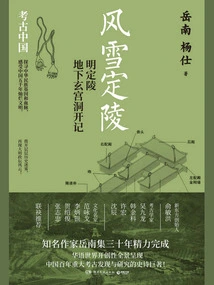
风雪定陵:明定陵地下玄宫洞开记
Yuenan
As a panoramic and multi-faceted archaeological documentary that reflects the excavation process of Dingling Mausoleum, this book not only discloses the detailed process of the opening of the underground palace of Dingling Tomb, the true situation of the coffins of the emperors and empresses, and the treasures buried with them, but also traces the little-known construction of Dingling Tomb from beginning to end and the related ruthless battles between the government and the public, and between emperors, ministers and concubines, revealing the inevitable trend of the Ming Empire's decline and decline. The authors Yue Nan and Yang Shi are good at describing the archaeological excavation process in a literary way, integrating history and new archaeological discoveries. They are different from boring archaeological excavation reports and traditional documentary literature. They are known as "evidence writers". With a rigorous attitude and well-organized writing techniques, this book connects the archaeological excavation process with the historical sea and recreates ancient civilization for readers, making the archaeological process an object of public reading.
As a panoramic and multi-faceted archaeological documentary that reflects the excavation process of Dingling Mausoleum, this book not only discloses the detailed process of the opening of the underground palace of Dingling Tomb, the true situation of the coffins of the emperors and empresses, and the treasures buried with them, but also traces the little-known construction of Dingling Tomb from beginning to end and the related ruthless battles between the government and the public, and between emperors, ministers and concubines, revealing the inevitable trend of the Ming Empire's decline and decline. The authors Yue Nan and Yang Shi are good at describing the archaeological excavation process in a literary way, integrating history and new archaeological discoveries. They are different from boring archaeological excavation reports and traditional documentary literature. They are known as "evidence writers". With a rigorous attitude and well-organized writing techniques, this book connects the archaeological excavation process with the historical sea and recreates ancient civilization for readers, making the archaeological process an object of public reading.
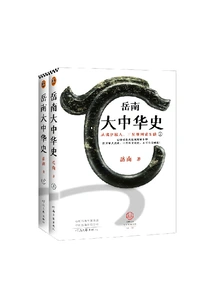
岳南大中华史
Yuenan
12 major archaeological discoveries bear witness to China's millions of years of human history, 10,000 years of cultural history, and 5,000 years of civilization history! Yue Nan, the author of "Going South to the North" is a blockbuster work. The discovery of the skull of "Peking Man" traces the history of mankind on the land of China to 500,000 years ago. The discovery of the Yangshao Culture has dispelled the fallacy that China did not have a Stone Age. The archaeological discovery of oracle bones at the Yin Ruins has provided China with credible historical evidence. Going back to the Shang Dynasty, the discovery of Sanxingdui helped us get rid of the misunderstanding that Chinese civilization only originated in the Central Plains. The discovery of the Mawangdui Han Tomb gave us a glimpse of the luxurious daily life of the Han Dynasty nobles. Open this book and read the thrilling archaeological discoveries again and again to rebuild our understanding of Chinese civilization!
12 major archaeological discoveries bear witness to China's millions of years of human history, 10,000 years of cultural history, and 5,000 years of civilization history! Yue Nan, the author of "Going South to the North" is a blockbuster work. The discovery of the skull of "Peking Man" traces the history of mankind on the land of China to 500,000 years ago. The discovery of the Yangshao Culture has dispelled the fallacy that China did not have a Stone Age. The archaeological discovery of oracle bones at the Yin Ruins has provided China with credible historical evidence. Going back to the Shang Dynasty, the discovery of Sanxingdui helped us get rid of the misunderstanding that Chinese civilization only originated in the Central Plains. The discovery of the Mawangdui Han Tomb gave us a glimpse of the luxurious daily life of the Han Dynasty nobles. Open this book and read the thrilling archaeological discoveries again and again to rebuild our understanding of Chinese civilization!
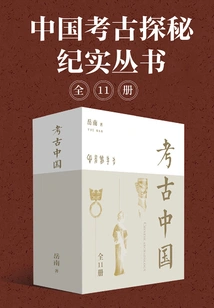
中国考古探秘纪实丛书(全11册)
Yuenan
"Chinese Archaeological Exploration Documentary Series" is a collection of documentary works written by writer Yue Nan and others over the past twenty years to describe the major archaeological discoveries in China in recent years. The author uses documentary literature techniques to spread out the entire excavation process in layers, integrating a large number of relevant important historical backgrounds during the archaeological excavation process, switching between characters and events freely, and the plot is vivid and fascinating. It restores the archaeological truth, explores secrets and records, takes you into real ancient tombs, and shows readers a picture of the ever-changing history. There are 11 books in the series, namely: "Snowy Dingling - The Opening of the Underground Xuan Palace Cave in the Dingling Tomb of the Ming Dynasty", "The Resurrection of the Legion - The Discovery of the Terracotta Warriors and Horses in the Mausoleum of the First Emperor of Qin", "The Death of the Yue Kingdom - The Excavation of the Tomb of the Nanyue King in Guangzhou", "Eternal Dharma - The Reveal of Buddha Bones in the Underground Palace of Famen Temple" (written by Shang Chengyong and Yue Nan), "The God-given Kingdom - Sanxingdui and the Jinsha Ruins". "Historical Records", "Searching for Ancestors - The Lost Skull Fossils of "Peking Man"", "The Lost Souls of the Western Han Dynasty - The Excavation of the Mawangdui Han Tomb in Changsha", "The Tomb of the Rimu Emperor - The Stolen Treasures from the Underground Palace of the Eastern Tombs of the Qing Dynasty", "The Ancient Cases - The Decryption of the Xia, Shang and Zhou Dynasty Projects", "The Unparalleled Sound - The Excavation of the Tomb of Marquis Zeng Yi in Leigudun", "The Unparalleled Soldier Saint - The Decryption of Yinqueshan".
"Chinese Archaeological Exploration Documentary Series" is a collection of documentary works written by writer Yue Nan and others over the past twenty years to describe the major archaeological discoveries in China in recent years. The author uses documentary literature techniques to spread out the entire excavation process in layers, integrating a large number of relevant important historical backgrounds during the archaeological excavation process, switching between characters and events freely, and the plot is vivid and fascinating. It restores the archaeological truth, explores secrets and records, takes you into real ancient tombs, and shows readers a picture of the ever-changing history. There are 11 books in the series, namely: "Snowy Dingling - The Opening of the Underground Xuan Palace Cave in the Dingling Tomb of the Ming Dynasty", "The Resurrection of the Legion - The Discovery of the Terracotta Warriors and Horses in the Mausoleum of the First Emperor of Qin", "The Death of the Yue Kingdom - The Excavation of the Tomb of the Nanyue King in Guangzhou", "Eternal Dharma - The Reveal of Buddha Bones in the Underground Palace of Famen Temple" (written by Shang Chengyong and Yue Nan), "The God-given Kingdom - Sanxingdui and the Jinsha Ruins". "Historical Records", "Searching for Ancestors - The Lost Skull Fossils of "Peking Man"", "The Lost Souls of the Western Han Dynasty - The Excavation of the Mawangdui Han Tomb in Changsha", "The Tomb of the Rimu Emperor - The Stolen Treasures from the Underground Palace of the Eastern Tombs of the Qing Dynasty", "The Ancient Cases - The Decryption of the Xia, Shang and Zhou Dynasty Projects", "The Unparalleled Sound - The Excavation of the Tomb of Marquis Zeng Yi in Leigudun", "The Unparalleled Soldier Saint - The Decryption of Yinqueshan".
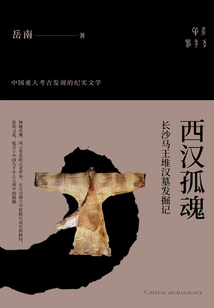
The Lonely Soul of the Western Han Dynasty: Excavations of the Mawangdui Han Tomb in Changsha
History西汉孤魂:长沙马王堆汉墓发掘记
Yuenan
In an excavated cave under Mawangdui, snake-like blue flames suddenly burst out, injuring the director of the hospital. The engineering unit was dispatched urgently to detect the bomb but failed. After the farce, the ancient tomb was accidentally discovered... This book tells the tortuous process of excavation of the Mawangdui Han Tomb in Changsha, Hunan in the 1970s, as well as a series of intricate historical events triggered by the political background at that time. The author uses documentary literature techniques to switch freely between the archaeological excavation process and related historical backgrounds, characters and events, showing readers a picture of the ever-changing history.
In an excavated cave under Mawangdui, snake-like blue flames suddenly burst out, injuring the director of the hospital. The engineering unit was dispatched urgently to detect the bomb but failed. After the farce, the ancient tomb was accidentally discovered... This book tells the tortuous process of excavation of the Mawangdui Han Tomb in Changsha, Hunan in the 1970s, as well as a series of intricate historical events triggered by the political background at that time. The author uses documentary literature techniques to switch freely between the archaeological excavation process and related historical backgrounds, characters and events, showing readers a picture of the ever-changing history.
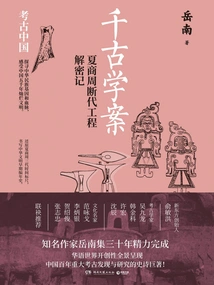
千古学案:夏商周断代工程解密记
Yuenan
Facing the splendid Chinese civilization and the eternal academic unsolved issues left by Sima Qian, what mentality and actions will our academic community face the legacy of history? After full deliberation from all walks of life, the world-famous Xia, Shang and Zhou dynasty project has begun. The "Xia, Shang and Zhou Chronology Project" is a key scientific and technological project of the National "Ninth Five-Year Plan" launched in 1996. The project gathered experts and scholars from multiple disciplines and research fields, established 9 subjects and 44 special topics, and conducted a comprehensive and brand-new study on the chronology of the Xia, Shang and Zhou dynasties. The published "Xia, Shang and Zhou Chronology" has pushed my country's historical chronology forward by more than 1,200 years. This book is a documentary literature work that describes this project in a panoramic manner.
Facing the splendid Chinese civilization and the eternal academic unsolved issues left by Sima Qian, what mentality and actions will our academic community face the legacy of history? After full deliberation from all walks of life, the world-famous Xia, Shang and Zhou dynasty project has begun. The "Xia, Shang and Zhou Chronology Project" is a key scientific and technological project of the National "Ninth Five-Year Plan" launched in 1996. The project gathered experts and scholars from multiple disciplines and research fields, established 9 subjects and 44 special topics, and conducted a comprehensive and brand-new study on the chronology of the Xia, Shang and Zhou dynasties. The published "Xia, Shang and Zhou Chronology" has pushed my country's historical chronology forward by more than 1,200 years. This book is a documentary literature work that describes this project in a panoramic manner.
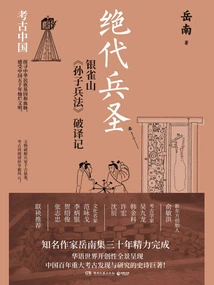
绝代兵圣:银雀山《孙子兵法》破译记
Yuenan
In the spring of 1972, an ancient tomb from the Han Dynasty was discovered in Yinqueshan, Linyi City, Shandong Province, and a number of bamboo slips were unearthed. The emergence of these treasures has opened the prelude to the "archaeological renaissance" since the founding of the People's Republic of China. In particular, the simultaneous unearthing of the sacred military classic "Sun Tzu's Art of War" and the authentic copy of "Sun Bin's Art of War" that had been lost for more than a thousand years has suddenly solved an academic mystery that has been debated for more than a thousand years, and opened an epoch-making page for the study of these two military books. This book uses documentary literature to describe the entire process of the discovery and excavation of the Yinqueshan Han Tomb, as well as the scholars' research, interpretation and deciphering of the unearthed bamboo writings. The author Yue Nan is good at describing the archaeological excavation process in a literary way, integrating history and new archaeological discoveries, which is different from boring archaeological excavation reports and traditional documentary literature. With a rigorous attitude and well-organized writing techniques, the archaeological excavation process is closely related to the historical sea, recreating ancient Chinese civilization for readers, making the archaeological process an object of public reading.
In the spring of 1972, an ancient tomb from the Han Dynasty was discovered in Yinqueshan, Linyi City, Shandong Province, and a number of bamboo slips were unearthed. The emergence of these treasures has opened the prelude to the "archaeological renaissance" since the founding of the People's Republic of China. In particular, the simultaneous unearthing of the sacred military classic "Sun Tzu's Art of War" and the authentic copy of "Sun Bin's Art of War" that had been lost for more than a thousand years has suddenly solved an academic mystery that has been debated for more than a thousand years, and opened an epoch-making page for the study of these two military books. This book uses documentary literature to describe the entire process of the discovery and excavation of the Yinqueshan Han Tomb, as well as the scholars' research, interpretation and deciphering of the unearthed bamboo writings. The author Yue Nan is good at describing the archaeological excavation process in a literary way, integrating history and new archaeological discoveries, which is different from boring archaeological excavation reports and traditional documentary literature. With a rigorous attitude and well-organized writing techniques, the archaeological excavation process is closely related to the historical sea, recreating ancient Chinese civilization for readers, making the archaeological process an object of public reading.
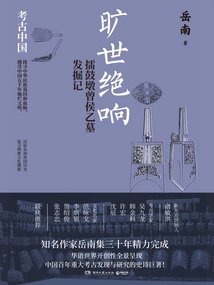
旷世绝响:擂鼓墩曾侯乙墓发掘记
Yuenan
Just as many major archaeological discoveries in the world began with building roads and houses, digging pits and dams in the wild, the emergence of the tomb of Zeng Hou Yi originated from an accidental construction by the local garrison: the burial place of princes, generals and ministers of a mysterious country that lasted for more than 20 centuries and countless treasures were revealed. The tomb of Marquis Yi of Zeng is one of the great archaeological discoveries in human history in the 20th century. A large number of funerary objects were unearthed in the tomb, including many national treasure-level precious cultural relics such as bronze bells, which attracted attention and caused a worldwide sensation. This book uses documentary techniques and literary forms to describe in detail the entire process of the discovery, survey, and excavation of the tomb of Marquis Yi of Zeng. It also explores as much as possible the ancient burial system, the formation era of the robber cave, the strange encounters of the tomb robbers after entering the cave, the historical relationship between Zeng State and Chu State, and the general time and historical events of the demise of Zeng State.
Just as many major archaeological discoveries in the world began with building roads and houses, digging pits and dams in the wild, the emergence of the tomb of Zeng Hou Yi originated from an accidental construction by the local garrison: the burial place of princes, generals and ministers of a mysterious country that lasted for more than 20 centuries and countless treasures were revealed. The tomb of Marquis Yi of Zeng is one of the great archaeological discoveries in human history in the 20th century. A large number of funerary objects were unearthed in the tomb, including many national treasure-level precious cultural relics such as bronze bells, which attracted attention and caused a worldwide sensation. This book uses documentary techniques and literary forms to describe in detail the entire process of the discovery, survey, and excavation of the tomb of Marquis Yi of Zeng. It also explores as much as possible the ancient burial system, the formation era of the robber cave, the strange encounters of the tomb robbers after entering the cave, the historical relationship between Zeng State and Chu State, and the general time and historical events of the demise of Zeng State.
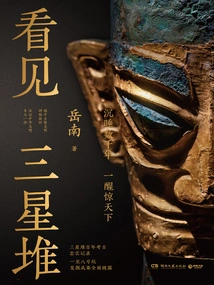
Saw Sanxingdui
History看见三星堆
Yuenan
Yue Nan, the author of "Traveling to the South and Returning to the North", has made a masterpiece after going to Sanxingdui for in-depth interviews many times! The archaeological records of Sanxingdui over the past century + the latest excavation results are fully disclosed! The book contains a large amount of precious historical materials + interviews with front-line archaeologists + real photos of the excavation site, allowing you to immersively touch the pulse of ancient Shu civilization! Panoramic collection of archaeological results from 1929 to 2024, exclusive disclosure of the latest discoveries in Pit No. 3 To Pit 8, and first-hand pictures of cultural relics that have never been released! Archeology professors from Peking University and Sichuan University jointly wrote the preface and highly recommended it! Sanxingdui in Guanghan, Sichuan, has always attracted the attention of the world with its unique cultural relics: magnificent and colorful jade artifacts, mysterious bronze masks, exquisite bronze sacred trees, shining golden scepters... All of these show the world the splendid and colorful ancient Shu civilization. This book uses vivid writing to reproduce the discovery and excavation process of Sanxingdui for nearly a hundred years from the 1920s to the present, the fierce game between relevant parties around Sanxingdui cultural relics, and the rich meaning and connotation behind the unearthed cultural relics. In the past two years, writer Yue Nan went to Sanxingdui again to conduct in-depth interviews, brilliantly interpreting the latest archaeological results of Pit No. 3 To No. 8, And striving to present a more three-dimensional and complete Sanxingdui to readers. Reading this book, you will understand the past and present life of Sanxingdui, and start a wonderful journey full of exploration!
Yue Nan, the author of "Traveling to the South and Returning to the North", has made a masterpiece after going to Sanxingdui for in-depth interviews many times! The archaeological records of Sanxingdui over the past century + the latest excavation results are fully disclosed! The book contains a large amount of precious historical materials + interviews with front-line archaeologists + real photos of the excavation site, allowing you to immersively touch the pulse of ancient Shu civilization! Panoramic collection of archaeological results from 1929 to 2024, exclusive disclosure of the latest discoveries in Pit No. 3 To Pit 8, and first-hand pictures of cultural relics that have never been released! Archeology professors from Peking University and Sichuan University jointly wrote the preface and highly recommended it! Sanxingdui in Guanghan, Sichuan, has always attracted the attention of the world with its unique cultural relics: magnificent and colorful jade artifacts, mysterious bronze masks, exquisite bronze sacred trees, shining golden scepters... All of these show the world the splendid and colorful ancient Shu civilization. This book uses vivid writing to reproduce the discovery and excavation process of Sanxingdui for nearly a hundred years from the 1920s to the present, the fierce game between relevant parties around Sanxingdui cultural relics, and the rich meaning and connotation behind the unearthed cultural relics. In the past two years, writer Yue Nan went to Sanxingdui again to conduct in-depth interviews, brilliantly interpreting the latest archaeological results of Pit No. 3 To No. 8, And striving to present a more three-dimensional and complete Sanxingdui to readers. Reading this book, you will understand the past and present life of Sanxingdui, and start a wonderful journey full of exploration!
Mr
History那时的先生
Yuenan
The Marco Polo Bridge Incident broke out on July 7, 1937, and a large number of scholars, teachers and students from academic education institutions were forced to migrate to Changsha, Chongqing, Kunming and other regions. In 1940, due to the intensification of the war, teachers and students of Tongji University moved to Lizhuang, an ancient town in southern Sichuan. Subsequently, institutions such as the Academia Sinica, the Preparatory Office of the Central Museum, the Institute of Liberal Arts of Peking University, and the Chinese Architecture Society came one after another. For a time, many first-class scholars and a large number of precious cultural relics and ancient books gathered in Lizhuang - a place that Fu Sinian called "a place that cannot be found on the map."
The Marco Polo Bridge Incident broke out on July 7, 1937, and a large number of scholars, teachers and students from academic education institutions were forced to migrate to Changsha, Chongqing, Kunming and other regions. In 1940, due to the intensification of the war, teachers and students of Tongji University moved to Lizhuang, an ancient town in southern Sichuan. Subsequently, institutions such as the Academia Sinica, the Preparatory Office of the Central Museum, the Institute of Liberal Arts of Peking University, and the Chinese Architecture Society came one after another. For a time, many first-class scholars and a large number of precious cultural relics and ancient books gathered in Lizhuang - a place that Fu Sinian called "a place that cannot be found on the map."
Yue Nan Fun Talk Master
History岳南趣讲大师
Yuenan
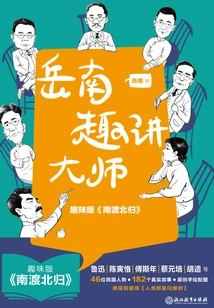
In "Returning from the South to the North", in addition to well-known figures such as Cai Yuanpei, Hu Shi, and Fu Sinian, the author also has many stories about masters of the Republic of China, involving 18246 figures and people in the Republic of China, such as Hou Debang, Liu Wendian, Zeng Zhaoluan and other talented people. This book has a total of 9 chapters, including: interesting things in life, interesting knowledge, character and spirit, friendship, teacher-student relationship, family relationship, past events of Southwest Associated University, etc., To increase knowledge and learning spirit.
In "Returning from the South to the North", in addition to well-known figures such as Cai Yuanpei, Hu Shi, and Fu Sinian, the author also has many stories about masters of the Republic of China, involving 18246 figures and people in the Republic of China, such as Hou Debang, Liu Wendian, Zeng Zhaoluan and other talented people. This book has a total of 9 chapters, including: interesting things in life, interesting knowledge, character and spirit, friendship, teacher-student relationship, family relationship, past events of Southwest Associated University, etc., To increase knowledge and learning spirit.