Library
Browse and search books
4 novels found
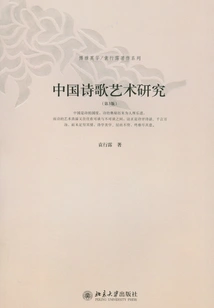
中国诗歌艺术研究(第3版)
Yuan Xingpei
"Research on the Art of Chinese Poetry (3rd Edition)" is divided into two parts: the upper part focuses on words, ideas, images, and scenes, exploring the art theory of Chinese poetry; the lower part specifically describes and analyzes Qu Yuan, Tao Yuanming, Xie Lingyun, Wang Wei, Li Bai, Du Fu, Bai Juyi, Li He, Wen Tingyun, Wei Zhuang, Su Shi, Zhou The book combines poetry theory with poetry history, macroscopic research with microscopic investigation, and corroborates the exploration of poetry theory with the specific research on the poet's art. It is a classic work in the study of Chinese poetry art.
"Research on the Art of Chinese Poetry (3rd Edition)" is divided into two parts: the upper part focuses on words, ideas, images, and scenes, exploring the art theory of Chinese poetry; the lower part specifically describes and analyzes Qu Yuan, Tao Yuanming, Xie Lingyun, Wang Wei, Li Bai, Du Fu, Bai Juyi, Li He, Wen Tingyun, Wei Zhuang, Su Shi, Zhou The book combines poetry theory with poetry history, macroscopic research with microscopic investigation, and corroborates the exploration of poetry theory with the specific research on the poet's art. It is a classic work in the study of Chinese poetry art.
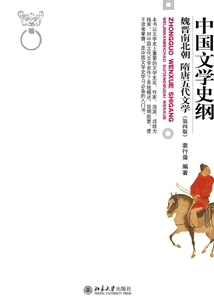
中国文学史纲·魏晋南北朝 隋唐五代文学(第四版)
Yuan Xingpei
"Outline of the History of Chinese Literature" outlines important literary facts, important writers, important literary schools, and important literary achievements in the history of Chinese literature. The editors are all famous literary historians. Different from the general writing method of detailed description of the history of Chinese literature, the outline aims to give a concise and systematic overview of the history of literature, highlighting the key phenomena in the history of literature, making it easier for readers to grasp. It is the best introductory book to the history of Chinese literature. This book is the second of four volumes and is a compendium of literature from the Wei, Jin, Southern and Northern Dynasties, Sui, Tang and Five Dynasties.
"Outline of the History of Chinese Literature" outlines important literary facts, important writers, important literary schools, and important literary achievements in the history of Chinese literature. The editors are all famous literary historians. Different from the general writing method of detailed description of the history of Chinese literature, the outline aims to give a concise and systematic overview of the history of literature, highlighting the key phenomena in the history of literature, making it easier for readers to grasp. It is the best introductory book to the history of Chinese literature. This book is the second of four volumes and is a compendium of literature from the Wei, Jin, Southern and Northern Dynasties, Sui, Tang and Five Dynasties.
中华文明史(1—4)(精装)
Yuan Xingpei
This book brings together the research results of many outstanding scholars in the humanities of Peking University. On the basis of learning from previous research experiences, this book strives to make breakthroughs in theories, perspectives, methods, etc., And is especially committed to multi-disciplinary comprehensive research. It systematically discusses the long history of the development of Chinese civilization. , With pictures and texts, shows the rich and colorful features of civilization in each period, focuses on describing the highlights, characteristics and reasons of the formation of civilization in each period, and reveals the laws of the development of Chinese civilization that are extensive and profound. It is a history of Chinese civilization with contemporary consciousness, forward-looking, multi-disciplinary and comprehensive history.
This book brings together the research results of many outstanding scholars in the humanities of Peking University. On the basis of learning from previous research experiences, this book strives to make breakthroughs in theories, perspectives, methods, etc., And is especially committed to multi-disciplinary comprehensive research. It systematically discusses the long history of the development of Chinese civilization. , With pictures and texts, shows the rich and colorful features of civilization in each period, focuses on describing the highlights, characteristics and reasons of the formation of civilization in each period, and reveals the laws of the development of Chinese civilization that are extensive and profound. It is a history of Chinese civilization with contemporary consciousness, forward-looking, multi-disciplinary and comprehensive history.
中华文明史(第三卷)
Yuan Xingpei
Yuan Xingpei, born in 1936. Dean of the Institute of Chinese Studies at Peking University, professor of the Chinese Department, and doctoral supervisor. This book is a multi-disciplinary academic work organized and written by the Institute of Chinese Studies at Peking University. From the viewpoint that the history of emergent civilization is both the creation history of mankind and the history of its evolution, material civilization, political civilization, and spiritual civilization correspond to the relationship between man and nature, the organization of human society, and the human spiritual world respectively, showing their intricate relationships and making an overall description to highlight the creativity of the Chinese nation and the endless process of Chinese civilization. This book divides Chinese civilization into four periods, using major transformations in the history of Chinese civilization as the basis for periodization. It describes in detail the characteristics, highlights, and connections between civilizations in each period, highlights those who have made significant contributions to the development of civilization, and explores various factors that play a key role in the development of civilization. It thus comprehensively discusses the development process of Chinese civilization and reveals several development laws and historical experiences. This book strives to examine Chinese civilization within the world structure and write about the position of Chinese civilization in the process of world civilization. In the discussion, full attention should be paid to the combination of cultural relics and archaeological materials with documentary materials, and efforts should be made to combine historical writing, discussion, and talent. This volume covers the Sui and Tang Dynasties to the mid-Ming Dynasty.
Yuan Xingpei, born in 1936. Dean of the Institute of Chinese Studies at Peking University, professor of the Chinese Department, and doctoral supervisor. This book is a multi-disciplinary academic work organized and written by the Institute of Chinese Studies at Peking University. From the viewpoint that the history of emergent civilization is both the creation history of mankind and the history of its evolution, material civilization, political civilization, and spiritual civilization correspond to the relationship between man and nature, the organization of human society, and the human spiritual world respectively, showing their intricate relationships and making an overall description to highlight the creativity of the Chinese nation and the endless process of Chinese civilization. This book divides Chinese civilization into four periods, using major transformations in the history of Chinese civilization as the basis for periodization. It describes in detail the characteristics, highlights, and connections between civilizations in each period, highlights those who have made significant contributions to the development of civilization, and explores various factors that play a key role in the development of civilization. It thus comprehensively discusses the development process of Chinese civilization and reveals several development laws and historical experiences. This book strives to examine Chinese civilization within the world structure and write about the position of Chinese civilization in the process of world civilization. In the discussion, full attention should be paid to the combination of cultural relics and archaeological materials with documentary materials, and efforts should be made to combine historical writing, discussion, and talent. This volume covers the Sui and Tang Dynasties to the mid-Ming Dynasty.