Library
Browse and search books
3 novels found
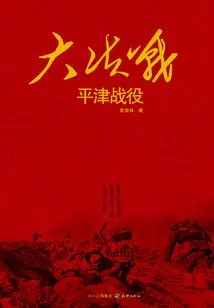
大决战:平津战役
Yuan Tingdong
This book reflects the main body of the Liberation War - the battles of Beijing and Tianjin among the three major battles. The Battle of Pingjin took the attack on Tianjin on January 14, 1949 as the obvious starting point. The rest were divided and surrounded by the Kuomintang troops, and they were surrounded but not attacked. Only some small-scale battles occurred. Peiping, in particular, was peacefully liberated through our party's painstaking and meticulous work against Fu Zuoyi, then the commander-in-chief of the Kuomintang's "Suppression Chief" in North China. The end time was marked by the People's Liberation Army officially entering Peiping on January 31, 1949. This battle has similarities and differences with the Liaoshen and Pingjin battles. The similarities are the decisive battle between the revolutionary forces represented by the Communist Party of China and the reactionary forces represented by the Kuomintang after many years of competition; it was a decisive battle on the eve of the overthrow of Chiang Kai-shek and the establishment of New China. The difference is that the battle took place around the northwest slope of the Party Central Committee headed by Mao Zedong, and centered on Peking, our country's famous ancient capital and the future capital of New China. In this battle, 40% of the Kuomintang troops did not belong to Chiang Kai-shek's direct line troops, and their commander was not a direct line general of Chiang Kai-shek, but General Fu Zuoyi, a representative figure within the Kuomintang army at that time. The above-mentioned similarities determine the cruelty and importance of this decisive battle; and the above-mentioned differences determine the flexibility and importance of this decisive battle. The thrilling scenes presented in this war are not all rushes and bloody battles, but also a large number of complex and tense struggles on another front. The result of this struggle was the peaceful liberation of the ancient capital Beiping.
This book reflects the main body of the Liberation War - the battles of Beijing and Tianjin among the three major battles. The Battle of Pingjin took the attack on Tianjin on January 14, 1949 as the obvious starting point. The rest were divided and surrounded by the Kuomintang troops, and they were surrounded but not attacked. Only some small-scale battles occurred. Peiping, in particular, was peacefully liberated through our party's painstaking and meticulous work against Fu Zuoyi, then the commander-in-chief of the Kuomintang's "Suppression Chief" in North China. The end time was marked by the People's Liberation Army officially entering Peiping on January 31, 1949. This battle has similarities and differences with the Liaoshen and Pingjin battles. The similarities are the decisive battle between the revolutionary forces represented by the Communist Party of China and the reactionary forces represented by the Kuomintang after many years of competition; it was a decisive battle on the eve of the overthrow of Chiang Kai-shek and the establishment of New China. The difference is that the battle took place around the northwest slope of the Party Central Committee headed by Mao Zedong, and centered on Peking, our country's famous ancient capital and the future capital of New China. In this battle, 40% of the Kuomintang troops did not belong to Chiang Kai-shek's direct line troops, and their commander was not a direct line general of Chiang Kai-shek, but General Fu Zuoyi, a representative figure within the Kuomintang army at that time. The above-mentioned similarities determine the cruelty and importance of this decisive battle; and the above-mentioned differences determine the flexibility and importance of this decisive battle. The thrilling scenes presented in this war are not all rushes and bloody battles, but also a large number of complex and tense struggles on another front. The result of this struggle was the peaceful liberation of the ancient capital Beiping.
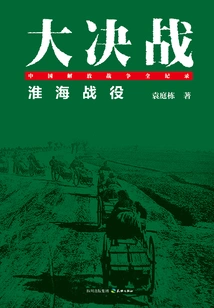
大决战:淮海战役
Yuan Tingdong
This book reflects the main body of the Liberation War - the Huaihai Campaign among the three major battles. The Huaihai Campaign officially started on November 6, 1948. Our East China Field Army used the strong superiority of 7 columns to encircle Huang Baitao Corps in Xin'an Town near Xuzhou, cut off the connection between Huang Baitao Corps and Li Mi Corps and other Kuomintang troops, carried out key strikes, and annihilated each one. The end was marked by the capture of Du Yuming and the killing of Qiu Qingquan on January 10, 1949. Since ancient times, the Central Plains has been a battleground for Chinese military strategists. In the decisive battle of the Liberation War, the Central Plains region also became the main battlefield that both the Kuomintang and the Communist Party were determined to win. After the victory of the Anti-Japanese War, Chiang Kai-shek's first battle in launching a full-scale civil war was to besiege Li Xiannian's headquarters of the Central Plains People's Liberation Army. From then on, the battles between the two armies in the Central Plains have been one after another. The battlefield has become wider and wider, and the scale has become larger and larger. Under this situation, both the Kuomintang and the Communist Party were mobilizing troops and planning for this war. In the end, the army led by the CCP won this battle with the strong support of the broad masses of the people.
This book reflects the main body of the Liberation War - the Huaihai Campaign among the three major battles. The Huaihai Campaign officially started on November 6, 1948. Our East China Field Army used the strong superiority of 7 columns to encircle Huang Baitao Corps in Xin'an Town near Xuzhou, cut off the connection between Huang Baitao Corps and Li Mi Corps and other Kuomintang troops, carried out key strikes, and annihilated each one. The end was marked by the capture of Du Yuming and the killing of Qiu Qingquan on January 10, 1949. Since ancient times, the Central Plains has been a battleground for Chinese military strategists. In the decisive battle of the Liberation War, the Central Plains region also became the main battlefield that both the Kuomintang and the Communist Party were determined to win. After the victory of the Anti-Japanese War, Chiang Kai-shek's first battle in launching a full-scale civil war was to besiege Li Xiannian's headquarters of the Central Plains People's Liberation Army. From then on, the battles between the two armies in the Central Plains have been one after another. The battlefield has become wider and wider, and the scale has become larger and larger. Under this situation, both the Kuomintang and the Communist Party were mobilizing troops and planning for this war. In the end, the army led by the CCP won this battle with the strong support of the broad masses of the people.
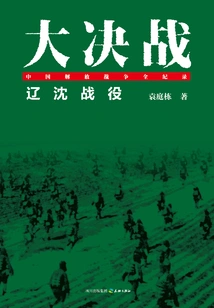
大决战:辽沈战役
Yuan Tingdong
It reflects the main body of the Liberation War - the Liaoshen Campaign among the three major battles. The Liaoshen Campaign started on September 12, 1948 on the railway line from Peiping to Shenyang, that is, the Beining Line. The primary goal was to cut off the Kuomintang's transportation lines for troops, weapons and ammunition to the Northeast region, and create a situation in which our Northeast Field Army closed the door on the Kuomintang troops. The end time was marked by the entry of our Northeast Field Army into Shenyang on November 1, 1948. The 52-day Liaoshen Campaign was the first major battle fought by the people's army founded and led by the Communist Party of China since the birth of the Nanchang Uprising. It created scale, prestige, confidence, experience, and an important base to serve the next two major battles. This battle not only defeated the coordinated operations of the Kuomintang army, land, sea and air force, but also eliminated two of the five main forces of the Kuomintang army at that time, with a total of 470,000 troops. It liberated the entire Northeast and brought about a decisive change in the balance of military power between the Kuomintang and the Communist Party on the battlefield across China.
It reflects the main body of the Liberation War - the Liaoshen Campaign among the three major battles. The Liaoshen Campaign started on September 12, 1948 on the railway line from Peiping to Shenyang, that is, the Beining Line. The primary goal was to cut off the Kuomintang's transportation lines for troops, weapons and ammunition to the Northeast region, and create a situation in which our Northeast Field Army closed the door on the Kuomintang troops. The end time was marked by the entry of our Northeast Field Army into Shenyang on November 1, 1948. The 52-day Liaoshen Campaign was the first major battle fought by the people's army founded and led by the Communist Party of China since the birth of the Nanchang Uprising. It created scale, prestige, confidence, experience, and an important base to serve the next two major battles. This battle not only defeated the coordinated operations of the Kuomintang army, land, sea and air force, but also eliminated two of the five main forces of the Kuomintang army at that time, with a total of 470,000 troops. It liberated the entire Northeast and brought about a decisive change in the balance of military power between the Kuomintang and the Communist Party on the battlefield across China.