Library
Browse and search books
8 novels found
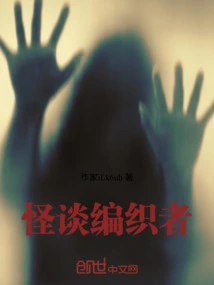
The Weaver of Weird Tales
Suspense and Supernatural怪谈编织者
Yuan Ling
Criminal psychologist Lin Shen doesn't believe in ghosts until a red line of unknown origin appears on her wrist. The line moved slowly under the skin, heading towards the heart. The medical examination was normal - there was no pathological explanation. There were four other people who appeared on the red line at the same time as her. The five life trajectories had no intersection, but were woven into the same web on the same day. They began to have the same dream: an ancient well, a woman in white, and a recurring sentence-- "You took something you shouldn't have taken." When Lin Shen followed the clue and found the ancient mirror, what was reflected in the mirror was not her face, but a pale, unfamiliar face. The mouth said to her silently: "You are the seventh. The first six all thought they were still alive." The red line is moving. The time is counting down. And the thing hidden behind the strange stories was smarter, crueler, and more understanding of people's hearts than any serial killer she had ever seen. To survive, Lin Shen must solve this mystery. But this time, the end of the line of reasoning isn't the truth-it's herself.
Criminal psychologist Lin Shen doesn't believe in ghosts until a red line of unknown origin appears on her wrist. The line moved slowly under the skin, heading towards the heart. The medical examination was normal - there was no pathological explanation. There were four other people who appeared on the red line at the same time as her. The five life trajectories had no intersection, but were woven into the same web on the same day. They began to have the same dream: an ancient well, a woman in white, and a recurring sentence-- "You took something you shouldn't have taken." When Lin Shen followed the clue and found the ancient mirror, what was reflected in the mirror was not her face, but a pale, unfamiliar face. The mouth said to her silently: "You are the seventh. The first six all thought they were still alive." The red line is moving. The time is counting down. And the thing hidden behind the strange stories was smarter, crueler, and more understanding of people's hearts than any serial killer she had ever seen. To survive, Lin Shen must solve this mystery. But this time, the end of the line of reasoning isn't the truth-it's herself.
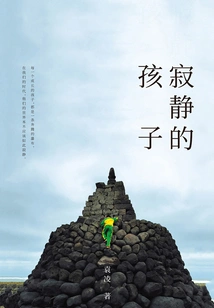
Silent Child
Literature寂静的孩子
Yuan Ling
"The Silent Child" is a new non-fiction work written by the writer Yuan Ling after four years of visits, exploration, recording, and precipitation. In this work, Yuan Ling focused his attention on children. He paid attention to the current living plight of urban and rural children in China, personally felt their living conditions, daily labor and mental state, listened carefully to the children's voices, and finally completed this record of children's lives and humanity. Left-behind, relocated, out of school, single-parented, orphaned, seriously ill... Children struggle hard in situations of poverty and scarcity, but they grow tenaciously. A child's life should be a flowing waterfall, free and happy, but the voices of these children are restricted by barriers of class, geography, and identity and cannot be conveyed. "Silent Children" is a detailed record of the living conditions of such a group of children. Breaking down barriers, overcoming distance, their voices should not be so quiet in our world.
"The Silent Child" is a new non-fiction work written by the writer Yuan Ling after four years of visits, exploration, recording, and precipitation. In this work, Yuan Ling focused his attention on children. He paid attention to the current living plight of urban and rural children in China, personally felt their living conditions, daily labor and mental state, listened carefully to the children's voices, and finally completed this record of children's lives and humanity. Left-behind, relocated, out of school, single-parented, orphaned, seriously ill... Children struggle hard in situations of poverty and scarcity, but they grow tenaciously. A child's life should be a flowing waterfall, free and happy, but the voices of these children are restricted by barriers of class, geography, and identity and cannot be conveyed. "Silent Children" is a detailed record of the living conditions of such a group of children. Breaking down barriers, overcoming distance, their voices should not be so quiet in our world.
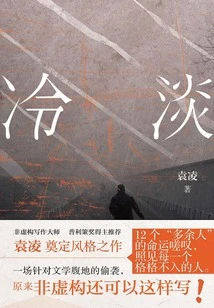
Cold
Literature冷淡
Yuan Ling
Pulitzer Prize winner Zhang Yan: Yuan Ling is a master of non-fiction writing. A sneak attack on the hinterland of literature, it turns out that non-fiction can be written like this! The lamentation of the fate of 12 "superfluous people" reflects on every misfit. Yuan Ling further established his style. He conducted a literary experiment based on real characters and details, blurring the boundaries between documentary literature and fiction, and challenging the possibility of writing non-fiction literature. This is a collection of "emotional" non-fiction works. Among the 12 stories, there are migrant workers who left their hometowns, confinement sisters who insisted on taking literature classes, and cold-eyed bystanders of murders... They are all "superfluous people" - unable to change their lives, they can only watch the fate that is imposed on them, showing a kind of "indifference" to their own circumstances. Yuan Ling captured this subtle emotion and restored the solemnity of life with words. "Indifference" condenses Yuan Ling's judgment and expression on the changes taking place in contemporary society. He wrote this record not just to sigh, but also to regurgitate our life and find its hidden warmth.
Pulitzer Prize winner Zhang Yan: Yuan Ling is a master of non-fiction writing. A sneak attack on the hinterland of literature, it turns out that non-fiction can be written like this! The lamentation of the fate of 12 "superfluous people" reflects on every misfit. Yuan Ling further established his style. He conducted a literary experiment based on real characters and details, blurring the boundaries between documentary literature and fiction, and challenging the possibility of writing non-fiction literature. This is a collection of "emotional" non-fiction works. Among the 12 stories, there are migrant workers who left their hometowns, confinement sisters who insisted on taking literature classes, and cold-eyed bystanders of murders... They are all "superfluous people" - unable to change their lives, they can only watch the fate that is imposed on them, showing a kind of "indifference" to their own circumstances. Yuan Ling captured this subtle emotion and restored the solemnity of life with words. "Indifference" condenses Yuan Ling's judgment and expression on the changes taking place in contemporary society. He wrote this record not just to sigh, but also to regurgitate our life and find its hidden warmth.
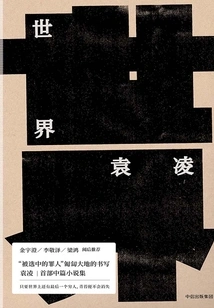
World
General Fiction世界
Yuan Ling
"The World" is Yuan Ling's first collection of novellas, including nine stories such as "The World", "Snowfall", "Pastoral", "Gelang", "Hunting Fish" and "Turning the Mountain". In the novel, there is a man who lost his eyesight in a mining accident, a "ginger" who made a living by crying to death, a logger who struggled with the mountains and the fate, and a village who looked for hope in Jesus... They seem to be marginalized and no one cares about them, but they have lived out folk legends. After "The Moss Will Not Go Away", Yuan Ling still focused his attention on the people at the bottom, and by describing their fate, he showed a rural picture of suffering but full of hope.
"The World" is Yuan Ling's first collection of novellas, including nine stories such as "The World", "Snowfall", "Pastoral", "Gelang", "Hunting Fish" and "Turning the Mountain". In the novel, there is a man who lost his eyesight in a mining accident, a "ginger" who made a living by crying to death, a logger who struggled with the mountains and the fate, and a village who looked for hope in Jesus... They seem to be marginalized and no one cares about them, but they have lived out folk legends. After "The Moss Will Not Go Away", Yuan Ling still focused his attention on the people at the bottom, and by describing their fate, he showed a rural picture of suffering but full of hope.
生死课(译文纪实)
Yuan Ling
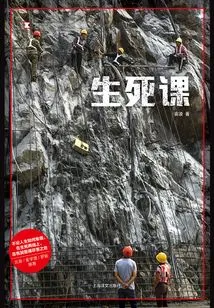
The first original work in the translation documentary series, a current story about life and death in China. "Lessons on Life and Death" is a collection of Yuan Ling's short stories, which record the little people who move around in various places of existence, or the anonymous people who are superimposed in the historical strata. Most of these characters are encountered by the author during his growth experience, interviews and surveys, and charity visits. They include rural elders and marginalized people in the city; there are missing people in history and children left behind; there are hard-working businessmen and white-collar workers under the shadow of autism. There are dead people and there are living people. Their life experiences may be described as twists and turns, or simply sloppy. Life scenes are either unique or ordinary. They are not the protagonists in the spotlight of the times, but each has their own plot. Yuan Ling records the life and death of these people, not only for the sake of their lives, but also for the understanding of his own life.
The first original work in the translation documentary series, a current story about life and death in China. "Lessons on Life and Death" is a collection of Yuan Ling's short stories, which record the little people who move around in various places of existence, or the anonymous people who are superimposed in the historical strata. Most of these characters are encountered by the author during his growth experience, interviews and surveys, and charity visits. They include rural elders and marginalized people in the city; there are missing people in history and children left behind; there are hard-working businessmen and white-collar workers under the shadow of autism. There are dead people and there are living people. Their life experiences may be described as twists and turns, or simply sloppy. Life scenes are either unique or ordinary. They are not the protagonists in the spotlight of the times, but each has their own plot. Yuan Ling records the life and death of these people, not only for the sake of their lives, but also for the understanding of his own life.
My Picun Brothers and Sisters
Literature我的皮村兄妹
Yuan Ling
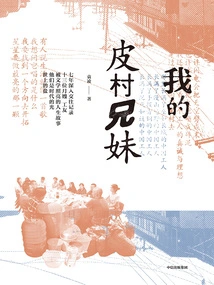
"My Pi Village Brothers and Sisters" is a non-fiction work that unfolds a panoramic depiction of the life stories of grassroots workers in China who have the dual identities of laborers and literary creators. If "I Deliver Express in Beijing" and "My Mother Works as a Cleaner" are about the spiritual world of a certain type of workers, then "My Pi Village Brothers and Sisters" is a comprehensive writing about the current labor literature and the new migrant literature. The author Yuan Ling is currently a leading figure in Chinese non-fiction literature and one of the founders of Picun Literary House. He spent seven years entering Pi Village life many times, and completed this book after deeply understanding the fateful transition of more than a dozen workers from working to becoming literary creators.
"My Pi Village Brothers and Sisters" is a non-fiction work that unfolds a panoramic depiction of the life stories of grassroots workers in China who have the dual identities of laborers and literary creators. If "I Deliver Express in Beijing" and "My Mother Works as a Cleaner" are about the spiritual world of a certain type of workers, then "My Pi Village Brothers and Sisters" is a comprehensive writing about the current labor literature and the new migrant literature. The author Yuan Ling is currently a leading figure in Chinese non-fiction literature and one of the founders of Picun Literary House. He spent seven years entering Pi Village life many times, and completed this book after deeply understanding the fateful transition of more than a dozen workers from working to becoming literary creators.
Nine Immortals
Xianxia Fantasy九转仙缘
Yuan Ling
In the mysterious continent of Jiuzhou, surrounded by immortal energy, immortal cultivators pursue the ultimate dream of immortality. However, in this land shrouded in magic and sword energy, the true way of immortality has long been lost in the chaos of the world. "Nine Transformations of Immortality" is a fairy tale novel that depicts love, hate, fate and choices on the road to immortality.
In the mysterious continent of Jiuzhou, surrounded by immortal energy, immortal cultivators pursue the ultimate dream of immortality. However, in this land shrouded in magic and sword energy, the true way of immortality has long been lost in the chaos of the world. "Nine Transformations of Immortality" is a fairy tale novel that depicts love, hate, fate and choices on the road to immortality.
My Ninety-nine Deaths
Literature我的九十九次死亡
Yuan Ling
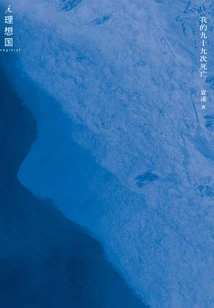
A book of life that pays tribute to ordinary people, and a book of death that makes people feel the weight of life! This book takes recording death as its theme. Starting from the concern for life, the author faithfully and equally commemorates the ninety-nine deaths he has experienced in his life, leaving his last words for people, animals or plants. From the "Red Death" who was injured for the first time in his childhood when he opened a slate, to the young man who starved to death in the famine; from the miners who were killed to the prisoners shot in the counter-revolutionary case; from the writer Lu Yao at the last moment of his life, to the tomb of the Red Guards in Chongqing; from the dog killed by rabies to the bear facing extinction... The book uses concise and faithful language to convey the direct experience of facing death as truly as possible. It strives to make this strange experience accommodate and accommodate human nature, and reflect the hardships and comforts of life. "My Ninety-nine Deaths" is not only a death record of the ninety-nine deceased, but also a contemporary Chinese social history that restores their life scenes and living conditions.
A book of life that pays tribute to ordinary people, and a book of death that makes people feel the weight of life! This book takes recording death as its theme. Starting from the concern for life, the author faithfully and equally commemorates the ninety-nine deaths he has experienced in his life, leaving his last words for people, animals or plants. From the "Red Death" who was injured for the first time in his childhood when he opened a slate, to the young man who starved to death in the famine; from the miners who were killed to the prisoners shot in the counter-revolutionary case; from the writer Lu Yao at the last moment of his life, to the tomb of the Red Guards in Chongqing; from the dog killed by rabies to the bear facing extinction... The book uses concise and faithful language to convey the direct experience of facing death as truly as possible. It strives to make this strange experience accommodate and accommodate human nature, and reflect the hardships and comforts of life. "My Ninety-nine Deaths" is not only a death record of the ninety-nine deceased, but also a contemporary Chinese social history that restores their life scenes and living conditions.