Library
Browse and search books
1 novel found
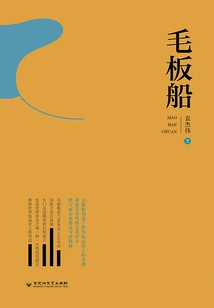
Rough Boat
Literature毛板船
Yuan Jiewei
"Maoban Ship" adopts the rigorous attitude of "holding a stone to hit a floating ball" and reflects the domineering spirit of Meishan ship merchants and sailors in the budding period of Chinese capitalism, who were brave in innovation, dared to take risks, and were not afraid of hardships and hardships. It panoramically describes the spectacular scenes of giant Maoban ships shipping in Zijiang, Dongting Lake, and the Yangtze River more than 200 years ago. It meticulously and tortuously demonstrates the role played by Meishan martial arts masters in the war for more than a hundred years. It also explores Meishan martial arts very profoundly. Not only that, "Maoban Ship" also expands on the impact of Maoban ship shipping history on Meishan area's economy, culture, education, military and other aspects from a philosophical perspective, especially the impact of Maoban ship shipping history on Hunan Army commander Zeng Guofan, Chen Tianhua who awakened the Chinese people, as well as the China Alliance, the Revolution of 1911, etc. "Maoban Ship" briefly and accurately describes the "post-Maoban Ship era", that is, the Hankou Pier was placed under military control after 1949, the state built the Zhexi Hydropower Station, making Maoban Ship history, and the state's socialist transformation of the Maoban Ship economy.
"Maoban Ship" adopts the rigorous attitude of "holding a stone to hit a floating ball" and reflects the domineering spirit of Meishan ship merchants and sailors in the budding period of Chinese capitalism, who were brave in innovation, dared to take risks, and were not afraid of hardships and hardships. It panoramically describes the spectacular scenes of giant Maoban ships shipping in Zijiang, Dongting Lake, and the Yangtze River more than 200 years ago. It meticulously and tortuously demonstrates the role played by Meishan martial arts masters in the war for more than a hundred years. It also explores Meishan martial arts very profoundly. Not only that, "Maoban Ship" also expands on the impact of Maoban ship shipping history on Meishan area's economy, culture, education, military and other aspects from a philosophical perspective, especially the impact of Maoban ship shipping history on Hunan Army commander Zeng Guofan, Chen Tianhua who awakened the Chinese people, as well as the China Alliance, the Revolution of 1911, etc. "Maoban Ship" briefly and accurately describes the "post-Maoban Ship era", that is, the Hankou Pier was placed under military control after 1949, the state built the Zhexi Hydropower Station, making Maoban Ship history, and the state's socialist transformation of the Maoban Ship economy.