Library
Browse and search books
8 novels found
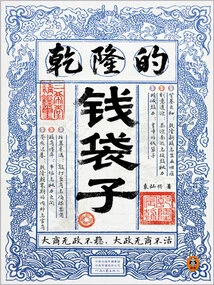
Qianlong's Money Bag
History乾隆的钱袋子
Yuan Canxing
If you understand the fate of businessmen in the Qianlong era, you will understand the political and business game of two thousand years in ancient China! This book takes the salt industry of the Qianlong Dynasty as an entry point, showing the complex interactions between salt merchants and Emperor Qianlong around the interests of the salt industry. It is a political and business record of the emperor and merchants: - Salt merchants continued to deliver money to Emperor Qianlong to curry favor with the imperial power, and once became the emperor's "money bag"; - Qianlong kept the salt industry firmly in the hands of the royal family through layers of control and frequent beatings. Salt merchants could only survive carefully caught in the gap between the market and power. Their ups and downs also reflected the political, business, and social landscape of the prosperous era of Qianlong. This is not only a history of the rise and fall of salt merchants in the Qianlong Dynasty, but also a two-thousand-year history of political and business games that understands how power controlled capital in the imperial era and how capital affected politics and society. It provides a unique perspective for understanding the political and economic operations of the Qing Dynasty and even traditional Chinese society.
If you understand the fate of businessmen in the Qianlong era, you will understand the political and business game of two thousand years in ancient China! This book takes the salt industry of the Qianlong Dynasty as an entry point, showing the complex interactions between salt merchants and Emperor Qianlong around the interests of the salt industry. It is a political and business record of the emperor and merchants: - Salt merchants continued to deliver money to Emperor Qianlong to curry favor with the imperial power, and once became the emperor's "money bag"; - Qianlong kept the salt industry firmly in the hands of the royal family through layers of control and frequent beatings. Salt merchants could only survive carefully caught in the gap between the market and power. Their ups and downs also reflected the political, business, and social landscape of the prosperous era of Qianlong. This is not only a history of the rise and fall of salt merchants in the Qianlong Dynasty, but also a two-thousand-year history of political and business games that understands how power controlled capital in the imperial era and how capital affected politics and society. It provides a unique perspective for understanding the political and economic operations of the Qing Dynasty and even traditional Chinese society.
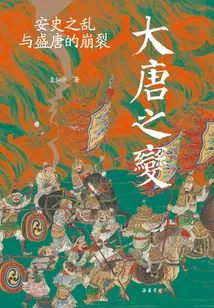
大唐之变:安史之乱与盛唐的崩裂
Yuan Canxing
In 755 AD, the Anshi Rebellion broke out, and the Tang Empire turned from prosperity to decline. The Anshi Rebellion was a landmark event in Chinese history. It not only brought the prosperity of the Tang Dynasty to an abrupt end, but also became a watershed in the development of Chinese history. Before and after the Anshi Rebellion, the political, economic, military and other systems of the Tang Dynasty underwent major changes, as well as social and cultural changes. These changes had a profound impact on future generations. This book is a new non-fiction historical work about the Anshi Rebellion written by the well-known historian Yuan Canxing. Based on historical data, the book vividly and smoothly depicts the big names and ruthless characters in this historical turning point, and epically shows the great changes and disputes in the Tang Empire.
In 755 AD, the Anshi Rebellion broke out, and the Tang Empire turned from prosperity to decline. The Anshi Rebellion was a landmark event in Chinese history. It not only brought the prosperity of the Tang Dynasty to an abrupt end, but also became a watershed in the development of Chinese history. Before and after the Anshi Rebellion, the political, economic, military and other systems of the Tang Dynasty underwent major changes, as well as social and cultural changes. These changes had a profound impact on future generations. This book is a new non-fiction historical work about the Anshi Rebellion written by the well-known historian Yuan Canxing. Based on historical data, the book vividly and smoothly depicts the big names and ruthless characters in this historical turning point, and epically shows the great changes and disputes in the Tang Empire.
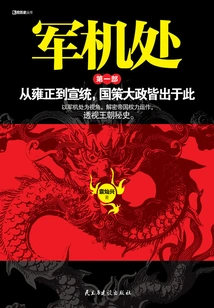
透视大清王朝秘史:军机处
Yuan Canxing
"When you start your career, you can write poems and poems first, and this is where you write articles to serve the country. Scholars are as good at cutting old papers as they are on the battlefield." One hundred and eighty-three years of the Military Aircraft Department is a rich history, a group of outstanding characters, and a bunch of stories to be discovered. In the trilogy of "Military Aircraft Department", I will try my best to show readers a comprehensive and authentic Military Aircraft Department.
"When you start your career, you can write poems and poems first, and this is where you write articles to serve the country. Scholars are as good at cutting old papers as they are on the battlefield." One hundred and eighty-three years of the Military Aircraft Department is a rich history, a group of outstanding characters, and a bunch of stories to be discovered. In the trilogy of "Military Aircraft Department", I will try my best to show readers a comprehensive and authentic Military Aircraft Department.
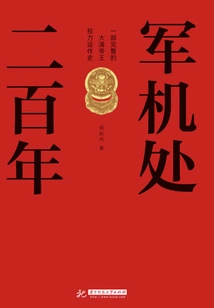
军机处二百年
Yuan Canxing
This book takes the 200-year history of the Military Aircraft Department as the main line and shows the important role of the Military Aircraft Department in the history of the Qing Dynasty. When the national power of the Yongzheng and Qianlong dynasties was rising, the military ministers followed the emperor, leaping on their horses and whipping their whips, and expanding their territories, all with great ambition. By the Jiaqing and Daoguang dynasties, the Qing Dynasty had begun to decline. Faced with this situation, Jiaqing and Daoguang chose to maintain their status, so the military ministers also restrained their fists and carefully helped the emperor manage the country, and finally passed on the Qing Dynasty. The four dynasties of Yongzheng, Qianlong, Jiaqing and Daoguang are a display of a dynasty's transition from prosperity to decline. In this historical process, what role did the Military Aircraft Department play? Two hundred years of the Military Aircraft Department, a rich history, a group of outstanding characters, a bunch of stories to be discovered, a comprehensive and real Military Aircraft Department.
This book takes the 200-year history of the Military Aircraft Department as the main line and shows the important role of the Military Aircraft Department in the history of the Qing Dynasty. When the national power of the Yongzheng and Qianlong dynasties was rising, the military ministers followed the emperor, leaping on their horses and whipping their whips, and expanding their territories, all with great ambition. By the Jiaqing and Daoguang dynasties, the Qing Dynasty had begun to decline. Faced with this situation, Jiaqing and Daoguang chose to maintain their status, so the military ministers also restrained their fists and carefully helped the emperor manage the country, and finally passed on the Qing Dynasty. The four dynasties of Yongzheng, Qianlong, Jiaqing and Daoguang are a display of a dynasty's transition from prosperity to decline. In this historical process, what role did the Military Aircraft Department play? Two hundred years of the Military Aircraft Department, a rich history, a group of outstanding characters, a bunch of stories to be discovered, a comprehensive and real Military Aircraft Department.
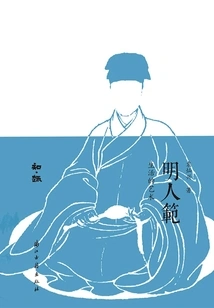
明人范:生活的艺术(知﹒趣丛书)
Yuan Canxing
This book displays the life of the Ming Dynasty people from the perspectives of daily diet, culture and entertainment, food, clothing, housing and transportation, and folk beliefs. On the one hand, it reflects the creative spirit of the Ming Dynasty people who dared to break etiquette and lead social trends. On the other hand, it focuses on the artistic realm of the Ming Dynasty people in tea drinking, utensil modeling, calligraphy and painting, and other areas of life. The characters involved include historical figures such as Tang Bohu, Yuan Zhongdao, Wang Shizhen, Tu Long, Li Kaixian, Zhang Dai, Wang Ruqian, Chen Hongshou, Chen Jiru, Feng Menglong, Qian Qianyi, Dong Xiaowan, etc., As well as literary figures Ximen Qing. It has a wonderful description of the social life of the Ming people and a relatively in-depth revelation of the spiritual world of the Ming people. It is a good book that can help readers understand the society and culture of the late Ming Dynasty. The book has rich content, reasonable structure, easy-to-understand language and strong readability.
This book displays the life of the Ming Dynasty people from the perspectives of daily diet, culture and entertainment, food, clothing, housing and transportation, and folk beliefs. On the one hand, it reflects the creative spirit of the Ming Dynasty people who dared to break etiquette and lead social trends. On the other hand, it focuses on the artistic realm of the Ming Dynasty people in tea drinking, utensil modeling, calligraphy and painting, and other areas of life. The characters involved include historical figures such as Tang Bohu, Yuan Zhongdao, Wang Shizhen, Tu Long, Li Kaixian, Zhang Dai, Wang Ruqian, Chen Hongshou, Chen Jiru, Feng Menglong, Qian Qianyi, Dong Xiaowan, etc., As well as literary figures Ximen Qing. It has a wonderful description of the social life of the Ming people and a relatively in-depth revelation of the spiritual world of the Ming people. It is a good book that can help readers understand the society and culture of the late Ming Dynasty. The book has rich content, reasonable structure, easy-to-understand language and strong readability.
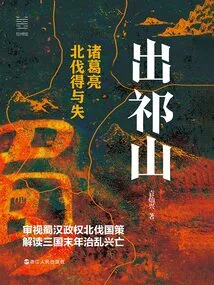
出祁山:诸葛亮北伐得与失(经纬度丛书)
Yuan Canxing
This book focuses on the Shu Han regime's Northern Expedition "out of Qishan" during the Three Kingdoms period, discusses the establishment and strategic planning of Liu Bei's Shu Han regime, and analyzes the reasons for the failure of Zhuge Liang's Northern Expedition through the conscription system, taxation system, and the struggle between Liu Bei's direct lineage and local bureaucrats under Zhuge Liang's rule. While describing the strategy and destiny of the Shu Han regime's "exodus from Qishan", this book also writes about the game between Cao Wei and Sun Wu at the same time and the Shu Han regime. These games not only affected the success or failure of the expedition from Qishan, but also affected the national destiny of the three kingdoms of Wei, Shu and Wu, until the Jin Dynasty finally unified the world. The Three Kingdoms are far away, and a series of stories surrounding the Qishan Mountains have been sung through the ages. Zhuge Liang worked hard to turn the tide and revive the Han Dynasty. But what does the rise of the Han Dynasty have to do with the thousands of people at the bottom? Whether it rises or falls, the people will suffer.
This book focuses on the Shu Han regime's Northern Expedition "out of Qishan" during the Three Kingdoms period, discusses the establishment and strategic planning of Liu Bei's Shu Han regime, and analyzes the reasons for the failure of Zhuge Liang's Northern Expedition through the conscription system, taxation system, and the struggle between Liu Bei's direct lineage and local bureaucrats under Zhuge Liang's rule. While describing the strategy and destiny of the Shu Han regime's "exodus from Qishan", this book also writes about the game between Cao Wei and Sun Wu at the same time and the Shu Han regime. These games not only affected the success or failure of the expedition from Qishan, but also affected the national destiny of the three kingdoms of Wei, Shu and Wu, until the Jin Dynasty finally unified the world. The Three Kingdoms are far away, and a series of stories surrounding the Qishan Mountains have been sung through the ages. Zhuge Liang worked hard to turn the tide and revive the Han Dynasty. But what does the rise of the Han Dynasty have to do with the thousands of people at the bottom? Whether it rises or falls, the people will suffer.
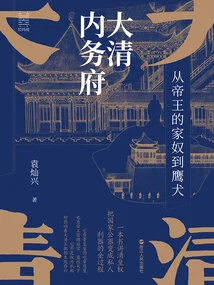
大清内务府:从帝王的家奴到鹰犬
Yuan Canxing
A book to understand the people and things that really affected the emperor's behavior. This is a palace service organization, but it is also an institution close to the emperor. The people here are far away from government affairs, but they are extremely powerful. This is the Ministry of Internal Affairs of the Qing Dynasty. Yuan Canxing, the author of "Two Hundred Years of Military Aircraft Department" and "Changes in the Tang Dynasty", is a new author. This book uses a popular style to unfold the status and role of the Ministry of Internal Affairs in the history of the Qing Dynasty and the stories that happened, showing an institution that everyone is familiar with but full of mystery. The Ministry of Internal Affairs had important functions in the Qing Dynasty. It was the emperor's imperial agency and served the emperor. Everything from the emperor's food, clothing, housing and transportation to his private treasury was under the control of the Ministry of Internal Affairs. The Ministry of Internal Affairs is so powerful that only ministers trusted by the emperor can be in charge of the Ministry of Internal Affairs. The Ministry of Internal Affairs has a large organization, involving Jiangnan Weaving Bureau, Jingshifang (eunuch), Shengjing Internal Affairs Office, Imperial Tea Kitchen and many other institutions, and it obtains money through various channels. Many wonderful stories have been told in the history of the Ministry of Internal Affairs.
A book to understand the people and things that really affected the emperor's behavior. This is a palace service organization, but it is also an institution close to the emperor. The people here are far away from government affairs, but they are extremely powerful. This is the Ministry of Internal Affairs of the Qing Dynasty. Yuan Canxing, the author of "Two Hundred Years of Military Aircraft Department" and "Changes in the Tang Dynasty", is a new author. This book uses a popular style to unfold the status and role of the Ministry of Internal Affairs in the history of the Qing Dynasty and the stories that happened, showing an institution that everyone is familiar with but full of mystery. The Ministry of Internal Affairs had important functions in the Qing Dynasty. It was the emperor's imperial agency and served the emperor. Everything from the emperor's food, clothing, housing and transportation to his private treasury was under the control of the Ministry of Internal Affairs. The Ministry of Internal Affairs is so powerful that only ministers trusted by the emperor can be in charge of the Ministry of Internal Affairs. The Ministry of Internal Affairs has a large organization, involving Jiangnan Weaving Bureau, Jingshifang (eunuch), Shengjing Internal Affairs Office, Imperial Tea Kitchen and many other institutions, and it obtains money through various channels. Many wonderful stories have been told in the history of the Ministry of Internal Affairs.
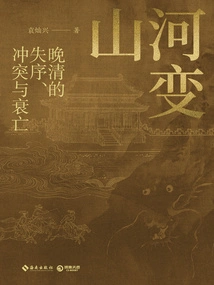
山河变:晚清的失序、冲突与衰亡
Yuan Canxing
A wonderful history describing the disorder, conflict and decline of the late Qing Dynasty! Well-known historian Yuan Canxing's new work! Analyze the secret psychology of various characters under the background of the great era, reveal the complex motivations in external operations and internal divisions, and reproduce the changes in China that have not happened in three thousand years! A unique perspective to peer into the internal and external troubles of the late Qing Dynasty! This book begins with the Western missionaries who broke into the gate of the Celestial Dynasty, opening the narrative from a subtle and unusual perspective. When the Qing Dynasty closed the door to the outside world and indulged in the dream of a great Celestial Empire, Westerners never stopped trying to enter the door of China. Through nine chapters: collision, rebels, self-improvement, reform, war, war, mutual protection, defeat, and revolution, the author deeply explores the complex motivations behind the great changes in the society in the late Qing Dynasty, showing little-known historical details. When the door is opened, mountains and rivers are shaken, and rivers and mountains undergo disasters. Where will the swaying empire go? Peeling away the cocoons and interlocking them, it deeply explores the little-known historical details behind the great social changes in the late Qing Dynasty. The author of this book, Yuan Canxing, is a young historical scholar and author who has made considerable achievements in the past two years. He is good at unraveling and interlocking narrative structures. His narrative language is gripping, and his writing style has been well received by readers. During the late Qing Dynasty, China faced the impact of the expansion of Western powers, crises caused by long-term accumulation of social problems, and serious government dysfunction. New and old problems converged, but the Qing Empire was like a tired old horse, unable to cope with its needs, stiff but not dead, barely able to survive. The great changes that resulted from countless small events eventually led to the collapse of the empire.
A wonderful history describing the disorder, conflict and decline of the late Qing Dynasty! Well-known historian Yuan Canxing's new work! Analyze the secret psychology of various characters under the background of the great era, reveal the complex motivations in external operations and internal divisions, and reproduce the changes in China that have not happened in three thousand years! A unique perspective to peer into the internal and external troubles of the late Qing Dynasty! This book begins with the Western missionaries who broke into the gate of the Celestial Dynasty, opening the narrative from a subtle and unusual perspective. When the Qing Dynasty closed the door to the outside world and indulged in the dream of a great Celestial Empire, Westerners never stopped trying to enter the door of China. Through nine chapters: collision, rebels, self-improvement, reform, war, war, mutual protection, defeat, and revolution, the author deeply explores the complex motivations behind the great changes in the society in the late Qing Dynasty, showing little-known historical details. When the door is opened, mountains and rivers are shaken, and rivers and mountains undergo disasters. Where will the swaying empire go? Peeling away the cocoons and interlocking them, it deeply explores the little-known historical details behind the great social changes in the late Qing Dynasty. The author of this book, Yuan Canxing, is a young historical scholar and author who has made considerable achievements in the past two years. He is good at unraveling and interlocking narrative structures. His narrative language is gripping, and his writing style has been well received by readers. During the late Qing Dynasty, China faced the impact of the expansion of Western powers, crises caused by long-term accumulation of social problems, and serious government dysfunction. New and old problems converged, but the Qing Empire was like a tired old horse, unable to cope with its needs, stiff but not dead, barely able to survive. The great changes that resulted from countless small events eventually led to the collapse of the empire.