Library
Browse and search books
2 novels found

Pomegranate Flowers and Hair Respond to Each Other's Smiles. Their Roots Are Shallow and Their Origins Are Deep
Slice of Life海榴花发应相笑万代根浅由来深
Yu Ziyuan
The story tells the story of a girl from a single-parent family named He Chengcheng. She was a very sensible and outstanding girl at home and at school. During her college internship, she encountered various people and events in a fashion magazine. She finally chose to return to her mother's clothing store after graduation and build her own business with her mother. From then on, Cheng Cheng embarked on the road of starting her own business...
The story tells the story of a girl from a single-parent family named He Chengcheng. She was a very sensible and outstanding girl at home and at school. During her college internship, she encountered various people and events in a fashion magazine. She finally chose to return to her mother's clothing store after graduation and build her own business with her mother. From then on, Cheng Cheng embarked on the road of starting her own business...
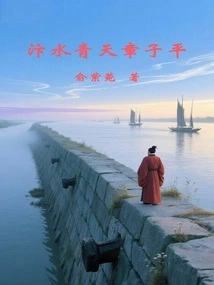
Bianshui Qingtian Zhang Ziping
Short Fiction汴水青天章子平
Yu Ziyuan
In the second year of Jiayou's reign in the Northern Song Dynasty, Zhang Heng (also known as Ziping) and Su Shi were on the Dragon and Tiger List, and became famous in Bianjing. However, this talented scholar did not choose to talk about the palace, but spent his life immersed in the mountains and rivers and the suffering of the people. The novel depicts Zhang Heng's ups and downs and heavy life with delicate brushstrokes: he was capable of writing history and compiling classics, and his military skills were able to conquer the frontiers; in the local area, he was the "blue sky" who worked hard for the people - Hutuo River Jue, he personally led the people, and built a dragon lock with his flesh and blood. The stone embankment protected the living beings; the West Lake was silted up, and he fought against all opinions and worked hard to dredge it to restore the Ming Dynasty, laying the foundation for prosperity in later generations; in charge of the salt and iron canal transportation, he slashed at the silverfish with his sword, rectified the accumulated shortcomings, smoothed the country's veins, and benefited thousands of boatmen and porters. Every action he took was resolute and resolute, affecting interests and causing a flood of slander. However, he stood up like a rock, only seeking "benefits for the people." He experienced ups and downs in officialdom, and retired to the West Lake in his later years, where he stayed in his humble mountain house and looked down upon the situation. When he passed away suddenly, Su Shi, a close friend of Bianjing, lamented that "Ziping's talents have been surpassed by no one in a hundred years." What is even more touching is that thousands of miles away, the salt merchants and boatmen who were grateful for his kindness, with their thousands of sails half-draped as if covered with silk, and the salt and snow flying on the Qiantang River, bid farewell to their "Salt and Iron Lord" in the most simple and magnificent ceremony. Zhang Heng is not as famous as Su Shi's poems, not as vigorous as Wang Anshi's reform, and not as tragic as Fan Zhongyan's "worry first and then joy". With his almost silent tenacity, he became the "silent backbone" supporting the Song Dynasty.
In the second year of Jiayou's reign in the Northern Song Dynasty, Zhang Heng (also known as Ziping) and Su Shi were on the Dragon and Tiger List, and became famous in Bianjing. However, this talented scholar did not choose to talk about the palace, but spent his life immersed in the mountains and rivers and the suffering of the people. The novel depicts Zhang Heng's ups and downs and heavy life with delicate brushstrokes: he was capable of writing history and compiling classics, and his military skills were able to conquer the frontiers; in the local area, he was the "blue sky" who worked hard for the people - Hutuo River Jue, he personally led the people, and built a dragon lock with his flesh and blood. The stone embankment protected the living beings; the West Lake was silted up, and he fought against all opinions and worked hard to dredge it to restore the Ming Dynasty, laying the foundation for prosperity in later generations; in charge of the salt and iron canal transportation, he slashed at the silverfish with his sword, rectified the accumulated shortcomings, smoothed the country's veins, and benefited thousands of boatmen and porters. Every action he took was resolute and resolute, affecting interests and causing a flood of slander. However, he stood up like a rock, only seeking "benefits for the people." He experienced ups and downs in officialdom, and retired to the West Lake in his later years, where he stayed in his humble mountain house and looked down upon the situation. When he passed away suddenly, Su Shi, a close friend of Bianjing, lamented that "Ziping's talents have been surpassed by no one in a hundred years." What is even more touching is that thousands of miles away, the salt merchants and boatmen who were grateful for his kindness, with their thousands of sails half-draped as if covered with silk, and the salt and snow flying on the Qiantang River, bid farewell to their "Salt and Iron Lord" in the most simple and magnificent ceremony. Zhang Heng is not as famous as Su Shi's poems, not as vigorous as Wang Anshi's reform, and not as tragic as Fan Zhongyan's "worry first and then joy". With his almost silent tenacity, he became the "silent backbone" supporting the Song Dynasty.