Library
Browse and search books
1 novel found
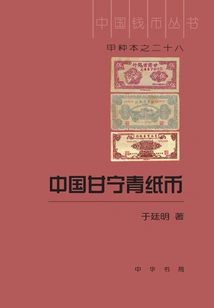
中国甘宁青纸币
Yu Tingming
This book is a work that comprehensively presents the circulation of banknotes in Gansu, Ningxia and Qinghai from the late Qing Dynasty to the Republic of China. The turmoil and chaos of the late 19th and early 20th centuries were most directly reflected in the field of banknote issuance - the inconsistency of issuing institutions and the complexity of banknote types. Gansu, Ningxia, and Qinghai were no exception. At the national level, the "four major banks": the Central Bank, Bank of China, Bank of Communications, and Agricultural Bank of China issue banknotes in Gansu, Ningxia, and Qingdu. Various local banks, such as Gansu Provincial Bank, Ningxia Bank, and Qinghai Industrial Bank, can also issue banknotes with approval. Many banks, banks, pawn shops and other private financial institutions can also issue their own money tickets and private notes, and have considerable influence in small areas. This book is dedicated to sorting out, classifying and introducing in detail these various modern Ganningqing banknotes. The banknotes issued by the national banks, local banks and private financial institutions in the three provinces and regions are collected as completely as possible, classified according to the issuing institutions or banknote attributes, and the full picture is presented based on time. This book records a large number of banknote plates. At the same time, it also pays attention to many banknote derivatives that were often ignored in the past, such as licenses, promissory notes, bonds, treasury certificates, deeds, etc. There are a total of 1,221 plates, each of which is marked with the face size and rarity level. In addition to describing the plates, this book also briefly introduces the background of each type of banknotes when introducing them, sorting out the historical evolution of their issuing institutions, tracing back to the origin of the issuance of banknotes, and paying equal attention to description and research. These combing and compilation provide historical currency researchers and enthusiasts, financial historians, and coin collectors with as complete information as possible when studying modern local banknotes, filling the gaps in the study of local banknotes in the Gansu, Ningxia and Qinghai regions.
This book is a work that comprehensively presents the circulation of banknotes in Gansu, Ningxia and Qinghai from the late Qing Dynasty to the Republic of China. The turmoil and chaos of the late 19th and early 20th centuries were most directly reflected in the field of banknote issuance - the inconsistency of issuing institutions and the complexity of banknote types. Gansu, Ningxia, and Qinghai were no exception. At the national level, the "four major banks": the Central Bank, Bank of China, Bank of Communications, and Agricultural Bank of China issue banknotes in Gansu, Ningxia, and Qingdu. Various local banks, such as Gansu Provincial Bank, Ningxia Bank, and Qinghai Industrial Bank, can also issue banknotes with approval. Many banks, banks, pawn shops and other private financial institutions can also issue their own money tickets and private notes, and have considerable influence in small areas. This book is dedicated to sorting out, classifying and introducing in detail these various modern Ganningqing banknotes. The banknotes issued by the national banks, local banks and private financial institutions in the three provinces and regions are collected as completely as possible, classified according to the issuing institutions or banknote attributes, and the full picture is presented based on time. This book records a large number of banknote plates. At the same time, it also pays attention to many banknote derivatives that were often ignored in the past, such as licenses, promissory notes, bonds, treasury certificates, deeds, etc. There are a total of 1,221 plates, each of which is marked with the face size and rarity level. In addition to describing the plates, this book also briefly introduces the background of each type of banknotes when introducing them, sorting out the historical evolution of their issuing institutions, tracing back to the origin of the issuance of banknotes, and paying equal attention to description and research. These combing and compilation provide historical currency researchers and enthusiasts, financial historians, and coin collectors with as complete information as possible when studying modern local banknotes, filling the gaps in the study of local banknotes in the Gansu, Ningxia and Qinghai regions.