Library
Browse and search books
3 novels found
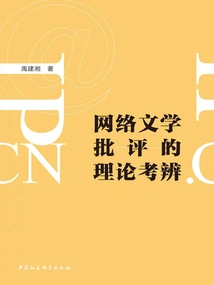
网络文学批评的理论考辨
Yu Jianxiang
The key issue in Internet literature criticism is to theoretically explore what content should be covered in the construction of an Internet literature evaluation system, and to explore the relevant paths and internal logic of the construction of an Internet literature evaluation system. What new qualities does online literature generated by digital technology add to traditional literature? What kind of mechanism transformation has the literary evaluation activity experienced in the Internet era? What are the possibilities and paths for constructing an evaluation system for Chinese online literature? Theoretical examination of Chinese Internet literature criticism is to sort out all the results of Internet literature criticism, reveal what established theoretical goals the criticism community has achieved, and whether it has answered many theoretical questions about the development of Internet literature, thereby promoting the diversification of Internet literature criticism.
The key issue in Internet literature criticism is to theoretically explore what content should be covered in the construction of an Internet literature evaluation system, and to explore the relevant paths and internal logic of the construction of an Internet literature evaluation system. What new qualities does online literature generated by digital technology add to traditional literature? What kind of mechanism transformation has the literary evaluation activity experienced in the Internet era? What are the possibilities and paths for constructing an evaluation system for Chinese online literature? Theoretical examination of Chinese Internet literature criticism is to sort out all the results of Internet literature criticism, reveal what established theoretical goals the criticism community has achieved, and whether it has answered many theoretical questions about the development of Internet literature, thereby promoting the diversification of Internet literature criticism.
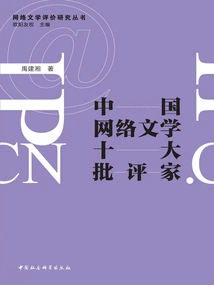
中国网络文学十大批评家
Yu Jianxiang
The vigorous development of Chinese Internet literature cannot be separated from the encouragement and encouragement of critics. This book adopts the method of "taking people to guide history and using history to introduce arguments" and selects the 10 most representative Internet literature critics in China: Huang Mingfen, Ouyang Youquan, Chen Dingjia, Shan Xiaoxi, and Zhou Zhi Xiong, Ma Ji, Shao Yanjun, Xia Lie, Xu Miaomiao, and Xiao Jinghong demonstrate their academic contributions through the analysis of their theoretical criticism of Internet literature, revealing the development level and academic contribution of theoretical criticism of Internet literature in China from point to line and from line to surface. This book starts with the critical practice of individual critics, and obtains the theoretical depth and research breadth of Chinese Internet literature criticism through individual criticism symptoms. From here, we can see the development context, basic appearance and importance of theoretical criticism of Chinese Internet literature. At the same time, it also pays tribute to the pioneers of Chinese Internet literature criticism. It is precisely because of their academic exploration that Internet literature has entered the mainstream and Internet literature research has become a prominent scholar.
The vigorous development of Chinese Internet literature cannot be separated from the encouragement and encouragement of critics. This book adopts the method of "taking people to guide history and using history to introduce arguments" and selects the 10 most representative Internet literature critics in China: Huang Mingfen, Ouyang Youquan, Chen Dingjia, Shan Xiaoxi, and Zhou Zhi Xiong, Ma Ji, Shao Yanjun, Xia Lie, Xu Miaomiao, and Xiao Jinghong demonstrate their academic contributions through the analysis of their theoretical criticism of Internet literature, revealing the development level and academic contribution of theoretical criticism of Internet literature in China from point to line and from line to surface. This book starts with the critical practice of individual critics, and obtains the theoretical depth and research breadth of Chinese Internet literature criticism through individual criticism symptoms. From here, we can see the development context, basic appearance and importance of theoretical criticism of Chinese Internet literature. At the same time, it also pays tribute to the pioneers of Chinese Internet literature criticism. It is precisely because of their academic exploration that Internet literature has entered the mainstream and Internet literature research has become a prominent scholar.
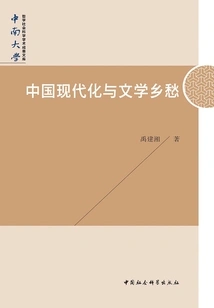
中国现代化与文学乡愁
Yu Jianxiang
China is essentially a rural country and has been exploring the path to modernization since the 20th century. Chinese writers have narrated nostalgia in complex ways amid the changes that have occurred over the past century. The result of this project is to find the underlying operating mechanism behind nostalgia and the relationship between this mechanism and China's modernization process, thereby answering the two basic questions of "why literature has nostalgia" and "how does literature express nostalgia", revealing how the operating mechanism of modernization in different contexts affects the form and content of literary nostalgia, revealing the complexity of China's modernization process, and providing theoretical and literary historical experience for "new nostalgia" narratives under new historical opportunities. By studying the expression of nostalgia by Chinese writers in the operating mechanism of the modernization context since the 20th century, it is pointed out that the countryside is an imaginary object of Chinese writers in the process of modernization, a unity of reality and fiction, and a destination for nostalgia in the process of modernization. This will help the academic community to have a deeper understanding of the nostalgia motif, and can better guide writers to correctly handle the relationship between nostalgia and modernization, and create "new nostalgia" works rich in the Chinese dream.
China is essentially a rural country and has been exploring the path to modernization since the 20th century. Chinese writers have narrated nostalgia in complex ways amid the changes that have occurred over the past century. The result of this project is to find the underlying operating mechanism behind nostalgia and the relationship between this mechanism and China's modernization process, thereby answering the two basic questions of "why literature has nostalgia" and "how does literature express nostalgia", revealing how the operating mechanism of modernization in different contexts affects the form and content of literary nostalgia, revealing the complexity of China's modernization process, and providing theoretical and literary historical experience for "new nostalgia" narratives under new historical opportunities. By studying the expression of nostalgia by Chinese writers in the operating mechanism of the modernization context since the 20th century, it is pointed out that the countryside is an imaginary object of Chinese writers in the process of modernization, a unity of reality and fiction, and a destination for nostalgia in the process of modernization. This will help the academic community to have a deeper understanding of the nostalgia motif, and can better guide writers to correctly handle the relationship between nostalgia and modernization, and create "new nostalgia" works rich in the Chinese dream.