Library
Browse and search books
1 novel found
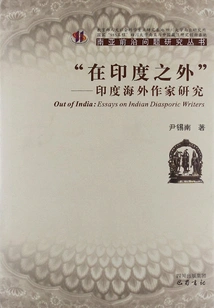
“在印度之外”:印度海外作家研究
Yin Xinan
It is divided into six chapters. The first chapter introduces Seth's life and overall creation. The second chapter takes the ideological content of "The Good Man" as the research object and points out this work's views on social issues such as Western culture, secularism and religious tolerance, the development of India's modernization, and the growth of the middle class. The next four chapters examine the novel from aspects such as space, gender, structure and language. The third chapter, from the perspective of postmodern geography, points out that the writer's fictional city of Brahmepur symbolizes India in the early 1950s, and also analyzes the use of spatial symbolism within the text. Chapter 4 analyzes the construction of male and female images in "The Man Who Wants You" and the symbolic meanings carried by the newer generation of characters from the perspective of gender studies. Chapter Five focuses on the narrative structure of "The Man Who Wants You". Chapter 6 analyzes the use of Seth's native language and English, and points out their cultural symbolic significance.
It is divided into six chapters. The first chapter introduces Seth's life and overall creation. The second chapter takes the ideological content of "The Good Man" as the research object and points out this work's views on social issues such as Western culture, secularism and religious tolerance, the development of India's modernization, and the growth of the middle class. The next four chapters examine the novel from aspects such as space, gender, structure and language. The third chapter, from the perspective of postmodern geography, points out that the writer's fictional city of Brahmepur symbolizes India in the early 1950s, and also analyzes the use of spatial symbolism within the text. Chapter 4 analyzes the construction of male and female images in "The Man Who Wants You" and the symbolic meanings carried by the newer generation of characters from the perspective of gender studies. Chapter Five focuses on the narrative structure of "The Man Who Wants You". Chapter 6 analyzes the use of Seth's native language and English, and points out their cultural symbolic significance.