Library
Browse and search novels
2 novels found
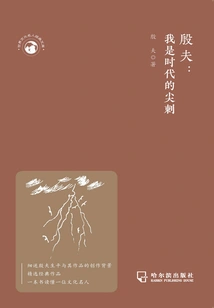
Yin Fu: I Am the Thorn of the Times
Literature殷夫:我是时代的尖刺
Yin Fu
This book is a selected collection of Yin Fu's poems and novels. It mainly focuses on Yin Fu's poems and collects nearly 80 of his poems, including his representative works "May Day Song", "May 1st, 1929", "Declaration", "Blood Letter", "Children's Tower", "Farewell, Brother", etc., Which have certain historical value. Reading Yin Fu's poems allows readers to appreciate the deep patriotic feelings of this poet who shared the fate of the revolution.
This book is a selected collection of Yin Fu's poems and novels. It mainly focuses on Yin Fu's poems and collects nearly 80 of his poems, including his representative works "May Day Song", "May 1st, 1929", "Declaration", "Blood Letter", "Children's Tower", "Farewell, Brother", etc., Which have certain historical value. Reading Yin Fu's poems allows readers to appreciate the deep patriotic feelings of this poet who shared the fate of the revolution.
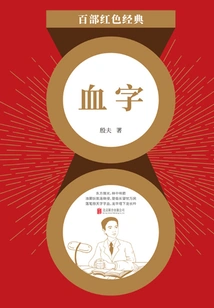
Letters in Blood (red Classic)
Literature血字(红色经典)
Yin Fu
"Words in Blood" contains many revolutionary poems by Yin Fu. Most of Yin Fu's early poems sung about love and homeland, both condemning the dark reality and yearning for a bright future. After his creation began to mature, he began to eulogize the struggle of the working class from the front with rough timbre and high rhythm, and confided his persistent pursuit of ideals and belief in a complete break with the old world. He had a broad realm, a strong spirit, a clear political tendency and a strong sense of the times. After Guo Moruo and Jiang Guangci, he is another important revolutionary poet in the history of modern literature. Lu Xun spoke highly of his poems: "There is no need to compare all the so-called mature, concise, quiet and distant works, because this poem belongs to another world."
"Words in Blood" contains many revolutionary poems by Yin Fu. Most of Yin Fu's early poems sung about love and homeland, both condemning the dark reality and yearning for a bright future. After his creation began to mature, he began to eulogize the struggle of the working class from the front with rough timbre and high rhythm, and confided his persistent pursuit of ideals and belief in a complete break with the old world. He had a broad realm, a strong spirit, a clear political tendency and a strong sense of the times. After Guo Moruo and Jiang Guangci, he is another important revolutionary poet in the history of modern literature. Lu Xun spoke highly of his poems: "There is no need to compare all the so-called mature, concise, quiet and distant works, because this poem belongs to another world."