Library
Browse and search books
1 novel found
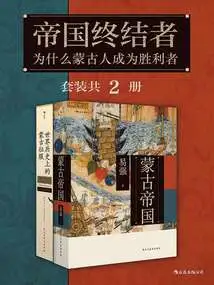
帝国终结者:为什么蒙古人成为胜利者(套装共2册)
Yi Qiang (american) Mei Tianmu
"Mongol Empire" In the 13th century, the Mongol Empire swept across the Eurasian continent like a whirlwind. Its rise and development have also brought us many mysteries: What are the internal driving forces and external conditions for the expansion of the Mongols? How did Mongolia grow rapidly from a local government with a population of less than 2 million to an unstoppable empire? How did the Mongolian conquests interact with those powerful countries with glorious civilizations? Focusing on these issues, the author excavated Chinese and Western historical documents and combined the research results of domestic and foreign scholars to give his own understanding. The Mongolian war of conquest accelerated exchanges in the flow of products, population migration, and cultural dissemination between the ancient Eastern and Western worlds. "The Mongol Conquest in World History" is a new heavyweight work in the field of research on the history of the Mongolian Empire in recent years. From the perspective of world history and global history, the author focuses on describing the Eurasian cultural exchanges promoted by Genghis Khan and the emergence of a new Eurasian world after the successive collapse of the Mongol khanates. Under the forcible promotion of the Mongol rulers, the East and the West began a process of mutual exchange, and a new Eurasian culture was born under the "Mongol rule." This, to a certain extent, corrected the image of Mongolia as a barbarian who destroyed the civilized world.
"Mongol Empire" In the 13th century, the Mongol Empire swept across the Eurasian continent like a whirlwind. Its rise and development have also brought us many mysteries: What are the internal driving forces and external conditions for the expansion of the Mongols? How did Mongolia grow rapidly from a local government with a population of less than 2 million to an unstoppable empire? How did the Mongolian conquests interact with those powerful countries with glorious civilizations? Focusing on these issues, the author excavated Chinese and Western historical documents and combined the research results of domestic and foreign scholars to give his own understanding. The Mongolian war of conquest accelerated exchanges in the flow of products, population migration, and cultural dissemination between the ancient Eastern and Western worlds. "The Mongol Conquest in World History" is a new heavyweight work in the field of research on the history of the Mongolian Empire in recent years. From the perspective of world history and global history, the author focuses on describing the Eurasian cultural exchanges promoted by Genghis Khan and the emergence of a new Eurasian world after the successive collapse of the Mongol khanates. Under the forcible promotion of the Mongol rulers, the East and the West began a process of mutual exchange, and a new Eurasian culture was born under the "Mongol rule." This, to a certain extent, corrected the image of Mongolia as a barbarian who destroyed the civilized world.