Library
Browse and search books
5 novels found
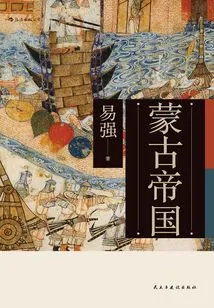
Mongol Empire
History蒙古帝国
Yi Qiang
In the 13th century, the Mongol Empire swept across the Eurasian continent like a whirlwind. Its rise and development have also brought us many mysteries: What are the internal driving forces and external conditions for the expansion of the Mongols? How did Mongolia grow rapidly from a local government with a population of less than 2 million to an unstoppable empire? How did the Mongolian conquests interact with those powerful countries with glorious civilizations? Focusing on these issues, the author excavated Chinese and Western historical documents and combined the research results of domestic and foreign scholars to give his own understanding. The Mongolian war of conquest accelerated exchanges in the flow of products, population migration, and cultural dissemination between the ancient Eastern and Western worlds.
In the 13th century, the Mongol Empire swept across the Eurasian continent like a whirlwind. Its rise and development have also brought us many mysteries: What are the internal driving forces and external conditions for the expansion of the Mongols? How did Mongolia grow rapidly from a local government with a population of less than 2 million to an unstoppable empire? How did the Mongolian conquests interact with those powerful countries with glorious civilizations? Focusing on these issues, the author excavated Chinese and Western historical documents and combined the research results of domestic and foreign scholars to give his own understanding. The Mongolian war of conquest accelerated exchanges in the flow of products, population migration, and cultural dissemination between the ancient Eastern and Western worlds.
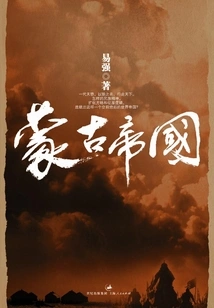
Mongol Empire
History蒙古帝国
Yi Qiang
A generation of genius, walking around the world in the name of wolf. What kind of national spirit, expansion strategy and conquest logic created such an unprecedented world empire? Do you believe that Genghis Khan was afraid of dogs when he was nine years old? Do you believe that this timid boy would kill his brother in a few years just for a little whitebait? What turned this timid kid into a murderer? Is there a genetic code hidden deep in this child's brain that can control his destiny under certain circumstances? How could Mongolia, with a population of less than 2 million at the beginning, be able to conquer other countries and open up an unprecedented territory that encompasses many civilizations?
A generation of genius, walking around the world in the name of wolf. What kind of national spirit, expansion strategy and conquest logic created such an unprecedented world empire? Do you believe that Genghis Khan was afraid of dogs when he was nine years old? Do you believe that this timid boy would kill his brother in a few years just for a little whitebait? What turned this timid kid into a murderer? Is there a genetic code hidden deep in this child's brain that can control his destiny under certain circumstances? How could Mongolia, with a population of less than 2 million at the beginning, be able to conquer other countries and open up an unprecedented territory that encompasses many civilizations?
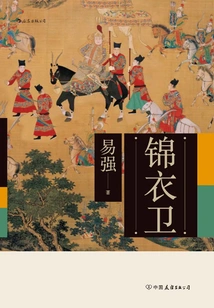
Jinyiwei
History锦衣卫
Yi Qiang
This book examines the creation and evolution of Jinyiwei within the historical background of the Ming Dynasty. Taking the development of Jinyiwei as the longitude and the replacement of emperors in the Ming Dynasty as the weft, it outlines the relationship between the demands for imperial power and the development trajectory of Jinyiwei in each period. Jinyiwei was founded during the Ming Dynasty. Its main task was to maintain etiquette and discipline in order to meet Zhu Yuanzhang's urgent need for "correct discipline", "legislation of etiquette", "name naming" and "clear orders" at the beginning of the founding of the country. As the situation developed, Jin Yiwei was gradually given various new functions: managing prisons, conducting diplomatic missions, arresting traitors and robbers, supervising courtiers, etc. The needs of imperial power also strongly affected the development of East Factory and West Factory. Imperial power, imperial guards, and east-west factories were intertwined in the course of history. In the late Ming Dynasty, factory guards even began to be involved in party disputes among courtiers, becoming an important force in them.
This book examines the creation and evolution of Jinyiwei within the historical background of the Ming Dynasty. Taking the development of Jinyiwei as the longitude and the replacement of emperors in the Ming Dynasty as the weft, it outlines the relationship between the demands for imperial power and the development trajectory of Jinyiwei in each period. Jinyiwei was founded during the Ming Dynasty. Its main task was to maintain etiquette and discipline in order to meet Zhu Yuanzhang's urgent need for "correct discipline", "legislation of etiquette", "name naming" and "clear orders" at the beginning of the founding of the country. As the situation developed, Jin Yiwei was gradually given various new functions: managing prisons, conducting diplomatic missions, arresting traitors and robbers, supervising courtiers, etc. The needs of imperial power also strongly affected the development of East Factory and West Factory. Imperial power, imperial guards, and east-west factories were intertwined in the course of history. In the late Ming Dynasty, factory guards even began to be involved in party disputes among courtiers, becoming an important force in them.
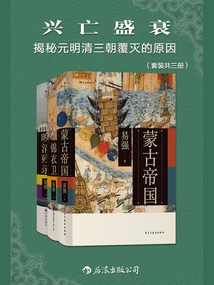
兴亡盛衰:揭秘元明清三朝覆灭的原因(套装共三册)
Yi Qiang
"Mongol Empire": In the 13th century, the Mongol Empire swept across the Eurasian continent like a whirlwind. Its rise and development have also brought us many mysteries: What are the internal driving forces and external conditions for the expansion of the Mongols? How did Mongolia grow rapidly from a local government with a population of less than 2 million to an unstoppable empire? How did the Mongolian conquests interact with those powerful countries with glorious civilizations? Focusing on these issues, the author excavated Chinese and Western historical documents and combined the research results of domestic and foreign scholars to give his own understanding. The Mongolian war of conquest accelerated exchanges in the flow of products, population migration, and cultural dissemination between the ancient Eastern and Western worlds. "Jinyiwei": This book examines the creation and evolution of Jinyiwei within the historical background of the Ming Dynasty. Taking the development of Jinyiwei as the longitude and the replacement of emperors in the Ming Dynasty as the weft, this book outlines the relationship between the needs of imperial power and the development trajectory of Jinyiwei in each period. Jinyiwei was founded during the Ming Dynasty. Its main task was to maintain etiquette and discipline in order to meet Zhu Yuanzhang's urgent need for "correct discipline", "legislation of etiquette", "name naming" and "clear orders" at the beginning of the founding of the country. As the situation developed, Jin Yiwei was gradually given various new functions: managing prisons, conducting diplomatic missions, arresting traitors and robbers, supervising courtiers, etc. The needs of imperial power also strongly affected the development of East Factory and West Factory. Imperial power, imperial guards, and east-west factories were intertwined in the course of history. In the late Ming Dynasty, factory guards even began to be involved in party disputes among courtiers, becoming an important force in them. "Remnants of the Late Qing Dynasty": Since the Qing Dynasty, China has been in frequent contact and collision with Western countries. Beginning with Macartney's visit to China in 1793, Western countries, through trading companies, missionaries, diplomats and other channels, collected a large amount of intelligence about the Qing Dynasty's political economy and society, and used it in subsequent military conflicts (such as the Opium War, the invasion of the British and French forces, etc.) To achieve the purpose of aggression. Based on precious reports from Western media over the past century, combined with original Chinese historical materials such as "Records of the Qing Dynasty" and "The Imperial Qing Dynasty Conference", the author tells a picture of the Qing Dynasty gradually falling behind, declining and even collapsing in its interactions with Western powers.
"Mongol Empire": In the 13th century, the Mongol Empire swept across the Eurasian continent like a whirlwind. Its rise and development have also brought us many mysteries: What are the internal driving forces and external conditions for the expansion of the Mongols? How did Mongolia grow rapidly from a local government with a population of less than 2 million to an unstoppable empire? How did the Mongolian conquests interact with those powerful countries with glorious civilizations? Focusing on these issues, the author excavated Chinese and Western historical documents and combined the research results of domestic and foreign scholars to give his own understanding. The Mongolian war of conquest accelerated exchanges in the flow of products, population migration, and cultural dissemination between the ancient Eastern and Western worlds. "Jinyiwei": This book examines the creation and evolution of Jinyiwei within the historical background of the Ming Dynasty. Taking the development of Jinyiwei as the longitude and the replacement of emperors in the Ming Dynasty as the weft, this book outlines the relationship between the needs of imperial power and the development trajectory of Jinyiwei in each period. Jinyiwei was founded during the Ming Dynasty. Its main task was to maintain etiquette and discipline in order to meet Zhu Yuanzhang's urgent need for "correct discipline", "legislation of etiquette", "name naming" and "clear orders" at the beginning of the founding of the country. As the situation developed, Jin Yiwei was gradually given various new functions: managing prisons, conducting diplomatic missions, arresting traitors and robbers, supervising courtiers, etc. The needs of imperial power also strongly affected the development of East Factory and West Factory. Imperial power, imperial guards, and east-west factories were intertwined in the course of history. In the late Ming Dynasty, factory guards even began to be involved in party disputes among courtiers, becoming an important force in them. "Remnants of the Late Qing Dynasty": Since the Qing Dynasty, China has been in frequent contact and collision with Western countries. Beginning with Macartney's visit to China in 1793, Western countries, through trading companies, missionaries, diplomats and other channels, collected a large amount of intelligence about the Qing Dynasty's political economy and society, and used it in subsequent military conflicts (such as the Opium War, the invasion of the British and French forces, etc.) To achieve the purpose of aggression. Based on precious reports from Western media over the past century, combined with original Chinese historical materials such as "Records of the Qing Dynasty" and "The Imperial Qing Dynasty Conference", the author tells a picture of the Qing Dynasty gradually falling behind, declining and even collapsing in its interactions with Western powers.
晚清残录
Yi Qiang
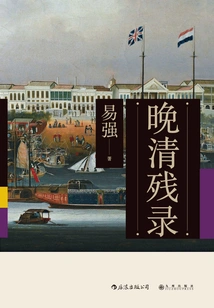
Since the Qing Dynasty, China has had frequent contacts and collisions with Western countries. Beginning with Macartney's visit to China in 1793, Western countries, through trading companies, missionaries, diplomats and other channels, collected a large amount of intelligence about the Qing Dynasty's political economy and society, and used it in subsequent military conflicts (such as the Opium War, the invasion of the British and French forces, etc.) To achieve the purpose of aggression. Based on precious reports from Western media over the past century, combined with original Chinese historical materials such as "Records of the Qing Dynasty" and "The Imperial Qing Dynasty Conference", the author tells a picture of the Qing Dynasty gradually falling behind, declining and even collapsing in its interactions with Western powers.
Since the Qing Dynasty, China has had frequent contacts and collisions with Western countries. Beginning with Macartney's visit to China in 1793, Western countries, through trading companies, missionaries, diplomats and other channels, collected a large amount of intelligence about the Qing Dynasty's political economy and society, and used it in subsequent military conflicts (such as the Opium War, the invasion of the British and French forces, etc.) To achieve the purpose of aggression. Based on precious reports from Western media over the past century, combined with original Chinese historical materials such as "Records of the Qing Dynasty" and "The Imperial Qing Dynasty Conference", the author tells a picture of the Qing Dynasty gradually falling behind, declining and even collapsing in its interactions with Western powers.