Library
Browse and search books
8 novels found
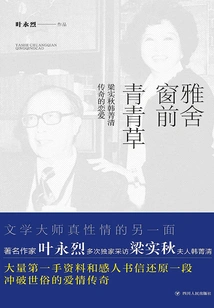
雅舍窗前青青草:梁实秋韩菁清传奇的恋爱
Ye Yonglie
Liang Shiqiu is a veteran of Taiwanese literary circles, and his "Ya She Xiao Xiao" has had a wide impact. When Liang Shiqiu was 73 years old, when he and his first wife Cheng Jishu went to the supermarket in the United States, an iron ladder suddenly fell and hit Cheng Jishu on the head, causing her death on the spot. Liang Shiqiu, who was deeply saddened, wrote the touching book "Memories of Sophora Garden Dreams". The owner of Taiwan's Far Eastern Publishing House was Liang Shiqiu's old friend for many years. In the name of proofreading the book, he invited Liang Shiqiu to return to Taipei to relax. Liang Shiqiu accidentally met Han Jingqing, a singer 30 years younger than him, in Taipei, and fell in love - a legendary love. Those readers who were immersed in tears in "Memories of Sophora Garden" learned about Liang Shiqiu's dusk love, which immediately set off a news storm. Liang Shiqiu's students even organized a "nursing group" to resolutely oppose the teacher's love affair in order to maintain Liang Shiqiu's "Confucius" image. The year-long love between Liang Shiqiu and Han Jingqing has withstood the test of 13 years. The author of this book exclusively interviewed Liang Shiqiu's wife, Han Jingqing, for many times, and described Liang Shiqiu's twilight love with first-hand information, and wrote this documentary, which has been widely welcomed by readers in the Mainland, Hong Kong and Taiwan. Taiwanese newspapers commented that Liang Shiqiu's Love at Dusk should have been written about by a Taiwanese writer, but unexpectedly the Shanghai writer Ye Yonglie took the lead. Instead, Taiwanese readers could only read the story that happened in Taiwan from the Shanghai writer's pen.
Liang Shiqiu is a veteran of Taiwanese literary circles, and his "Ya She Xiao Xiao" has had a wide impact. When Liang Shiqiu was 73 years old, when he and his first wife Cheng Jishu went to the supermarket in the United States, an iron ladder suddenly fell and hit Cheng Jishu on the head, causing her death on the spot. Liang Shiqiu, who was deeply saddened, wrote the touching book "Memories of Sophora Garden Dreams". The owner of Taiwan's Far Eastern Publishing House was Liang Shiqiu's old friend for many years. In the name of proofreading the book, he invited Liang Shiqiu to return to Taipei to relax. Liang Shiqiu accidentally met Han Jingqing, a singer 30 years younger than him, in Taipei, and fell in love - a legendary love. Those readers who were immersed in tears in "Memories of Sophora Garden" learned about Liang Shiqiu's dusk love, which immediately set off a news storm. Liang Shiqiu's students even organized a "nursing group" to resolutely oppose the teacher's love affair in order to maintain Liang Shiqiu's "Confucius" image. The year-long love between Liang Shiqiu and Han Jingqing has withstood the test of 13 years. The author of this book exclusively interviewed Liang Shiqiu's wife, Han Jingqing, for many times, and described Liang Shiqiu's twilight love with first-hand information, and wrote this documentary, which has been widely welcomed by readers in the Mainland, Hong Kong and Taiwan. Taiwanese newspapers commented that Liang Shiqiu's Love at Dusk should have been written about by a Taiwanese writer, but unexpectedly the Shanghai writer Ye Yonglie took the lead. Instead, Taiwanese readers could only read the story that happened in Taiwan from the Shanghai writer's pen.
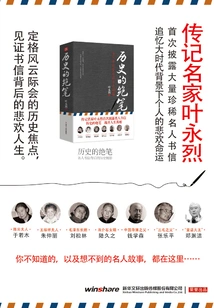
历史的绝笔:名人书信背后的历史侧影
Ye Yonglie
This is a big treasure. Everything you don't know, as well as unexpected celebrity stories, are all here: Chen Yun's wife Yu Ruomu, Wang Jiaxiang's wife Zhu Zhongli, Chiang Kai-shek's son-in-law Lu Jiuzhi, Chen Duxiu's confidential secretary Zheng Chaolin, "Central Cultural Revolution Group" leader Chen Boda, the father of China's aerospace Qian Xuesen, mathematician Hua Luogeng, American science fiction giant Heinlein, "Fairy Tale King" Zheng Yuanjie, "Father of Sanmao" Zhang Leping, famous poet Wang Guozhen, musician He Luting... Ye Yonglie witnessed the legendary lives of many celebrities and captured many fleeting historical moments. He clearly recorded a period of his life with warm writing and short length. When he flipped through it, the characters came to his face with the smoke and dust of history. On the one hand, there is enlightenment, on the other hand, there is emotion. How many people who have gone through vicissitudes of life will read such a masterpiece and sigh.
This is a big treasure. Everything you don't know, as well as unexpected celebrity stories, are all here: Chen Yun's wife Yu Ruomu, Wang Jiaxiang's wife Zhu Zhongli, Chiang Kai-shek's son-in-law Lu Jiuzhi, Chen Duxiu's confidential secretary Zheng Chaolin, "Central Cultural Revolution Group" leader Chen Boda, the father of China's aerospace Qian Xuesen, mathematician Hua Luogeng, American science fiction giant Heinlein, "Fairy Tale King" Zheng Yuanjie, "Father of Sanmao" Zhang Leping, famous poet Wang Guozhen, musician He Luting... Ye Yonglie witnessed the legendary lives of many celebrities and captured many fleeting historical moments. He clearly recorded a period of his life with warm writing and short length. When he flipped through it, the characters came to his face with the smoke and dust of history. On the one hand, there is enlightenment, on the other hand, there is emotion. How many people who have gone through vicissitudes of life will read such a masterpiece and sigh.
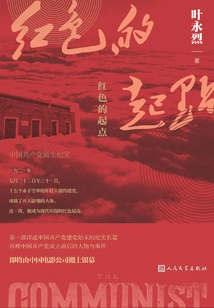
Red Starting Point
Literature红色的起点
Ye Yonglie
This long documentary is one of Ye Yonglie's "Red Trilogy". The author calls it "Party History Literature" and it is his non-fiction masterpiece. The Communist Party of China was born in Shanghai. Taking advantage of the "geographical advantage", the author of this book conducted long and detailed interviews in Shanghai, and also made a special trip to Beijing and Nanhu, Jiaxing. After that, he used an objective style and was loyal to historical facts to completely tell the story of the founding of the Communist Party of China. This book adopts a "T"-shaped structure, which mainly writes horizontal sections, supplemented by vertical sections. The horizontal section records the chronological history of the birth of the Communist Party of China around 1921, the flow of social thoughts, the operation of the Communist International, the establishment of the party group and the convening of the National Congress, etc. The vertical section tells the subsequent fate of the representatives of the "National Congress" of the Communist Party of China, giving readers a strong sense of historical depth.
This long documentary is one of Ye Yonglie's "Red Trilogy". The author calls it "Party History Literature" and it is his non-fiction masterpiece. The Communist Party of China was born in Shanghai. Taking advantage of the "geographical advantage", the author of this book conducted long and detailed interviews in Shanghai, and also made a special trip to Beijing and Nanhu, Jiaxing. After that, he used an objective style and was loyal to historical facts to completely tell the story of the founding of the Communist Party of China. This book adopts a "T"-shaped structure, which mainly writes horizontal sections, supplemented by vertical sections. The horizontal section records the chronological history of the birth of the Communist Party of China around 1921, the flow of social thoughts, the operation of the Communist International, the establishment of the party group and the convening of the National Congress, etc. The vertical section tells the subsequent fate of the representatives of the "National Congress" of the Communist Party of China, giving readers a strong sense of historical depth.
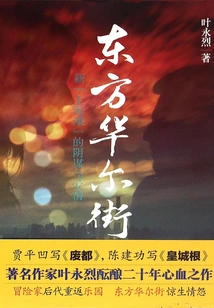
Oriental Wall Street
General Fiction东方华尔街
Ye Yonglie
The novel is set in today's Shanghai, showing the life ideals and living conditions of the young urban generation. The writing is simple and thick, the characters are full-bodied, and the plot is full of twists and turns. The book focuses on the exotic marriages of three men from the United States and three Shanghai girls. Through the different destinies of different characters, it reflects the vicissitudes of Shanghai, an international metropolis, and the style of the times. The book focuses on describing conspiracy and love, good and evil, fate and struggle. The story is fascinating and the ending is thought-provoking.
The novel is set in today's Shanghai, showing the life ideals and living conditions of the young urban generation. The writing is simple and thick, the characters are full-bodied, and the plot is full of twists and turns. The book focuses on the exotic marriages of three men from the United States and three Shanghai girls. Through the different destinies of different characters, it reflects the vicissitudes of Shanghai, an international metropolis, and the style of the times. The book focuses on describing conspiracy and love, good and evil, fate and struggle. The story is fascinating and the ending is thought-provoking.
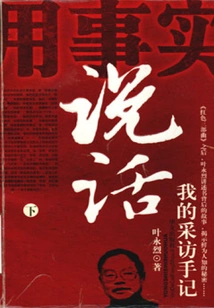
Speak with Facts: My Interview Notes
Literature用事实说话:我的采访手记
Ye Yonglie
As a writer of documentary literature, Ye Yonglie regards "speaking with facts" as the principle of creation. His documentary literature is very popular among readers because of "speaking with facts". His "Stories Behind the Books" are equally wonderful. The author launched "Chasing Historical Truth - My Writing Career" five years ago, revealing the little-known "story behind the book"
As a writer of documentary literature, Ye Yonglie regards "speaking with facts" as the principle of creation. His documentary literature is very popular among readers because of "speaking with facts". His "Stories Behind the Books" are equally wonderful. The author launched "Chasing Historical Truth - My Writing Career" five years ago, revealing the little-known "story behind the book"
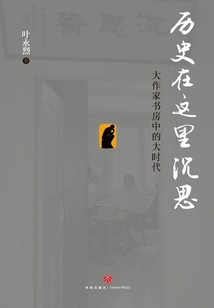
History Meditates Here
History历史在这里沉思
Ye Yonglie
The study is the "home base" for writers to create. "History Meditates Here" explores the creative "home base" of writer Ye Yonglie. Ye Yonglie's study is huge. As a documentary writer, he has collected a large number of precious files obtained during interviews, a large number of letters from famous people, thousands of interview tapes that have become "unforgettable", he also saved hundreds of thousands of photos he took himself, and collected many precious historical photos. Because of this, he named his study "Sitting Room". This book centers on Ye Yonglie's study, showing all aspects of the author's reading, book collection, and writing. There are both the writer's lament that he "sits at home" and the modern practice of keeping pace with the times and arming his study room with the new "Four Treasures of the Study". There are also rich and vivid writing stories behind a large number of books, legendary exchanges with readers and interviewees, as well as verbal and written criticism of infringement, piracy and counterfeit books.
The study is the "home base" for writers to create. "History Meditates Here" explores the creative "home base" of writer Ye Yonglie. Ye Yonglie's study is huge. As a documentary writer, he has collected a large number of precious files obtained during interviews, a large number of letters from famous people, thousands of interview tapes that have become "unforgettable", he also saved hundreds of thousands of photos he took himself, and collected many precious historical photos. Because of this, he named his study "Sitting Room". This book centers on Ye Yonglie's study, showing all aspects of the author's reading, book collection, and writing. There are both the writer's lament that he "sits at home" and the modern practice of keeping pace with the times and arming his study room with the new "Four Treasures of the Study". There are also rich and vivid writing stories behind a large number of books, legendary exchanges with readers and interviewees, as well as verbal and written criticism of infringement, piracy and counterfeit books.
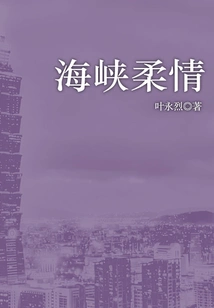
Strait Tenderness
History海峡柔情
Ye Yonglie
This book is the second part of the "Shanghai Trilogy", a long series by the famous writer Ye Yonglie, which tells the story of the love-hate entanglement between Zhu and Jiang families on Tamsui Road in Shanghai for hundreds of years. The son of the Zhu family, Zhu Jinyu, is an intelligence expert of the CCP. The son of the Jiang family, Jiang Chuanxian, is an economic confidant of Chiang Kai-shek, and his childhood friend has become his rival. After 1949, the Zhu and Jiang families were separated by the Taiwan Strait, but their descendants had complicated grievances and entanglements. The most legendary is the experience of Jiang Chuanxian's eldest son Jiang Bolun. He traveled back and forth between the two sides of the Taiwan Strait like a pendulum. He was arrested four times, married three times, and suffered several emotional setbacks. This reflects the complicated history of both sides of the Taiwan Strait. The strait runs between the Zhu and Jiang families, but it blocks the lingering tenderness. Their connection is broken and their love is still lingering, and one day they will get together again. "Strait Tenderness" sings a long song of family and country that "breaks the bones and connects the tendons".
This book is the second part of the "Shanghai Trilogy", a long series by the famous writer Ye Yonglie, which tells the story of the love-hate entanglement between Zhu and Jiang families on Tamsui Road in Shanghai for hundreds of years. The son of the Zhu family, Zhu Jinyu, is an intelligence expert of the CCP. The son of the Jiang family, Jiang Chuanxian, is an economic confidant of Chiang Kai-shek, and his childhood friend has become his rival. After 1949, the Zhu and Jiang families were separated by the Taiwan Strait, but their descendants had complicated grievances and entanglements. The most legendary is the experience of Jiang Chuanxian's eldest son Jiang Bolun. He traveled back and forth between the two sides of the Taiwan Strait like a pendulum. He was arrested four times, married three times, and suffered several emotional setbacks. This reflects the complicated history of both sides of the Taiwan Strait. The strait runs between the Zhu and Jiang families, but it blocks the lingering tenderness. Their connection is broken and their love is still lingering, and one day they will get together again. "Strait Tenderness" sings a long song of family and country that "breaks the bones and connects the tendons".
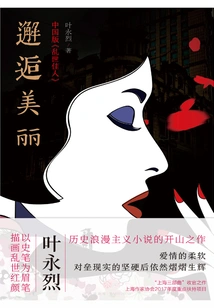
Encounter Beauty
General Fiction邂逅美丽
Ye Yonglie
"Meeting Beauty" is the final work of the "Shanghai Trilogy", a series of novels by the famous writer Ye Yonglie. The author considers it "the 'most beautiful' part of the trilogy." In the 1930s and 1940s, the Japanese invaded China, the Kuomintang and the Communist Party fought, the old and the new alternated, and social unrest... Shanghai became an "isolated island" with Japanese troops, traitors, and spies running rampant; Wenzhou also fell under the iron heel of the Japanese invaders. Fang Meilian and Fang Lilian, two sisters from a well-known family, accidentally entered a brothel in Shanghai and the other became a spy in Wenzhou. They were caught up in the tide of the times and experienced ups and downs. But they did not follow the crowd, but insisted on their own ethics and beliefs, dealing with various forces, and performing scenes of human life dramas that were evocative, sad or happy amidst the hatred and entanglements between family and country. The descriptions of the unique humanities, history, customs and customs of Shanghai, Wenzhou and other places make this book more colorful and have a long aftertaste.
"Meeting Beauty" is the final work of the "Shanghai Trilogy", a series of novels by the famous writer Ye Yonglie. The author considers it "the 'most beautiful' part of the trilogy." In the 1930s and 1940s, the Japanese invaded China, the Kuomintang and the Communist Party fought, the old and the new alternated, and social unrest... Shanghai became an "isolated island" with Japanese troops, traitors, and spies running rampant; Wenzhou also fell under the iron heel of the Japanese invaders. Fang Meilian and Fang Lilian, two sisters from a well-known family, accidentally entered a brothel in Shanghai and the other became a spy in Wenzhou. They were caught up in the tide of the times and experienced ups and downs. But they did not follow the crowd, but insisted on their own ethics and beliefs, dealing with various forces, and performing scenes of human life dramas that were evocative, sad or happy amidst the hatred and entanglements between family and country. The descriptions of the unique humanities, history, customs and customs of Shanghai, Wenzhou and other places make this book more colorful and have a long aftertaste.