Library
Browse and search books
11 novels found
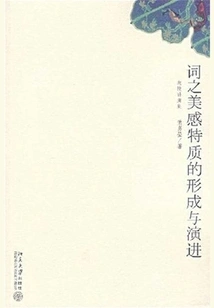
词之美感特质的形成与演进
Ye Jiaying
This book is the first part of the second-grade "Experimental School-based Textbook on Building a Socialist Core Value System" compiled by Renmin University of China. It uses the interpretation and explanation of traditional Chinese classics as the main means, combined with typical examples that children may encounter in their daily lives, to introduce the essence of traditional Chinese culture to primary school students in simple and easy-to-understand terms, and to subtly infiltrate the traditional virtues into the spiritual world of children. It can be used as a teaching material for primary school students' ideological and political courses, and is also suitable as an extracurricular reading material for primary school students.
This book is the first part of the second-grade "Experimental School-based Textbook on Building a Socialist Core Value System" compiled by Renmin University of China. It uses the interpretation and explanation of traditional Chinese classics as the main means, combined with typical examples that children may encounter in their daily lives, to introduce the essence of traditional Chinese culture to primary school students in simple and easy-to-understand terms, and to subtly infiltrate the traditional virtues into the spiritual world of children. It can be used as a teaching material for primary school students' ideological and political courses, and is also suitable as an extracurricular reading material for primary school students.
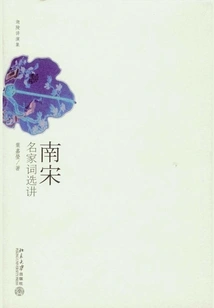
南宋名家词选讲
Ye Jiaying
This book inherits the ten lectures on Northern Song Dynasty poetry given by Ye in the auditorium of the State Education Commission in 1987, and continues to tell about several important poets of the Southern Song Dynasty and their works. When introducing each author, Professor Ye Jiaying often combines his life story, emotional quality, artistic style of works and other aspects with a comprehensive grasp but with different emphasis; at the same time, he not only pays attention to the inheritance and development of the Northern Song Dynasty Ci, especially the "Fuhua Ci" pioneered by Zhou Bangyan, but also pays attention to the different emotional contents of the authors in different stages of the Southern Song Dynasty due to different era backgrounds. Combined with the general introduction to the development of Ci before the Southern Song Dynasty in the introduction, readers can gain a generally complete understanding of the development of Ci from the late Tang and Five Dynasties to the two Song Dynasties.
This book inherits the ten lectures on Northern Song Dynasty poetry given by Ye in the auditorium of the State Education Commission in 1987, and continues to tell about several important poets of the Southern Song Dynasty and their works. When introducing each author, Professor Ye Jiaying often combines his life story, emotional quality, artistic style of works and other aspects with a comprehensive grasp but with different emphasis; at the same time, he not only pays attention to the inheritance and development of the Northern Song Dynasty Ci, especially the "Fuhua Ci" pioneered by Zhou Bangyan, but also pays attention to the different emotional contents of the authors in different stages of the Southern Song Dynasty due to different era backgrounds. Combined with the general introduction to the development of Ci before the Southern Song Dynasty in the introduction, readers can gain a generally complete understanding of the development of Ci from the late Tang and Five Dynasties to the two Song Dynasties.
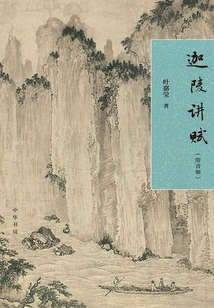
Jialing Lectures on Fu
Literature迦陵讲赋
Ye Jiaying
This book collects into one volume the contents of Mr. Ye Jiaying's lectures on Fu published in "Literary and Historical Knowledge". Everyone is familiar with Mr. Ye's lectures on poetry, but his explanation of Fu may be the first time he has met you so far, so it is novel. Mr. Ye explained "Wucheng Fu" by Bao Zhao, a master of fu style, "Xiaoyuan Fu" and "Ai Jiangnan Fu Preface" by Yu Xin, Ouyang Xiu's "Autumn Sound Fu", and Su Shi's "Red Cliff Fu" before and after. He not only sorted out the development and evolution of the fu style, but also explained the author's life, historical background, allusions, language common sense, etc. Involved in each article in a simple and easy-to-understand way. Readers can have a vivid understanding of this literary genre and several masterpieces of its most famous writers in a narrated atmosphere.
This book collects into one volume the contents of Mr. Ye Jiaying's lectures on Fu published in "Literary and Historical Knowledge". Everyone is familiar with Mr. Ye's lectures on poetry, but his explanation of Fu may be the first time he has met you so far, so it is novel. Mr. Ye explained "Wucheng Fu" by Bao Zhao, a master of fu style, "Xiaoyuan Fu" and "Ai Jiangnan Fu Preface" by Yu Xin, Ouyang Xiu's "Autumn Sound Fu", and Su Shi's "Red Cliff Fu" before and after. He not only sorted out the development and evolution of the fu style, but also explained the author's life, historical background, allusions, language common sense, etc. Involved in each article in a simple and easy-to-understand way. Readers can have a vivid understanding of this literary genre and several masterpieces of its most famous writers in a narrated atmosphere.
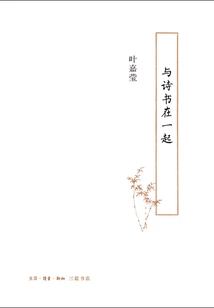
With Poetry and Books
Literature与诗书在一起
Ye Jiaying
Mr. Jiaying's first handbook book contains three contents: (1) a classic poem read by Ye Jiaying every month - encountering the soul of life contained in the poems; (2) a selection of Ye Jiaying's poems every week - feeling the flexible and firm four seasons of Mr. Ye's life; (3) The functions of the annual calendar, monthly calendar and weekly calendar, planning and recording the complicated daily life, leaving a personal mark in the chanting and caressing.
Mr. Jiaying's first handbook book contains three contents: (1) a classic poem read by Ye Jiaying every month - encountering the soul of life contained in the poems; (2) a selection of Ye Jiaying's poems every week - feeling the flexible and firm four seasons of Mr. Ye's life; (3) The functions of the annual calendar, monthly calendar and weekly calendar, planning and recording the complicated daily life, leaving a personal mark in the chanting and caressing.
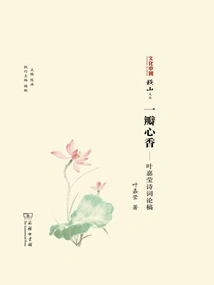
A Petal of Heart Fragrance: Essay on Ye Jiaying's Poetry (cultural China: Hengshan Wencong)
Literature一瓣心香:叶嘉莹诗词论稿(文化中国:横山文丛)
Ye Jiaying
"A Petal of Heart Fragrance" is a collection of poetry and speeches by Mr. Ye Jiaying in recent years. It contains a total of 7 transcripts of speeches. Mr. Ye is a "taxi in skirt" and has extremely high attainments in Chinese classical poetry. First of all, this book reveals the special beauty of Chinese lyrics by sorting out the development process from "Dunhuang Songs" to "Flowers"; explores the impact of Sino-Indian cultural exchanges on Chinese poetry, especially the impact of Buddhist singing and transliteration traditions on the phonology and rhythm of Chinese poetry, and its important role in the development of Chinese poetry; analyzes the adaptability of Western literary theory to Chinese poetry, but points out that Western literary theory cannot be completely applied to Chinese poetry, and the specific situation must be analyzed based on the background of the poetry itself. In addition, the book also intersperses the author's life journey, presenting readers with a true version of himself: a person who has been associated with poetry all his life, and has never given up poetry creation, teaching and research despite having many hardships.
"A Petal of Heart Fragrance" is a collection of poetry and speeches by Mr. Ye Jiaying in recent years. It contains a total of 7 transcripts of speeches. Mr. Ye is a "taxi in skirt" and has extremely high attainments in Chinese classical poetry. First of all, this book reveals the special beauty of Chinese lyrics by sorting out the development process from "Dunhuang Songs" to "Flowers"; explores the impact of Sino-Indian cultural exchanges on Chinese poetry, especially the impact of Buddhist singing and transliteration traditions on the phonology and rhythm of Chinese poetry, and its important role in the development of Chinese poetry; analyzes the adaptability of Western literary theory to Chinese poetry, but points out that Western literary theory cannot be completely applied to Chinese poetry, and the specific situation must be analyzed based on the background of the poetry itself. In addition, the book also intersperses the author's life journey, presenting readers with a true version of himself: a person who has been associated with poetry all his life, and has never given up poetry creation, teaching and research despite having many hardships.
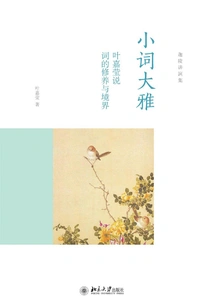
小词大雅:叶嘉莹说词的修养与境界
Ye Jiaying
This book is a compilation of Ye Jiaying's lecture in Nankai for CCTV's China University Open Course in 2012. The original open class is divided into six lectures, and the compiled manuscript is divided into seven lectures. The content of the original video is: Lecture 1: The location of the cultivation realm of Xiaoci. Lecture 2: Confucian cultivation in Zhang Hui's words. Lecture 3: Comparison of Zhang Huiyan's and Wang Guowei's Ci theory. Lecture 4: Wang Guowei's three-level realm theory and reception aesthetics. Lecture 5: Microscopic structure and dual characteristics of Ci. Lecture 6: Potential of Ci and reader response.
This book is a compilation of Ye Jiaying's lecture in Nankai for CCTV's China University Open Course in 2012. The original open class is divided into six lectures, and the compiled manuscript is divided into seven lectures. The content of the original video is: Lecture 1: The location of the cultivation realm of Xiaoci. Lecture 2: Confucian cultivation in Zhang Hui's words. Lecture 3: Comparison of Zhang Huiyan's and Wang Guowei's Ci theory. Lecture 4: Wang Guowei's three-level realm theory and reception aesthetics. Lecture 5: Microscopic structure and dual characteristics of Ci. Lecture 6: Potential of Ci and reader response.
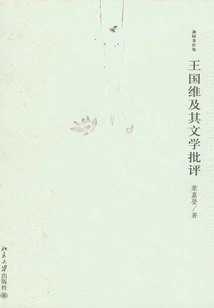
Wang Guowei and His Literary Criticism
Literature王国维及其文学批评
Ye Jiaying
This book was written by Ye Jiaying when she was at Harvard University. It was also a major turning point in the author's academic research. Mr. Wang Guowei, a modern Chinese academic master, ended his life by sinking himself into a lake. This shocking move left many doubts to future generations. Why did he suddenly commit suicide at the height of his academic research at the age of fifty-one? Why did he, who devoted himself to the study of Western philosophy and literature in the early days, turn to the textual research of ancient characters, ancient artifacts, and ancient history and places in the later stages of his academic career? This book provides convincing answers to these two puzzling questions. At the same time, this book also makes an appropriate evaluation of its literary criticism represented by "Human Words".
This book was written by Ye Jiaying when she was at Harvard University. It was also a major turning point in the author's academic research. Mr. Wang Guowei, a modern Chinese academic master, ended his life by sinking himself into a lake. This shocking move left many doubts to future generations. Why did he suddenly commit suicide at the height of his academic research at the age of fifty-one? Why did he, who devoted himself to the study of Western philosophy and literature in the early days, turn to the textual research of ancient characters, ancient artifacts, and ancient history and places in the later stages of his academic career? This book provides convincing answers to these two puzzling questions. At the same time, this book also makes an appropriate evaluation of its literary criticism represented by "Human Words".
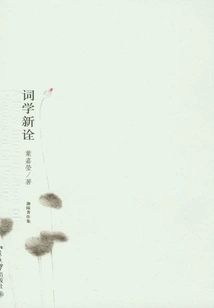
New Interpretation of Ci Studies
Literature词学新诠
Ye Jiaying
Based on his profound traditional cultural accomplishment and Western theoretical knowledge, and using modern concepts and theories as tools, the author of "New Interpretation of Ci Studies" scientifically developed and summarized traditional Ci Studies, and established a new theoretical framework of Ci Studies suitable for modern people's understanding. Compared with poetics, the development of Chinese poetry is relatively lagging behind. Although there are many original insights in traditional poetry, it lacks theoretical logic and scientific system.
Based on his profound traditional cultural accomplishment and Western theoretical knowledge, and using modern concepts and theories as tools, the author of "New Interpretation of Ci Studies" scientifically developed and summarized traditional Ci Studies, and established a new theoretical framework of Ci Studies suitable for modern people's understanding. Compared with poetics, the development of Chinese poetry is relatively lagging behind. Although there are many original insights in traditional poetry, it lacks theoretical logic and scientific system.
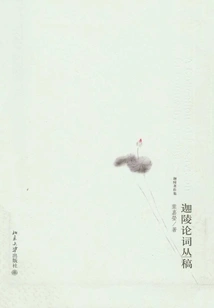
Jialing's Essay Series
Literature迦陵论词丛稿
Ye Jiaying
The eight essays on poetry collected in the book truly record the author's solid footprints in the past thirty years of studying classical literature, from the appreciation of individual poets' works to the exploration of critical theory. Among the eight reviews, the author deliberately selected some works that were not sublime and imperfect, and used this to reverse the prejudices of the academic community. Writers with slight character flaws such as Yan Shu, Wu Wenying, and Wang Yisun, as well as their works with mixed reputations and reputations that are considered obscure and obscure by some, are all targeted for criticism. The two theoretical discussion articles make in-depth explorations into the Huajian Ci School and Wang Guowei's realm theory.
The eight essays on poetry collected in the book truly record the author's solid footprints in the past thirty years of studying classical literature, from the appreciation of individual poets' works to the exploration of critical theory. Among the eight reviews, the author deliberately selected some works that were not sublime and imperfect, and used this to reverse the prejudices of the academic community. Writers with slight character flaws such as Yan Shu, Wu Wenying, and Wang Yisun, as well as their works with mixed reputations and reputations that are considered obscure and obscure by some, are all targeted for criticism. The two theoretical discussion articles make in-depth explorations into the Huajian Ci School and Wang Guowei's realm theory.
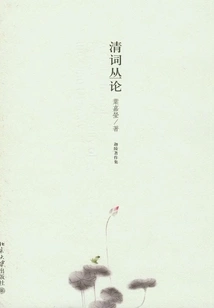
Qing Ci Cong Lun
Literature清词丛论
Ye Jiaying
The prosperity of Qing Ci is known as ZTE. This book makes an in-depth exploration of the status and value of four giants in the history of the development of Qing Ci, namely Chen Zilong, the representative of the Yunjian Ci School who initiated the change in Ci style, Zhu Yizun, the founder of the Western Zhejiang Ci School, Nalan Xingde, a giant in the world of Ci, and Zhang Huiyan, the leader of the Changzhou Ci School, and uses it to show the prosperity of the Ci Garden in the Qing Dynasty.
The prosperity of Qing Ci is known as ZTE. This book makes an in-depth exploration of the status and value of four giants in the history of the development of Qing Ci, namely Chen Zilong, the representative of the Yunjian Ci School who initiated the change in Ci style, Zhu Yizun, the founder of the Western Zhejiang Ci School, Nalan Xingde, a giant in the world of Ci, and Zhang Huiyan, the leader of the Changzhou Ci School, and uses it to show the prosperity of the Ci Garden in the Qing Dynasty.
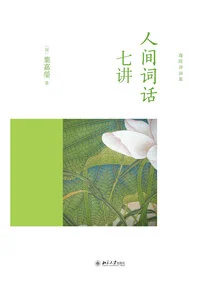
Seven Lectures on Human Words
Literature人间词话七讲
Ye Jiaying
"Human Words" is a literary criticism work written by the famous Chinese studies master Wang Guowei. It is also one of the most influential works since the late Qing Dynasty. Its writing is beautiful, but because its explanation method is traditional Chinese sentimental image criticism, it is not easy for ordinary readers to understand. The author of this book uses simple and elegant words to help you understand the stories and aesthetic qualities of words told by Wang Guowei and "Human Words".
"Human Words" is a literary criticism work written by the famous Chinese studies master Wang Guowei. It is also one of the most influential works since the late Qing Dynasty. Its writing is beautiful, but because its explanation method is traditional Chinese sentimental image criticism, it is not easy for ordinary readers to understand. The author of this book uses simple and elegant words to help you understand the stories and aesthetic qualities of words told by Wang Guowei and "Human Words".