Library
Browse and search books
1 novel found
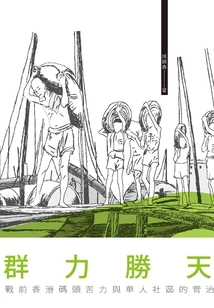
The Power of a Crowd: Dock Coolies and the Governance of the Chinese Community in Pre-war Hong Kong
History群力胜天:战前香港码头苦力与华人社区的管治
Yao Yingjia
The author's research covers the period from 1844 to 1945. By understanding the life and work of dock coolies, the author examines how these lower-class Chinese interacted with the government, and seeks a new perspective on understanding Chinese society. Taking the Pier Gurli group as the research object is based on the lack of relevant discussion in existing Hong Kong historical works. Since the opening of the port, the seaport freight industry has been closely related to Hong Kong's economic development. Before the war, cargo transportation relied on manpower and was an industry that many grassroots Chinese who lacked livelihood skills relied on to make a living. Therefore, it is quite representative for observing the situation of the Chinese community in Hong Kong. This study uses the perspective of social history to look at the history of the Chinese and the colonial government through the Gurli community in Hong Kong's docks, supplementing the history of Hong Kong. The author uses micro-historical investigation to reconstruct the history of the lower class groups by collecting and sorting out a large number of fragmentary historical materials, so as to achieve the goal of reflecting on the values of Hong Kong people.
The author's research covers the period from 1844 to 1945. By understanding the life and work of dock coolies, the author examines how these lower-class Chinese interacted with the government, and seeks a new perspective on understanding Chinese society. Taking the Pier Gurli group as the research object is based on the lack of relevant discussion in existing Hong Kong historical works. Since the opening of the port, the seaport freight industry has been closely related to Hong Kong's economic development. Before the war, cargo transportation relied on manpower and was an industry that many grassroots Chinese who lacked livelihood skills relied on to make a living. Therefore, it is quite representative for observing the situation of the Chinese community in Hong Kong. This study uses the perspective of social history to look at the history of the Chinese and the colonial government through the Gurli community in Hong Kong's docks, supplementing the history of Hong Kong. The author uses micro-historical investigation to reconstruct the history of the lower class groups by collecting and sorting out a large number of fragmentary historical materials, so as to achieve the goal of reflecting on the values of Hong Kong people.