Library
Browse and search books
2 novels found
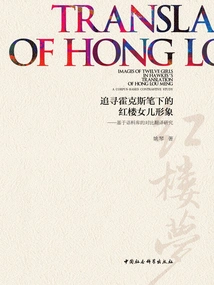
追寻霍克斯笔下的红楼女儿形象:基于语料库的对比翻译研究
Yao Qin
This book is the result of a general project of the China Postdoctoral Science Foundation. This book takes the representative and typical female images in the first 80 chapters of "Dream of Red Mansions" as the research object, and selects the main characters in the main volume, supplementary volume, and supplementary volume of The Twelve Golden Hairpins as the starting point. Through comparative research with the translations of Yang Xianyi and his wife, it explores the image of the daughter of the Red Mansion written by Hawkes. This book creates a "one-to-two" parallel corpus: the original text corpus of "Dream of Red Mansions" and the corpus of Huo and Yang's translation. It adopts a combination of quantitative and qualitative research methods. Through statistics, comparison and analysis, it discovers two paradigms of Hawkes' writing and image tracing: one is to write the expression of his words and dynamic outline; the other is to pursue his attributes and temperament and statically fixate the image. The research conclusions of this book can provide a useful paradigm for the English translation of characters in Chinese classic novels in the new century.
This book is the result of a general project of the China Postdoctoral Science Foundation. This book takes the representative and typical female images in the first 80 chapters of "Dream of Red Mansions" as the research object, and selects the main characters in the main volume, supplementary volume, and supplementary volume of The Twelve Golden Hairpins as the starting point. Through comparative research with the translations of Yang Xianyi and his wife, it explores the image of the daughter of the Red Mansion written by Hawkes. This book creates a "one-to-two" parallel corpus: the original text corpus of "Dream of Red Mansions" and the corpus of Huo and Yang's translation. It adopts a combination of quantitative and qualitative research methods. Through statistics, comparison and analysis, it discovers two paradigms of Hawkes' writing and image tracing: one is to write the expression of his words and dynamic outline; the other is to pursue his attributes and temperament and statically fixate the image. The research conclusions of this book can provide a useful paradigm for the English translation of characters in Chinese classic novels in the new century.
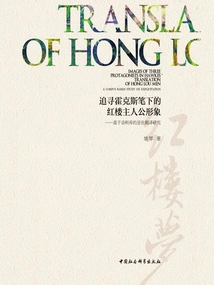
追寻霍克斯笔下的红楼主人公形象:基于语料库的显化翻译研究
Yao Qin
The publication of the English translation of Hawkes' "A Dream of Red Mansions" promoted the spread of "A Dream of Red Mansions" in the Western world. This book takes the image translation of the protagonists Lin Daiyu, Jia Baoyu, and Xue Baochai in "A Dream of Red Mansions" as an entry point. With the help of relevant theories of corpus linguistics, it adopts a combination of quantitative and qualitative, inductive and deductive methods. It uses a one-to-many mode of two original texts corresponding to two translations of a source text. It compares the first eighty chapters of the two translations of Hawkes and Yang Xianyi, and discusses Hawkes's translation method of manifesting the characters. This book combines normative translation research with descriptive translation research to conduct an empirical study on the translation of characters in Red Mansions, which makes up for the shortcomings of previous scattered studies and provides an effective research paradigm for translation studies.
The publication of the English translation of Hawkes' "A Dream of Red Mansions" promoted the spread of "A Dream of Red Mansions" in the Western world. This book takes the image translation of the protagonists Lin Daiyu, Jia Baoyu, and Xue Baochai in "A Dream of Red Mansions" as an entry point. With the help of relevant theories of corpus linguistics, it adopts a combination of quantitative and qualitative, inductive and deductive methods. It uses a one-to-many mode of two original texts corresponding to two translations of a source text. It compares the first eighty chapters of the two translations of Hawkes and Yang Xianyi, and discusses Hawkes's translation method of manifesting the characters. This book combines normative translation research with descriptive translation research to conduct an empirical study on the translation of characters in Red Mansions, which makes up for the shortcomings of previous scattered studies and provides an effective research paradigm for translation studies.