Library
Browse and search books
10 novels found
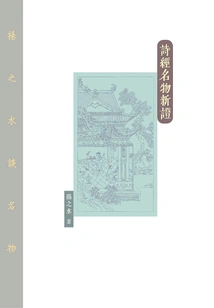
诗经名物新证
Yangzhishui
The "newness" pursued by "New Evidence of Famous Things" is, first of all, research methods. The sudden rise of archeology, which integrates humanities and natural sciences, has provided the most important conditions for the innovation of nomenclature methods. The second is the deepening of research level and enrichment of research connotation. It has developed from a simple focus on "things" to paying equal attention to "literature" and "things", that is, focusing on the revelation and elucidation of the humanistic significance of "things".
The "newness" pursued by "New Evidence of Famous Things" is, first of all, research methods. The sudden rise of archeology, which integrates humanities and natural sciences, has provided the most important conditions for the innovation of nomenclature methods. The second is the deepening of research level and enrichment of research connotation. It has developed from a simple focus on "things" to paying equal attention to "literature" and "things", that is, focusing on the revelation and elucidation of the humanistic significance of "things".
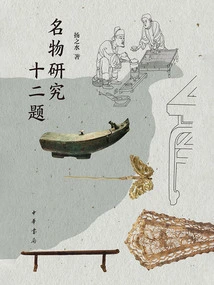
名物研究十二题
Yangzhishui
Nominology is an interdisciplinary subject involving the history of social life, history of arts and crafts, cultural relics, archaeology and other disciplines. For more than 20 years, Yang Zhishui has carried forward nominology through his solid and rigorous research and diligent writings, injecting new connotations into this ancient knowledge. As the author said: "As archeology gradually matures, today we are fully qualified to make nominology a new research method and solve literary problems." , History, archeology and other fields. "This book covers ancient furniture, Song Dynasty vases, incense, tea, wine vessels, seasonal customs, etc., And describes and reveals the research content, methods and functions of the interdisciplinary subject of nomenclature in the form of special topics.
Nominology is an interdisciplinary subject involving the history of social life, history of arts and crafts, cultural relics, archaeology and other disciplines. For more than 20 years, Yang Zhishui has carried forward nominology through his solid and rigorous research and diligent writings, injecting new connotations into this ancient knowledge. As the author said: "As archeology gradually matures, today we are fully qualified to make nominology a new research method and solve literary problems." , History, archeology and other fields. "This book covers ancient furniture, Song Dynasty vases, incense, tea, wine vessels, seasonal customs, etc., And describes and reveals the research content, methods and functions of the interdisciplinary subject of nomenclature in the form of special topics.
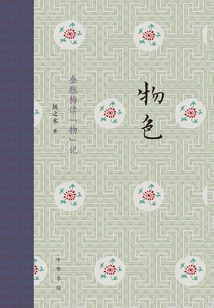
物色:金瓶梅读“物”记
Yangzhishui
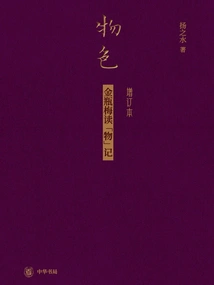
As one of the "Four Wonderful Books", "Jin Ping Mei" is praised by later generations for its detailed description of social life in the Ming Dynasty. This book is the first to provide a detailed interpretation and specialized research on "Jin Ping Mei" from the perspective of famous objects. The author said: "The Plum in the Golden Lotus opens up an unprecedented description of daily life and all the subtle things in life." However, the specific objects and objects that lay clues and structure the story in "The Plum in the Golden Lotus" have rarely been studied before. This book cites archaeological discoveries, examines relevant documents, and lists them one by one with illustrations, such as crown jewelery (Jinjing jade railing circle, golden lotus petal hairpin, bead hoop, gold silk bun, Jinxiang Jade Guanyin Manchi Jiaoxin...), Boxes (Blessing Box, Luodian Fruit Box, Ji Jin Square Box...) Various daily utensils, such as beds (Nanjing gold-lacquered Babu bed, black lacquer Huanmen gold-painted bed), wine and tea sets (silver handle kettles, round-target hook-headed chicken neck kettles, apricot leaf teaspoons...), Are all illuminated by the author's brushwork, allowing us to identify objects and see several meticulously drawn details in the long scroll of life in the Ming Dynasty. ? The term "wuse" comes from Chapter 46 of the famous ancient Chinese literary theory "Wen Xin Diao Long", which means "the color of things".
As one of the "Four Wonderful Books", "Jin Ping Mei" is praised by later generations for its detailed description of social life in the Ming Dynasty. This book is the first to provide a detailed interpretation and specialized research on "Jin Ping Mei" from the perspective of famous objects. The author said: "The Plum in the Golden Lotus opens up an unprecedented description of daily life and all the subtle things in life." However, the specific objects and objects that lay clues and structure the story in "The Plum in the Golden Lotus" have rarely been studied before. This book cites archaeological discoveries, examines relevant documents, and lists them one by one with illustrations, such as crown jewelery (Jinjing jade railing circle, golden lotus petal hairpin, bead hoop, gold silk bun, Jinxiang Jade Guanyin Manchi Jiaoxin...), Boxes (Blessing Box, Luodian Fruit Box, Ji Jin Square Box...) Various daily utensils, such as beds (Nanjing gold-lacquered Babu bed, black lacquer Huanmen gold-painted bed), wine and tea sets (silver handle kettles, round-target hook-headed chicken neck kettles, apricot leaf teaspoons...), Are all illuminated by the author's brushwork, allowing us to identify objects and see several meticulously drawn details in the long scroll of life in the Ming Dynasty. ? The term "wuse" comes from Chapter 46 of the famous ancient Chinese literary theory "Wen Xin Diao Long", which means "the color of things".
Questions and Answers
Literature问学记
Yangzhishui
Mr. Yang Zhishui is a researcher at the Institute of Literature of the Chinese Academy of Social Sciences and a famous expert on antiquities. His experience is quite legendary. In his youth, he worked, drove a truck, pedaled a three-wheeler, delivered cabbages, and sold watermelons. In 1977, he took part in the first college entrance examination and successfully passed the university. However, due to some strange circumstances, he failed to enter the school. He could only complete his studies through self-study, and eventually became a famous scholar of his generation. "Wen Xue Ji" is a collection of retrospective essays written by Mr. Yang Zhishui. In addition to several highly autobiographical chapters, the author also reminisces about his long-term interactions with mentors and friends such as Xu Fancheng, Sun Ji, Gu Lin, Zhao Luorui, Nan Xing, and Yang Chengkai. He uses exquisite and expressive writing to capture the erudition and elegance of those scholars, so that readers can appreciate the beauty of their thoughts, true feelings, and diction, and have a unique power to move them and inspire them.
Mr. Yang Zhishui is a researcher at the Institute of Literature of the Chinese Academy of Social Sciences and a famous expert on antiquities. His experience is quite legendary. In his youth, he worked, drove a truck, pedaled a three-wheeler, delivered cabbages, and sold watermelons. In 1977, he took part in the first college entrance examination and successfully passed the university. However, due to some strange circumstances, he failed to enter the school. He could only complete his studies through self-study, and eventually became a famous scholar of his generation. "Wen Xue Ji" is a collection of retrospective essays written by Mr. Yang Zhishui. In addition to several highly autobiographical chapters, the author also reminisces about his long-term interactions with mentors and friends such as Xu Fancheng, Sun Ji, Gu Lin, Zhao Luorui, Nan Xing, and Yang Chengkai. He uses exquisite and expressive writing to capture the erudition and elegance of those scholars, so that readers can appreciate the beauty of their thoughts, true feelings, and diction, and have a unique power to move them and inspire them.
物色:金瓶梅读“物”记(增订本)
Yangzhishui
This book is a groundbreaking work that combines nomological and literary studies. The book focuses on daily utensils such as gold and silver jewelry (such as Jin Ping Mei, Man Chi Jiao Fen), furniture (such as Nanjing gold-painted bed), wine and tea sets (silver pots, almond leaf teaspoons) that appear in the novel "Jin Ping Mei". It uses cultural relics and documents to compare and verify each other, and brilliantly restores the rich story. The details of daily life in the Ming Dynasty not only open a unique window for interpreting the literary world of novels, but also provide the basis for cultural relics and images for us to perceive the lives of ancient people today. It builds a bridge of communication between ancient and modern, literature and history, words and images\u002F cultural relics.
This book is a groundbreaking work that combines nomological and literary studies. The book focuses on daily utensils such as gold and silver jewelry (such as Jin Ping Mei, Man Chi Jiao Fen), furniture (such as Nanjing gold-painted bed), wine and tea sets (silver pots, almond leaf teaspoons) that appear in the novel "Jin Ping Mei". It uses cultural relics and documents to compare and verify each other, and brilliantly restores the rich story. The details of daily life in the Ming Dynasty not only open a unique window for interpreting the literary world of novels, but also provide the basis for cultural relics and images for us to perceive the lives of ancient people today. It builds a bridge of communication between ancient and modern, literature and history, words and images\u002F cultural relics.
从孩儿诗到百子图
Yangzhishui
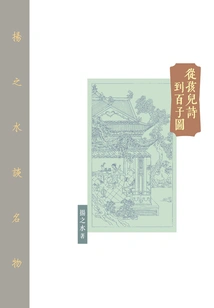
After adulthood, I always miss my childhood that is gone forever. However, among the Chinese classical literature, it is the least expressive of this type of emotion. The fifty-fifty rhyme of "Children's Poems" written by Lu Lu of the Tang Dynasty is close to the sound of empty valleys and feet, which is particularly cherished. What's even more interesting is that the children's games in the arts and crafts of the same period are almost consistent with it. The liveliness, nature and health of the pictures of babies playing are also a breath of fresh air in the atmosphere of the Tang Dynasty, and they are integrated into the customs of the two Song Dynasties and permeate throughout.
After adulthood, I always miss my childhood that is gone forever. However, among the Chinese classical literature, it is the least expressive of this type of emotion. The fifty-fifty rhyme of "Children's Poems" written by Lu Lu of the Tang Dynasty is close to the sound of empty valleys and feet, which is particularly cherished. What's even more interesting is that the children's games in the arts and crafts of the same period are almost consistent with it. The liveliness, nature and health of the pictures of babies playing are also a breath of fresh air in the atmosphere of the Tang Dynasty, and they are integrated into the customs of the two Song Dynasties and permeate throughout.
唐宋家具寻微
Yangzhishui
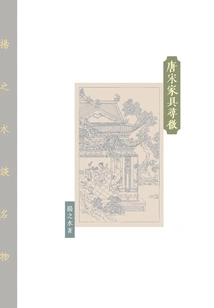
The Song Dynasty was a golden age for cultivating the spirit of "shi", that is, the spirit of scholar-bureaucrats. In their secular life, scholars used landscapes, fields, flowers and birds, tea and fragrance as their vocabulary, and used imagination and creation to create an independent small world for themselves. The style of furniture in the Song Dynasty, especially the taste of the furnishings of the scholar's bedrooms, had a deeper impact on later generations. The definition of elegance contained in it was carried by poetry and paintings into the new era.
The Song Dynasty was a golden age for cultivating the spirit of "shi", that is, the spirit of scholar-bureaucrats. In their secular life, scholars used landscapes, fields, flowers and birds, tea and fragrance as their vocabulary, and used imagination and creation to create an independent small world for themselves. The style of furniture in the Song Dynasty, especially the taste of the furnishings of the scholar's bedrooms, had a deeper impact on later generations. The definition of elegance contained in it was carried by poetry and paintings into the new era.
问道录(蠹鱼文丛)
Yangzhishui
"Dao Lu" is the latest collection of essays by the famous scholar Yang Zhishui (Zhao Liya). It includes: "Old Scenery under the Green Window", "Mr. Gu Lin's Last Letter", "In My Home Today", "Mr. Siyuan", "About Nanxing" "Mr.", "Walking with light and light", ""Should be broken over a thousand feet" - Farewell to Yang Chengkai", "Professional research based on "common sense" - Mr. Sun Ji's academic notes", "Looking up and looking down", "Me and the book" and other works.
"Dao Lu" is the latest collection of essays by the famous scholar Yang Zhishui (Zhao Liya). It includes: "Old Scenery under the Green Window", "Mr. Gu Lin's Last Letter", "In My Home Today", "Mr. Siyuan", "About Nanxing" "Mr.", "Walking with light and light", ""Should be broken over a thousand feet" - Farewell to Yang Chengkai", "Professional research based on "common sense" - Mr. Sun Ji's academic notes", "Looking up and looking down", "Me and the book" and other works.
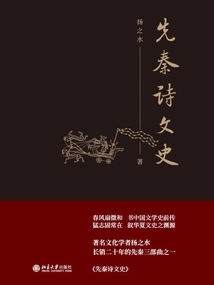
History of Pre-qin Poetry and Literature
Literature先秦诗文史
Yangzhishui
This book is based on the understanding and analysis of Pre-Qin texts, daily pre-Qin history and the experiences of writers. It explains the literary context of the Pre-Qin era when human civilization was just beginning, when human civilization was just starting to develop, and the books were not on the same track, but the same texts were not written in the same way.
This book is based on the understanding and analysis of Pre-Qin texts, daily pre-Qin history and the experiences of writers. It explains the literary context of the Pre-Qin era when human civilization was just beginning, when human civilization was just starting to develop, and the books were not on the same track, but the same texts were not written in the same way.
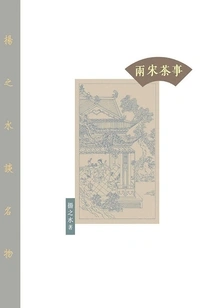
两宋茶事
Yangzhishui
Tea affairs are only one aspect of social life, but when reviewing its details within the scope of "Complete Poems of the Song Dynasty" and "Complete Song Ci", one cannot help but be surprised by its richness. The subtle details in tea affairs are originally sentiments, situations, and spirits in tea poems; the choice of tea drinking method often shows the drinker's magnanimity and spirit. Lu Yu once worked hard to make the tea ceremony an art and a realm. Scholars in the Song and Song Dynasties turned the suspended art and realm into daily life, and they could still use "objects" to carry their own "culture". So is there any difference between the tea of scholars and the tea of the world? Starting from the examination of the school's famous objects, we should be able to discover the significance of some details in the mutual contrast between tea poems and tea events.
Tea affairs are only one aspect of social life, but when reviewing its details within the scope of "Complete Poems of the Song Dynasty" and "Complete Song Ci", one cannot help but be surprised by its richness. The subtle details in tea affairs are originally sentiments, situations, and spirits in tea poems; the choice of tea drinking method often shows the drinker's magnanimity and spirit. Lu Yu once worked hard to make the tea ceremony an art and a realm. Scholars in the Song and Song Dynasties turned the suspended art and realm into daily life, and they could still use "objects" to carry their own "culture". So is there any difference between the tea of scholars and the tea of the world? Starting from the examination of the school's famous objects, we should be able to discover the significance of some details in the mutual contrast between tea poems and tea events.