Library
Browse and search books
4 novels found
新眼界·国外印象记·访苏两月记
Yang Zhongjian
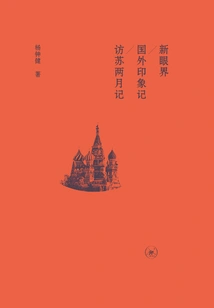
"New Vision" is Yang Lao's travelogue in Europe and America. At the end of World War II, he departed from Chongqing and flew to California, USA. He visited Miami, New York, Washington, Boston and other places, as well as Canada and Mexico. After that, he returned to the United States and then to the United Kingdom, where he visited and studied geological and paleontological research institutions in London, Cambridge and other places. Later, he returned to China from the United States. At this time, China had won the victory. He was very happy and full of new hope for the future of the country. During this trip to Europe and the United States, in addition to his own itinerary, food and daily life, etc., Mr. Yang also introduced the situation of foreign research institutions and museums at considerable length. In addition, he also described the economic and cultural development of foreign countries that he saw, and often lamented "When can we achieve it?" He heard the news of the victory of World War II in the United States and shared the joy with the American people. After returning to China, he saw the tragic victory at home, and naturally he had new hopes for the recovery of the national economy, especially the construction of disciplines. During this trip to Europe and the United States, Mr. Yang summarized and organized the professional and academic issues in another book - "Overseas Impressions", mainly recording people and events in the disciplines of paleontology and geology. According to Mr. Yang's own words, "the most profound impressions during the travel are listed as special topics in a comprehensive way and recorded one by one." In it, there is a relatively systematic introduction to geological institutions, museums, subject development, brief biographies of scholars, and the latest research results in the United States. It further compares it with the subject situation in my country and points out which of them we can learn from and which ones are not worthy of learning. Mr. Yang single-handedly built my country's vertebrate paleontology. Many of the new results that are being produced now are still thanks to Mr. Yang's planning and management of the discipline at that time. From August to October 1956, Mr. Yang Zhongjian, together with colleagues Zhou Mingzhen and Zhao Jinke from the Institute of Vertebrate Paleontology, and Si Xingjian from the Nanjing Institute of Paleontology, were invited to visit the Soviet Union. After returning, he wrote "A Two-Month Visit to the Soviet Union". This book records Mr. Yang's experiences in the Soviet Union, especially his exchanges with Soviet paleontologists, as well as field investigations and visits in various places. Through the text, we can have a glimpse of the Soviet Union's national appearance and scientific research strength at that time, understand the Soviet paleontologists, and appreciate the sincere friendship between China and the Soviet Union at that time.
"New Vision" is Yang Lao's travelogue in Europe and America. At the end of World War II, he departed from Chongqing and flew to California, USA. He visited Miami, New York, Washington, Boston and other places, as well as Canada and Mexico. After that, he returned to the United States and then to the United Kingdom, where he visited and studied geological and paleontological research institutions in London, Cambridge and other places. Later, he returned to China from the United States. At this time, China had won the victory. He was very happy and full of new hope for the future of the country. During this trip to Europe and the United States, in addition to his own itinerary, food and daily life, etc., Mr. Yang also introduced the situation of foreign research institutions and museums at considerable length. In addition, he also described the economic and cultural development of foreign countries that he saw, and often lamented "When can we achieve it?" He heard the news of the victory of World War II in the United States and shared the joy with the American people. After returning to China, he saw the tragic victory at home, and naturally he had new hopes for the recovery of the national economy, especially the construction of disciplines. During this trip to Europe and the United States, Mr. Yang summarized and organized the professional and academic issues in another book - "Overseas Impressions", mainly recording people and events in the disciplines of paleontology and geology. According to Mr. Yang's own words, "the most profound impressions during the travel are listed as special topics in a comprehensive way and recorded one by one." In it, there is a relatively systematic introduction to geological institutions, museums, subject development, brief biographies of scholars, and the latest research results in the United States. It further compares it with the subject situation in my country and points out which of them we can learn from and which ones are not worthy of learning. Mr. Yang single-handedly built my country's vertebrate paleontology. Many of the new results that are being produced now are still thanks to Mr. Yang's planning and management of the discipline at that time. From August to October 1956, Mr. Yang Zhongjian, together with colleagues Zhou Mingzhen and Zhao Jinke from the Institute of Vertebrate Paleontology, and Si Xingjian from the Nanjing Institute of Paleontology, were invited to visit the Soviet Union. After returning, he wrote "A Two-Month Visit to the Soviet Union". This book records Mr. Yang's experiences in the Soviet Union, especially his exchanges with Soviet paleontologists, as well as field investigations and visits in various places. Through the text, we can have a glimpse of the Soviet Union's national appearance and scientific research strength at that time, understand the Soviet paleontologists, and appreciate the sincere friendship between China and the Soviet Union at that time.
Northwest Section
Literature西北的剖面
Yang Zhongjian
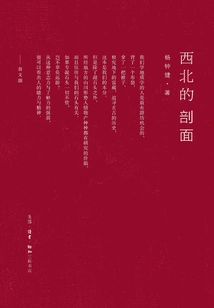
Between 1929 and 1931, when this book was written, it involved four large-scale travel expeditions, covering a total distance of 20,000 miles. The footprints so far cover most of northern China, and most of them are in remote and remote places. The records in the book not only have a professional vision, but also meticulously and vividly record the customs and customs of the remote areas of northwest China at that time. The author's deep humanistic feelings also permeate between the lines.
Between 1929 and 1931, when this book was written, it involved four large-scale travel expeditions, covering a total distance of 20,000 miles. The footprints so far cover most of northern China, and most of them are in remote and remote places. The records in the book not only have a professional vision, but also meticulously and vividly record the customs and customs of the remote areas of northwest China at that time. The author's deep humanistic feelings also permeate between the lines.
Cross-section of the Cross-section·looking at the Rivers and Mountains During the Anti-japanese War
Literature剖面的剖面·抗战中看河山
Yang Zhongjian
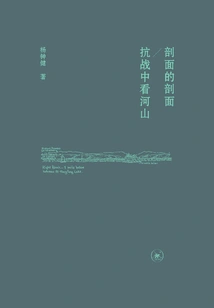
"Section of Sections" records the geological and paleontological investigations and surveys conducted by Mr. Yang Zhongjian in Shandong, Hebei, Shanxi, Shaanxi, Gansu, Sichuan and Guangdong and Guangxi from 1932 to 1936. As before, Yang Lao wrote down his observations and insights during the journey and turned it into a travel diary. Mr. Yang particularly emphasized that some travel notes in the old days had beautiful words and were immortal masterpieces. However, the descriptions were not consistent with the facts. For example, the mountains must have thousands of walls and the moon was nothing more than the Jade Rabbit Chang'e. What's more, Xia Yu would be mentioned when visiting Longmen, and Xia Yu would be mentioned when passing Turpan. Therefore, new travel notes must provide people with accurate knowledge and accurately record the geological background, geographical conditions, and human customs of each place. This writing intention is even more prominent in "Looking at Rivers and Mountains during the Anti-Japanese War". In 1937, the July 7th Incident and the Anti-Japanese War broke out. When Peiping, which he regarded as his second hometown, fell, Mr. Yang left Peiping in November of that year with grief. He traveled through Hunan, Yunnan, Sichuan, Shaanxi, then traveled to Xinjiang, and returned to Peiping, which took six years. This field trip was carried out amidst the decline of the country and the difficult current situation. Yang Laoyou felt that the beauty of our country's mountains and rivers and the abundance of products were not enough to describe it clearly with "splendid mountains and rivers" and "vast land and abundant resources", but should be recorded with actual descriptions and scientific explanations. More importantly, Mr. Yang was shocked to see that foreigners had detailed investigation records of my country's physical geography, but similar books had never appeared in my country's border areas after being lost for many years. He felt deeply the need for the development of geological science in our country.
"Section of Sections" records the geological and paleontological investigations and surveys conducted by Mr. Yang Zhongjian in Shandong, Hebei, Shanxi, Shaanxi, Gansu, Sichuan and Guangdong and Guangxi from 1932 to 1936. As before, Yang Lao wrote down his observations and insights during the journey and turned it into a travel diary. Mr. Yang particularly emphasized that some travel notes in the old days had beautiful words and were immortal masterpieces. However, the descriptions were not consistent with the facts. For example, the mountains must have thousands of walls and the moon was nothing more than the Jade Rabbit Chang'e. What's more, Xia Yu would be mentioned when visiting Longmen, and Xia Yu would be mentioned when passing Turpan. Therefore, new travel notes must provide people with accurate knowledge and accurately record the geological background, geographical conditions, and human customs of each place. This writing intention is even more prominent in "Looking at Rivers and Mountains during the Anti-Japanese War". In 1937, the July 7th Incident and the Anti-Japanese War broke out. When Peiping, which he regarded as his second hometown, fell, Mr. Yang left Peiping in November of that year with grief. He traveled through Hunan, Yunnan, Sichuan, Shaanxi, then traveled to Xinjiang, and returned to Peiping, which took six years. This field trip was carried out amidst the decline of the country and the difficult current situation. Yang Laoyou felt that the beauty of our country's mountains and rivers and the abundance of products were not enough to describe it clearly with "splendid mountains and rivers" and "vast land and abundant resources", but should be recorded with actual descriptions and scientific explanations. More importantly, Mr. Yang was shocked to see that foreigners had detailed investigation records of my country's physical geography, but similar books had never appeared in my country's border areas after being lost for many years. He felt deeply the need for the development of geological science in our country.
去国的悲哀·西北的剖面
Yang Zhongjian
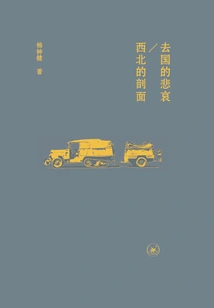
"The Sorrow of Leaving the Country" was written between 1923 and 1928. It tells the story of how, after graduating from the Geology Department of Peking University in 1923, he went to the University of Munich in Germany to study paleontology and geology under the guidance of the paleontologist Schlosser, funded by his family. In this book, he recorded his experience of starting from Huaxian County, passing through Beijing, Shanghai, and then taking a boat from Shanghai to Munich (which he called Mingxing in the book); he also recorded his experiences while studying abroad, when he and his teachers and classmates conducted geological surveys in Sweden and other cities in Germany. At that time, domestic warlords were fighting, and diplomacy was at a disadvantage. Yang Lao walked along the way and saw that the countryside was on the verge of bankruptcy, urban construction was hopeless, and the people were living in misery, and he felt very sad. When I see things abroad that are on the rise, especially when I visit museums and exhibition halls and see others thriving, I can't help but think of the backwardness of my own country's political and economic situation, let alone the development of science and technology and culture. In short, Mr. Yang's contradictory and complex emotions were revealed all the time during his journey. We follow Mr. Yang's footsteps and travel abroad in the 1920s, and we can also feel his mood. "Cross Sections of the Northwest" was first published in 1932. The author traveled and surveyed for three months in western Shanxi and northern Shaanxi, and then went to the three northeastern provinces for less than a month. Then he participated in the Sino-US inspection team to the eastern part of Erenhot, Inner Mongolia, and finally participated in the Sino-French scientific inspection team, starting from Zhangjiakou and heading west to Turpan and Urumqi, and then returned to Peking via Siberia. Mr. Yang recorded the experiences and feelings of these four trips and compiled them into a volume called "Cross Sections of the Northwest", with a preface by Weng Wenhao.
"The Sorrow of Leaving the Country" was written between 1923 and 1928. It tells the story of how, after graduating from the Geology Department of Peking University in 1923, he went to the University of Munich in Germany to study paleontology and geology under the guidance of the paleontologist Schlosser, funded by his family. In this book, he recorded his experience of starting from Huaxian County, passing through Beijing, Shanghai, and then taking a boat from Shanghai to Munich (which he called Mingxing in the book); he also recorded his experiences while studying abroad, when he and his teachers and classmates conducted geological surveys in Sweden and other cities in Germany. At that time, domestic warlords were fighting, and diplomacy was at a disadvantage. Yang Lao walked along the way and saw that the countryside was on the verge of bankruptcy, urban construction was hopeless, and the people were living in misery, and he felt very sad. When I see things abroad that are on the rise, especially when I visit museums and exhibition halls and see others thriving, I can't help but think of the backwardness of my own country's political and economic situation, let alone the development of science and technology and culture. In short, Mr. Yang's contradictory and complex emotions were revealed all the time during his journey. We follow Mr. Yang's footsteps and travel abroad in the 1920s, and we can also feel his mood. "Cross Sections of the Northwest" was first published in 1932. The author traveled and surveyed for three months in western Shanxi and northern Shaanxi, and then went to the three northeastern provinces for less than a month. Then he participated in the Sino-US inspection team to the eastern part of Erenhot, Inner Mongolia, and finally participated in the Sino-French scientific inspection team, starting from Zhangjiakou and heading west to Turpan and Urumqi, and then returned to Peking via Siberia. Mr. Yang recorded the experiences and feelings of these four trips and compiled them into a volume called "Cross Sections of the Northwest", with a preface by Weng Wenhao.