Library
Browse and search books
3 novels found
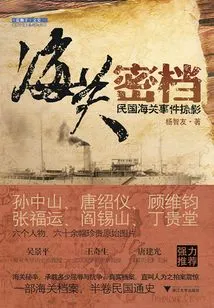
海关密档:民国海关事件掠影
Yang Zhiyou
Since the Republic of China, the customs system of the Foreign Tax Department has remained weak. China's national gate is not guarded by the Chinese, but controlled by foreigners! From the late Qing government weakening customs power, to Sun Yat-sen's southern revolutionary regime challenging foreigners; from local warlords shaking the foundation of customs, to the Beiyang government and Nanjing National Government gradually reclaiming customs rights and interests, the foreign tax department system gradually declined, until it disappeared in the wind in the sound of the gun salute at the founding ceremony of the People's Republic of China in Tiananmen Square. However, the scenes of customs turmoil that once stirred up the historical sky will never be forgotten... This book uses the major customs incidents involving six influential figures of the Republic of China as an entry point. It not only presents a panoramic view of the difficult process of regaining customs sovereignty, but also reflects the colorful historical mirror image of the Republic of China from the perspective of the customs.
Since the Republic of China, the customs system of the Foreign Tax Department has remained weak. China's national gate is not guarded by the Chinese, but controlled by foreigners! From the late Qing government weakening customs power, to Sun Yat-sen's southern revolutionary regime challenging foreigners; from local warlords shaking the foundation of customs, to the Beiyang government and Nanjing National Government gradually reclaiming customs rights and interests, the foreign tax department system gradually declined, until it disappeared in the wind in the sound of the gun salute at the founding ceremony of the People's Republic of China in Tiananmen Square. However, the scenes of customs turmoil that once stirred up the historical sky will never be forgotten... This book uses the major customs incidents involving six influential figures of the Republic of China as an entry point. It not only presents a panoramic view of the difficult process of regaining customs sovereignty, but also reflects the colorful historical mirror image of the Republic of China from the perspective of the customs.
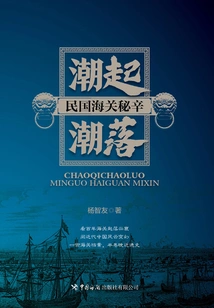
潮起潮落:民国海关秘辛
Yang Zhiyou
The rumbling artillery fire of the Opium War forced the Qing government to sign a series of unequal treaties such as the Alliance under the City and the Treaty of Nanjing between China and Britain, which gave birth to the customs foreign tax department system. This made China's customs, which was originally independent, come under the management of foreigners. In addition to its main business of tax collection and anti-smuggling, the customs also included navigation, port affairs, domestic and foreign debt, postal service, education, etc., And was deeply involved in the political, military, and diplomatic affairs of the Qing government... The author uses Jun Yongsheng Chang's writing style observes and examines history from the perspective of customs, or summarizes, analyzes or infers all major historical events in modern Chinese history such as the Opium War, the British and French invasion of China, the Taiping Rebellion, the Westernization Movement, the Reform Movement of 1898, and the Boxer Rebellion. The article tells the story of history through the small details, and tells the stories of historical figures such as Li Taitai, Hart, Yi Xin, Zhang Deyi, Guo Songtao, Bin Chun, Li Hongzhang, etc., Revealing secrets rarely mentioned in publications, allowing readers to glimpse the turbulent historical mirror image of the late Qing Dynasty through the changes in the imperial customs.
The rumbling artillery fire of the Opium War forced the Qing government to sign a series of unequal treaties such as the Alliance under the City and the Treaty of Nanjing between China and Britain, which gave birth to the customs foreign tax department system. This made China's customs, which was originally independent, come under the management of foreigners. In addition to its main business of tax collection and anti-smuggling, the customs also included navigation, port affairs, domestic and foreign debt, postal service, education, etc., And was deeply involved in the political, military, and diplomatic affairs of the Qing government... The author uses Jun Yongsheng Chang's writing style observes and examines history from the perspective of customs, or summarizes, analyzes or infers all major historical events in modern Chinese history such as the Opium War, the British and French invasion of China, the Taiping Rebellion, the Westernization Movement, the Reform Movement of 1898, and the Boxer Rebellion. The article tells the story of history through the small details, and tells the stories of historical figures such as Li Taitai, Hart, Yi Xin, Zhang Deyi, Guo Songtao, Bin Chun, Li Hongzhang, etc., Revealing secrets rarely mentioned in publications, allowing readers to glimpse the turbulent historical mirror image of the late Qing Dynasty through the changes in the imperial customs.
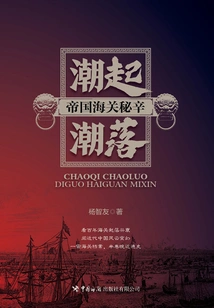
潮起潮落:帝国海关秘辛
Yang Zhiyou
The rumbling artillery fire of the Opium War forced the Qing government to sign a series of unequal treaties such as the Alliance under the City and the Treaty of Nanjing between China and Britain, which gave birth to the customs foreign tax department system. This made China's customs, which was originally independent, come under the management of foreigners. In addition to its main business of tax collection and anti-smuggling, the customs also included navigation, port affairs, domestic and foreign debt, postal service, education, etc., And was deeply involved in the political, military, and diplomatic affairs of the Qing government... The author uses Jun Yongsheng Chang's writing style observes and examines history from the perspective of customs, or summarizes, analyzes or infers all major historical events in modern Chinese history such as the Opium War, the British and French invasion of China, the Taiping Rebellion, the Westernization Movement, the Reform Movement of 1898, and the Boxer Rebellion. The article tells the story of history through the small details, and tells the stories of historical figures such as Li Taitai, Hart, Yi Xin, Zhang Deyi, Guo Songtao, Bin Chun, Li Hongzhang, etc., Revealing secrets rarely mentioned in publications, allowing readers to glimpse the turbulent historical mirror image of the late Qing Dynasty through the changes in the imperial customs.
The rumbling artillery fire of the Opium War forced the Qing government to sign a series of unequal treaties such as the Alliance under the City and the Treaty of Nanjing between China and Britain, which gave birth to the customs foreign tax department system. This made China's customs, which was originally independent, come under the management of foreigners. In addition to its main business of tax collection and anti-smuggling, the customs also included navigation, port affairs, domestic and foreign debt, postal service, education, etc., And was deeply involved in the political, military, and diplomatic affairs of the Qing government... The author uses Jun Yongsheng Chang's writing style observes and examines history from the perspective of customs, or summarizes, analyzes or infers all major historical events in modern Chinese history such as the Opium War, the British and French invasion of China, the Taiping Rebellion, the Westernization Movement, the Reform Movement of 1898, and the Boxer Rebellion. The article tells the story of history through the small details, and tells the stories of historical figures such as Li Taitai, Hart, Yi Xin, Zhang Deyi, Guo Songtao, Bin Chun, Li Hongzhang, etc., Revealing secrets rarely mentioned in publications, allowing readers to glimpse the turbulent historical mirror image of the late Qing Dynasty through the changes in the imperial customs.