Library
Browse and search books
33 novels found
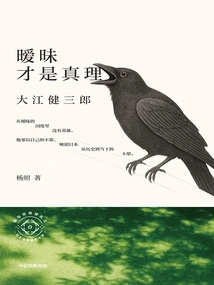
Ambiguity is the Truth: Oe Kenzaburo
Literature暧昧才是真理:大江健三郎
Yang Zhao
This book is a collection of literary criticism by Taiwanese scholar and writer Yang Zhao interpreting Oe Kenzaburo's life and works. It belongs to the second volume of his series "Ten Lectures by Famous Japanese Literary Masters: My Long Struggle with the World". The first volume (five books) of this series has been published. For nearly thirty years, Yang Zhao has continued to study and experience Japanese society, history, and culture. As a generation deeply influenced by Japanese culture, he continues to explore "what Japan is." In 2017, during an unexpected trip, he found an outlet for this problem: exploring Japan through Japanese novelists and their works. In the next five years, Yang Zhao selected 10 Japanese literary giants from different eras: Natsume Soseki, Tanizaki Junichiro, Akutagawa Ryunosuke, Kawabata Yasunari, Dazai Osamu, Mishima Yukio, Endo Shusaku, Oe Kenzaburo, Miyamoto Teru, and Murakami Haruki. Based on social background research, restoration of the mood of the times, original text reading, and excerpts and translations of important passages, he wrote about these 10 literary giants and the century-old Japanese literary history they created.
This book is a collection of literary criticism by Taiwanese scholar and writer Yang Zhao interpreting Oe Kenzaburo's life and works. It belongs to the second volume of his series "Ten Lectures by Famous Japanese Literary Masters: My Long Struggle with the World". The first volume (five books) of this series has been published. For nearly thirty years, Yang Zhao has continued to study and experience Japanese society, history, and culture. As a generation deeply influenced by Japanese culture, he continues to explore "what Japan is." In 2017, during an unexpected trip, he found an outlet for this problem: exploring Japan through Japanese novelists and their works. In the next five years, Yang Zhao selected 10 Japanese literary giants from different eras: Natsume Soseki, Tanizaki Junichiro, Akutagawa Ryunosuke, Kawabata Yasunari, Dazai Osamu, Mishima Yukio, Endo Shusaku, Oe Kenzaburo, Miyamoto Teru, and Murakami Haruki. Based on social background research, restoration of the mood of the times, original text reading, and excerpts and translations of important passages, he wrote about these 10 literary giants and the century-old Japanese literary history they created.
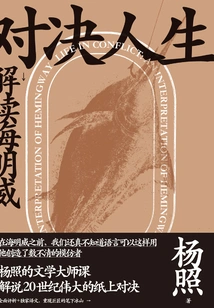
Duel of Life: Interpreting Hemingway
Literature对决人生:解读海明威
Yang Zhao
This book is a long introduction that provides an in-depth and comprehensive analysis of Hemingway's works. With his expertise in "historical reading" and "literary reading", Yang Zhao peeled off the cocoon and uncovered the huge iceberg hidden under Hemingway's words, cracked the code of his extremely concise aesthetic style, and elucidated the noble personality value conveyed in "The Old Man and the Sea". The appendix "The Old Man and the Sea" is a classic work by Nobel Prize winner Hemingway. It takes the story of the old man fighting a big fish as the core, condenses the minimalist scene into a metaphor of human beings' loneliness and desperation, and depicts Shen Yong's perseverance and resistance.
This book is a long introduction that provides an in-depth and comprehensive analysis of Hemingway's works. With his expertise in "historical reading" and "literary reading", Yang Zhao peeled off the cocoon and uncovered the huge iceberg hidden under Hemingway's words, cracked the code of his extremely concise aesthetic style, and elucidated the noble personality value conveyed in "The Old Man and the Sea". The appendix "The Old Man and the Sea" is a classic work by Nobel Prize winner Hemingway. It takes the story of the old man fighting a big fish as the core, condenses the minimalist scene into a metaphor of human beings' loneliness and desperation, and depicts Shen Yong's perseverance and resistance.
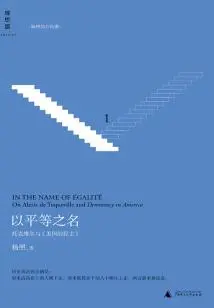
以平等之名:托克维尔与《论美国的民主》
Yang Zhao
"In the Name of Equality" is the first in a series of courses. The author uses the tone of a storyteller to easily interpret the process of Tocqueville's investigation of democracy in the United States and his final writing of "On Democracy in America". He also carefully leads readers into the world of the text and tells in depth how the Puritan spirit shaped American democracy and the United States. How is the civil liberties of France different from the natural freedom of France? More importantly, when Yang Zhao describes how Tocqueville cited examples to analyze the spirit of equality and parliamentary tradition in the United States, and warned the French how to learn from American democracy, readers can also reflect on how they participate in public affairs. This is the meaning of citizenship classes.
"In the Name of Equality" is the first in a series of courses. The author uses the tone of a storyteller to easily interpret the process of Tocqueville's investigation of democracy in the United States and his final writing of "On Democracy in America". He also carefully leads readers into the world of the text and tells in depth how the Puritan spirit shaped American democracy and the United States. How is the civil liberties of France different from the natural freedom of France? More importantly, when Yang Zhao describes how Tocqueville cited examples to analyze the spirit of equality and parliamentary tradition in the United States, and warned the French how to learn from American democracy, readers can also reflect on how they participate in public affairs. This is the meaning of citizenship classes.
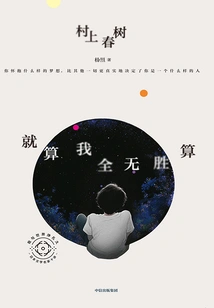
就算我全无胜算:村上春树(日本文学名家十讲07)
Yang Zhao
This book is the seventh volume in the series "My Long Struggle with the World: Ten Lectures on Japanese Literature by Yang Zhao", in which Yang Zhao talks about Haruki Murakami. There is a well in life, and one day we will fall into it. Falling into a well, confusion, disorder, and sadness. However, among the many people struggling in the well, Haruki Murakami created a kind of protagonist who always has a kind of strength: he has the courage to live resolutely and confidently. From Midori Kobayashi who "I can feel the so-called responsibility" in "Norwegian Wood", to Tamura who "want to be the strongest fifteen-year-old boy in the world" in "Kafka on the Shore", to Aomame and Tengo in "1Q84" who resolutely rescued themselves from nightmares... The same blood flows in their bodies. Even if they are destined to fall into a well, they will not give up the responsibility of living easily. No matter how unappealing the responsibility may seem. Haruki Murakami not only writes about our cowardice, but also the objects of courage we want to call upon.
This book is the seventh volume in the series "My Long Struggle with the World: Ten Lectures on Japanese Literature by Yang Zhao", in which Yang Zhao talks about Haruki Murakami. There is a well in life, and one day we will fall into it. Falling into a well, confusion, disorder, and sadness. However, among the many people struggling in the well, Haruki Murakami created a kind of protagonist who always has a kind of strength: he has the courage to live resolutely and confidently. From Midori Kobayashi who "I can feel the so-called responsibility" in "Norwegian Wood", to Tamura who "want to be the strongest fifteen-year-old boy in the world" in "Kafka on the Shore", to Aomame and Tengo in "1Q84" who resolutely rescued themselves from nightmares... The same blood flows in their bodies. Even if they are destined to fall into a well, they will not give up the responsibility of living easily. No matter how unappealing the responsibility may seem. Haruki Murakami not only writes about our cowardice, but also the objects of courage we want to call upon.
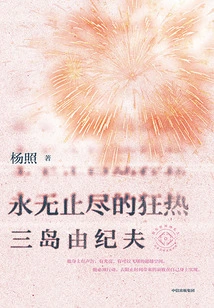
永无止尽的狂热:三岛由纪夫(日本文学名家十讲06)
Yang Zhao
19-year-old Mishima Yukio felt that he might die in the war at any time. There is no way of knowing whether I will be alive tomorrow, so I enjoy it wildly today. This absolute and pure passion continued to live in his body after the war, until the last day - November 25, 1970, when the 45-year-old Yukio Mishima transcribed the last part of "Sea of Fertility", "The Five Declines of Heavenly Beings", and the long million words were wrapped up in great tranquility. He then went to the Ground Self-Defense Force and committed seppuku. He believes that there is a kind of decent person who takes death seriously, and there is another kind of person who lives by himself, making his life darker and more boring. He also believed that before a person dies, he should always have light. "Mishima Yukio wrote until he was about to leave this world. He seemed to still embrace the world in his heart, but used his own hands to pull life away from this world. He did not commit suicide because he lost his enthusiasm for the world. On the contrary, he chose to die before he grew old because of his special enthusiasm for the world." - Yang Zhao.
19-year-old Mishima Yukio felt that he might die in the war at any time. There is no way of knowing whether I will be alive tomorrow, so I enjoy it wildly today. This absolute and pure passion continued to live in his body after the war, until the last day - November 25, 1970, when the 45-year-old Yukio Mishima transcribed the last part of "Sea of Fertility", "The Five Declines of Heavenly Beings", and the long million words were wrapped up in great tranquility. He then went to the Ground Self-Defense Force and committed seppuku. He believes that there is a kind of decent person who takes death seriously, and there is another kind of person who lives by himself, making his life darker and more boring. He also believed that before a person dies, he should always have light. "Mishima Yukio wrote until he was about to leave this world. He seemed to still embrace the world in his heart, but used his own hands to pull life away from this world. He did not commit suicide because he lost his enthusiasm for the world. On the contrary, he chose to die before he grew old because of his special enthusiasm for the world." - Yang Zhao.
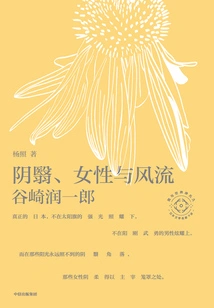
Shadow, Women and Romance: Junichiro Tanizaki (ten Lectures by Famous Japanese Literary Masters 02)
Literature阴翳、女性与风流:谷崎润一郎(日本文学名家十讲02)
Yang Zhao
The standard-bearers of literature in the 20th century were also laggards of their respective eras. "Classic Reader" Yang Zhao's ten-lecture series on Japanese literary masters: Using literature, listen to their struggles and answers. This volume's "classic reader" Yang Zhao × "the aesthetic master hidden in the corner of the great era" Junichiro Tanizaki: Writing all the way without echoing any era is his most remarkable achievement. From the "demonist" fantasy writing to the classical aesthetics of "Snow", passion that is not accepted and should not exist under collective standards will not really disappear from human reality. This is Tanizaki's basic creative attitude in his 50-year writing career. He spent 30 years and translated "The Tale of Genji" three times, which inspired him to create a unique "shadow aesthetic" writing, and then created a lifetime classic work "Snow". When the whole society was forced to sing for war, in his writing, the daughters of the Makoka family still cared about love, singing and dancing, catching fireflies, and admiring flowers. Are war, bushido, militarism, etc. Really more representative of Japan and closer to the Japanese people than their lives?
The standard-bearers of literature in the 20th century were also laggards of their respective eras. "Classic Reader" Yang Zhao's ten-lecture series on Japanese literary masters: Using literature, listen to their struggles and answers. This volume's "classic reader" Yang Zhao × "the aesthetic master hidden in the corner of the great era" Junichiro Tanizaki: Writing all the way without echoing any era is his most remarkable achievement. From the "demonist" fantasy writing to the classical aesthetics of "Snow", passion that is not accepted and should not exist under collective standards will not really disappear from human reality. This is Tanizaki's basic creative attitude in his 50-year writing career. He spent 30 years and translated "The Tale of Genji" three times, which inspired him to create a unique "shadow aesthetic" writing, and then created a lifetime classic work "Snow". When the whole society was forced to sing for war, in his writing, the daughters of the Makoka family still cared about love, singing and dancing, catching fireflies, and admiring flowers. Are war, bushido, militarism, etc. Really more representative of Japan and closer to the Japanese people than their lives?
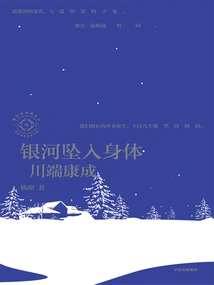
The Milky Way Falls into the Body: Kawabata Yasunari (ten Lectures by Japanese Literary Masters 04)
Literature银河坠入身体:川端康成(日本文学名家十讲04)
Yang Zhao
The standard-bearers of literature in the 20th century were also laggards of their respective eras. "Classic Reader" Yang Zhao's ten-lecture series on Japanese literary masters: Using literature, listen to their struggles and answers. Yang Zhao, the "classic reader" of this volume × Yasunari Kawabata, the "reconstructor of Japanese beauty": What we have is not this life, but a few accidental moments. In this world, while looking at the flowers, you are walking towards hell. Kawabata Yasunari, who grew up at the funeral of his relatives when he was young, was hit by the double blow of the country's defeat and the death of his best friend. He early felt the "futility" of life: How could he continue to survive for the rest of his life? Delicate and sensitive, he found a way in novels: novels can condense time - it is both an instant and an eternity fixed by condensation. There is a huge conflict and tension between the two, bursting out an indescribable beauty. In the post-war atmosphere of advocating the West, the multi-layered circulation of people's hearts, human kindness, strong time perception and social care perspective in Kawabata Yasunari's works not only revitalized Japan's own civilizational value, but also allowed it to be seen and valued by the world again. He was determined to preserve the beauty of Japan while preserving the country and find a reason for its continued existence amidst the ruins of defeat.
The standard-bearers of literature in the 20th century were also laggards of their respective eras. "Classic Reader" Yang Zhao's ten-lecture series on Japanese literary masters: Using literature, listen to their struggles and answers. Yang Zhao, the "classic reader" of this volume × Yasunari Kawabata, the "reconstructor of Japanese beauty": What we have is not this life, but a few accidental moments. In this world, while looking at the flowers, you are walking towards hell. Kawabata Yasunari, who grew up at the funeral of his relatives when he was young, was hit by the double blow of the country's defeat and the death of his best friend. He early felt the "futility" of life: How could he continue to survive for the rest of his life? Delicate and sensitive, he found a way in novels: novels can condense time - it is both an instant and an eternity fixed by condensation. There is a huge conflict and tension between the two, bursting out an indescribable beauty. In the post-war atmosphere of advocating the West, the multi-layered circulation of people's hearts, human kindness, strong time perception and social care perspective in Kawabata Yasunari's works not only revitalized Japan's own civilizational value, but also allowed it to be seen and valued by the world again. He was determined to preserve the beauty of Japan while preserving the country and find a reason for its continued existence amidst the ruins of defeat.
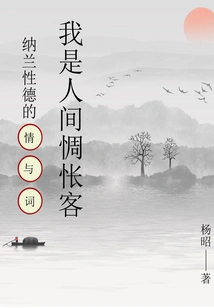
我是人间惆怅客:纳兰性德的情与词
Yang Zhao
The deep affection shown by Nalan Xingde in his poems made him known as "the first love type in the Qing Dynasty" by later generations, and his short life was just like his poems, which made people sad and sighing. Nalan Xingde, whose courtesy name is Rongruo, also known as Nalan Rongruo, is one of the most famous poets in the Qing Dynasty. He is known as "the first poet in the Manchu Qing Dynasty" and "the first poet in the early Qing Dynasty". His poems are sincere in emotion and profound in artistic conception, and mostly express personal emotions and people. His collection of poems was originally named "Side Hat Collection" and was later renamed "Drinking Water Poems", implying the profound emotions and self-realization contained in his poems. This book introduces Nalan Xingde's works and life, aiming to give readers a better understanding of him.
The deep affection shown by Nalan Xingde in his poems made him known as "the first love type in the Qing Dynasty" by later generations, and his short life was just like his poems, which made people sad and sighing. Nalan Xingde, whose courtesy name is Rongruo, also known as Nalan Rongruo, is one of the most famous poets in the Qing Dynasty. He is known as "the first poet in the Manchu Qing Dynasty" and "the first poet in the early Qing Dynasty". His poems are sincere in emotion and profound in artistic conception, and mostly express personal emotions and people. His collection of poems was originally named "Side Hat Collection" and was later renamed "Drinking Water Poems", implying the profound emotions and self-realization contained in his poems. This book introduces Nalan Xingde's works and life, aiming to give readers a better understanding of him.
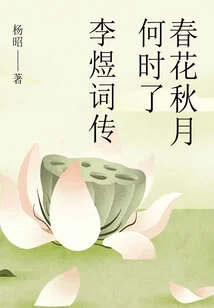
春花秋月何时了:李煜词传
Yang Zhao
Among the dazzling stars of ancient Chinese poetry, the lyrics of Li Yu, the late master of the Southern Tang Dynasty, are like a deep and sad meteor that streaked across the sky at the turn of the Tang and Song Dynasties, leaving a unique mark. His words, with deep emotions and beautiful writing style, not only reflect personal joys and sorrows, but also reflect the ups and downs of that era. The magnificence and sadness of the Southern Tang court are indispensable elements in Li Yu's early poetry. They constitute a true portrayal of court life in Li Yu's works, and also reflect the inner conflicts brought about by his dual identity as a monarch. This book will lead readers into that era, savor the magnificence and pathos of the "Eternal Ci Emperor"'s words, and experience his unique artistic charm.
Among the dazzling stars of ancient Chinese poetry, the lyrics of Li Yu, the late master of the Southern Tang Dynasty, are like a deep and sad meteor that streaked across the sky at the turn of the Tang and Song Dynasties, leaving a unique mark. His words, with deep emotions and beautiful writing style, not only reflect personal joys and sorrows, but also reflect the ups and downs of that era. The magnificence and sadness of the Southern Tang court are indispensable elements in Li Yu's early poetry. They constitute a true portrayal of court life in Li Yu's works, and also reflect the inner conflicts brought about by his dual identity as a monarch. This book will lead readers into that era, savor the magnificence and pathos of the "Eternal Ci Emperor"'s words, and experience his unique artistic charm.
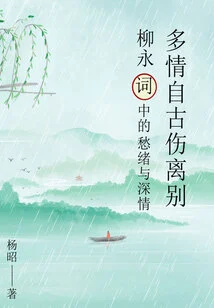
Sentiment Has Hurt Parting Since Ancient Times: Melancholy and Affection in Liu Yong's Poems
Literature多情自古伤离别:柳永词中的愁绪与深情
Yang Zhao
In Liu Yong's lyrics, affection and melancholy are often intertwined and difficult to separate. His desire and persistence for love, his sympathy and praise for women, his love and concern for life, as well as his emotion and helplessness about career, life, and the universe, all turned into the affectionate brushwork and expression of melancholy in his words. This blend of affection and melancholy gives Liu Yong's lyrics a unique artistic charm and makes him an immortal poet in the history of Chinese literature. This book uses Liu Yong's life, career and classic poems as clues to briefly explain the deep feelings and melancholy in Liu Yong's poems, trying to show a poet with a profound emotional world and unique artistic talent and his dreamlike life.
In Liu Yong's lyrics, affection and melancholy are often intertwined and difficult to separate. His desire and persistence for love, his sympathy and praise for women, his love and concern for life, as well as his emotion and helplessness about career, life, and the universe, all turned into the affectionate brushwork and expression of melancholy in his words. This blend of affection and melancholy gives Liu Yong's lyrics a unique artistic charm and makes him an immortal poet in the history of Chinese literature. This book uses Liu Yong's life, career and classic poems as clues to briefly explain the deep feelings and melancholy in Liu Yong's poems, trying to show a poet with a profound emotional world and unique artistic talent and his dreamlike life.
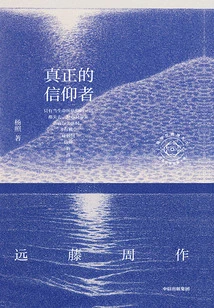
True Believer: Shusaku Endo
Literature真正的信仰者:远藤周作
Yang Zhao
This book is a collection of literary criticism by Taiwanese scholar and writer Yang Zhao interpreting Endo Shusaku and his works. In this book, Yang Zhao starts from Endo Shusaku's special identity as a Catholic and explains his life experiences such as being forced to be baptized under the influence of his mother and breaking with his father when he was a teenager. He also uses several of his representative works "Silence", "Mother", "Sea and Poison", "Shadow", "Deep River" and "Samurai" as examples to analyze Endo Shusaku's reflections on "guilt" and "shame" in post-war Japanese society and his doubts about the values of the Catholic Church. The manuscript is of good quality, highly knowledgeable, and backed by a large amount of literary materials. The language is fluent and easy to understand. Through Yang Zhao's explanation, readers can learn about Shusaku Endo, a heavyweight writer who is not well-known in China but who definitely occupies an important position in the Japanese literary world.
This book is a collection of literary criticism by Taiwanese scholar and writer Yang Zhao interpreting Endo Shusaku and his works. In this book, Yang Zhao starts from Endo Shusaku's special identity as a Catholic and explains his life experiences such as being forced to be baptized under the influence of his mother and breaking with his father when he was a teenager. He also uses several of his representative works "Silence", "Mother", "Sea and Poison", "Shadow", "Deep River" and "Samurai" as examples to analyze Endo Shusaku's reflections on "guilt" and "shame" in post-war Japanese society and his doubts about the values of the Catholic Church. The manuscript is of good quality, highly knowledgeable, and backed by a large amount of literary materials. The language is fluent and easy to understand. Through Yang Zhao's explanation, readers can learn about Shusaku Endo, a heavyweight writer who is not well-known in China but who definitely occupies an important position in the Japanese literary world.
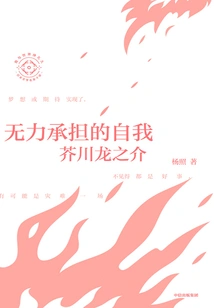
The Unbearable Self: Ryunosuke Akutagawa (ten Lectures by Famous Japanese Literary Masters 03)
Literature无力承担的自我:芥川龙之介(日本文学名家十讲03)
Yang Zhao
The standard-bearers of literature in the 20th century were also laggards of their respective eras. "Classic Reader" Yang Zhao's ten-lecture series on Japanese literary masters: Using literature, listen to their struggles and answers. Yang Zhao, the "classic reader" of this volume × Ryunosuke Akutagawa, "the ruthless writer who faces the world squarely": When a dream or expectation comes true, it may not always be a good thing, it may be a disaster. Ryunosuke Akutagawa is one of the most cosmopolitan among modern Japanese writers. From "Rashomon", which transcends tradition, to "Hell Transformation", which shows the magic of art, and crazy writing that is far away from daily life, such as "Kappa" and "Gear", reading his works is like being in the labyrinth of human nature, standing on the opposite side of the natural, to explore the chaos and confusion that neither reason nor sense can reach, but that modern life has to face and deal with. What he repeatedly shows in his works is how people who are deeply penetrated by "human feelings and principles" completely confuse the external and internal aspects of themselves. Many times people simply don't know what their true feelings and thoughts are, and what their performance is in line with the expectations of others in the outside world. Only in a few moments of sudden inspiration do people suddenly gain insight into the complex psychological operations of others, or suddenly understand their own subtle thoughts. And those moments of inspiration are what Akutagawa believes the novel should capture.
The standard-bearers of literature in the 20th century were also laggards of their respective eras. "Classic Reader" Yang Zhao's ten-lecture series on Japanese literary masters: Using literature, listen to their struggles and answers. Yang Zhao, the "classic reader" of this volume × Ryunosuke Akutagawa, "the ruthless writer who faces the world squarely": When a dream or expectation comes true, it may not always be a good thing, it may be a disaster. Ryunosuke Akutagawa is one of the most cosmopolitan among modern Japanese writers. From "Rashomon", which transcends tradition, to "Hell Transformation", which shows the magic of art, and crazy writing that is far away from daily life, such as "Kappa" and "Gear", reading his works is like being in the labyrinth of human nature, standing on the opposite side of the natural, to explore the chaos and confusion that neither reason nor sense can reach, but that modern life has to face and deal with. What he repeatedly shows in his works is how people who are deeply penetrated by "human feelings and principles" completely confuse the external and internal aspects of themselves. Many times people simply don't know what their true feelings and thoughts are, and what their performance is in line with the expectations of others in the outside world. Only in a few moments of sudden inspiration do people suddenly gain insight into the complex psychological operations of others, or suddenly understand their own subtle thoughts. And those moments of inspiration are what Akutagawa believes the novel should capture.
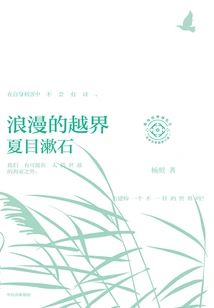
浪漫的越界:夏目漱石(日本文学名家十讲01)
Yang Zhao
The standard-bearers of literature in the 20th century were also laggards of their respective eras. "Classic Reader" Yang Zhao's ten-lecture series on Japanese literary masters: Using literature, listen to their struggles and answers. Yang Zhao, the "classic reader" of this volume, × Natsume Soseki, the translator of the word "romance": Life is not easy, and it is difficult wherever you go. Is it possible for us to build a different world outside of the constraints of human society? From "I Am a Cat" to the unfinished work "Light and Dark", Natsume Soseki created 15 novels in just over ten years. Each work has different styles and characteristics, but they are all about the wrestling and confrontation between "human feelings" and "inhuman feelings". This also points to the collective confusion of an era. After the Meiji Restoration, the "modernity" of rapid Westernization did not bring the expected freedom to Japan, and traditional human ethics still fully enveloped individual lives. Over time, people lose their self, are unable to behave without social roles, and do not know who they are or where they are. Therefore, Soseki, who was determined to fight against the trend, used protagonists with "inhuman" qualities to illustrate that there are no established boundaries and there is no so-called "normal". People have the freedom and potential to choose. The standard answer of this era can only be faced and decided by oneself.
The standard-bearers of literature in the 20th century were also laggards of their respective eras. "Classic Reader" Yang Zhao's ten-lecture series on Japanese literary masters: Using literature, listen to their struggles and answers. Yang Zhao, the "classic reader" of this volume, × Natsume Soseki, the translator of the word "romance": Life is not easy, and it is difficult wherever you go. Is it possible for us to build a different world outside of the constraints of human society? From "I Am a Cat" to the unfinished work "Light and Dark", Natsume Soseki created 15 novels in just over ten years. Each work has different styles and characteristics, but they are all about the wrestling and confrontation between "human feelings" and "inhuman feelings". This also points to the collective confusion of an era. After the Meiji Restoration, the "modernity" of rapid Westernization did not bring the expected freedom to Japan, and traditional human ethics still fully enveloped individual lives. Over time, people lose their self, are unable to behave without social roles, and do not know who they are or where they are. Therefore, Soseki, who was determined to fight against the trend, used protagonists with "inhuman" qualities to illustrate that there are no established boundaries and there is no so-called "normal". People have the freedom and potential to choose. The standard answer of this era can only be faced and decided by oneself.
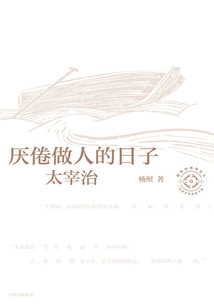
厌倦做人的日子:太宰治(日本文学名家十讲05)
Yang Zhao
The standard-bearers of literature in the 20th century were also laggards of their respective eras. "Classic Reader" Yang Zhao's ten-lecture series on Japanese literary masters: Using literature, listen to their struggles and answers. This volume's "classic reader" Yang Zhao × "the unusual libertine in the literary world" Dazai Osamu: How should a turbulent soul that cannot be classified into a framework be placed? The 26-year-old Osamu Dazai was shortlisted for the first "Akutagawa Prize", but was opposed by the judge Kawabata Yasunari: "This does not seem to be a work written by an author who lives a decent life." Dazai Osamu retorted: "Raising birds and watching Butoh, is it called a 'decent life'?" This "undecent" writer committed suicide three times and committed suicide five times, and his various debaucheries can be found in his final work "Disqualification in the World". However, what "Disqualification in the World" really explores is not how a person loses the qualification to be a human being. It forces us to reflect back on the "human world" including ourselves: What exactly do we pursue in life, and where are we going? Osamu Dazai's consistent contribution is to pierce our comfortable protective layer and unearth the experiences and feelings of people we are unfamiliar with, giving us the opportunity to review whether we lack sufficient understanding of the diversity and complexity of people, so that we self-centeredly regard the phenomenon of people who are different from ourselves as bad, terrible, and dark. Darkness is not just darkness, darkness may be more content and richer than light. When we are willing to admit this, we begin to truly know people. --Yang Zhao.
The standard-bearers of literature in the 20th century were also laggards of their respective eras. "Classic Reader" Yang Zhao's ten-lecture series on Japanese literary masters: Using literature, listen to their struggles and answers. This volume's "classic reader" Yang Zhao × "the unusual libertine in the literary world" Dazai Osamu: How should a turbulent soul that cannot be classified into a framework be placed? The 26-year-old Osamu Dazai was shortlisted for the first "Akutagawa Prize", but was opposed by the judge Kawabata Yasunari: "This does not seem to be a work written by an author who lives a decent life." Dazai Osamu retorted: "Raising birds and watching Butoh, is it called a 'decent life'?" This "undecent" writer committed suicide three times and committed suicide five times, and his various debaucheries can be found in his final work "Disqualification in the World". However, what "Disqualification in the World" really explores is not how a person loses the qualification to be a human being. It forces us to reflect back on the "human world" including ourselves: What exactly do we pursue in life, and where are we going? Osamu Dazai's consistent contribution is to pierce our comfortable protective layer and unearth the experiences and feelings of people we are unfamiliar with, giving us the opportunity to review whether we lack sufficient understanding of the diversity and complexity of people, so that we self-centeredly regard the phenomenon of people who are different from ourselves as bad, terrible, and dark. Darkness is not just darkness, darkness may be more content and richer than light. When we are willing to admit this, we begin to truly know people. --Yang Zhao.
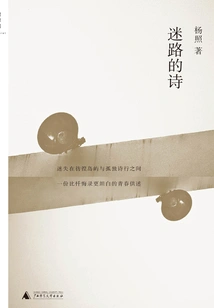
Lost Poem
Literature迷路的诗
Yang Zhao
"The Lost Poem" begins with a confession, recalling the author's romance and rebellion in high school. More than thirty years ago, when Yang Zhao faced his nascent love affair, the depression and hesitation, confusion and turmoil of his youth, poetry became an important outlet; his passion for literature and knowledge was also conveyed through poetry. Fifteen years later, this new edition comes out again. In addition to adding a short preface, Yang Zhao also added the unfinished words from that year into a long article "Poetry and Boyhood" and included it in the book. And the feelings of campus life were recorded in the book through photos. Teachers and classmates even rummaged through boxes and cabinets and dug out the school magazine "Jianzhong Youth" compiled by Yang Zhao back then, and the past events were once again vividly reenacted. The famous writer Zhang Dachun also wrote an article to share his special understanding of the once-lost poet because he had been dating the author Yang Zhao for decades.
"The Lost Poem" begins with a confession, recalling the author's romance and rebellion in high school. More than thirty years ago, when Yang Zhao faced his nascent love affair, the depression and hesitation, confusion and turmoil of his youth, poetry became an important outlet; his passion for literature and knowledge was also conveyed through poetry. Fifteen years later, this new edition comes out again. In addition to adding a short preface, Yang Zhao also added the unfinished words from that year into a long article "Poetry and Boyhood" and included it in the book. And the feelings of campus life were recorded in the book through photos. Teachers and classmates even rummaged through boxes and cabinets and dug out the school magazine "Jianzhong Youth" compiled by Yang Zhao back then, and the past events were once again vividly reenacted. The famous writer Zhang Dachun also wrote an article to share his special understanding of the once-lost poet because he had been dating the author Yang Zhao for decades.
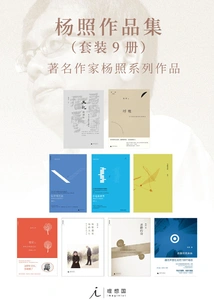
杨照作品集(套装9册)
Yang Zhao
This collection of Yang Zhao's works includes the following 9 works: 1. "Reading Historical Records: The Historical World of Sima Qian" 2. "Breathing: Music is in Our Body" 3. "Building a New World: The Philadelphia Convention and the U. S. Constitution" 4. "With "In the Name of Equality: Tocqueville and American Democracy" 5. "Searching for Youth" 6. "Thinking of Music: Listening to the Beautiful Heart Behind the Notes" 7. "I Want to Meet Your Life" 8. "Lost Poems" 9. "Stories Illuminate the Future: 100 Concepts towards an Open Society".
This collection of Yang Zhao's works includes the following 9 works: 1. "Reading Historical Records: The Historical World of Sima Qian" 2. "Breathing: Music is in Our Body" 3. "Building a New World: The Philadelphia Convention and the U. S. Constitution" 4. "With "In the Name of Equality: Tocqueville and American Democracy" 5. "Searching for Youth" 6. "Thinking of Music: Listening to the Beautiful Heart Behind the Notes" 7. "I Want to Meet Your Life" 8. "Lost Poems" 9. "Stories Illuminate the Future: 100 Concepts towards an Open Society".
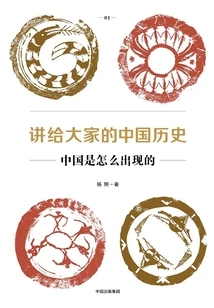
讲给大家的中国历史01:中国是怎么出现的
Yang Zhao
The "Chinese History for Everyone" series (13 volumes in total) examines China's historical trajectory for thousands of years from the Neolithic Age to the end of the Qing Dynasty. It makes full use of the fruitful achievements of history and archaeology in the past century, and uses a wide range of social structures, social trends of thought, literature and art, and people's lives as entry points to present to ordinary readers one by one new knowledge and methods that have been shelved in the academic ivory tower. In the first volume of the series "How China Emerged", you will see: How Chinese history started from the Neolithic Age; Without archaeological excavations in the past century, our understanding of ancient China would not be comprehensive; Pottery, tombs, bronzes, and settlements can all speak, which is a real historical voice, sometimes more real than historical documents; The interpretation of oracle bone inscriptions and bronze inscriptions allows us to understand the pre-Qin Dynasty better than the ancients; Most oracle bone inscriptions cannot be recognized yet because they are not symbols for recording language; The Xia, Shang and Zhou Dynasties were three powerful tribes that existed at the same time, emerged in different regions, and successively became co-lords; the Shang Dynasty was characterized by its love of drinking and superstition, which has never had a good impression in the minds of later generations of scholar-officials; an important element of what makes China China is writing...
The "Chinese History for Everyone" series (13 volumes in total) examines China's historical trajectory for thousands of years from the Neolithic Age to the end of the Qing Dynasty. It makes full use of the fruitful achievements of history and archaeology in the past century, and uses a wide range of social structures, social trends of thought, literature and art, and people's lives as entry points to present to ordinary readers one by one new knowledge and methods that have been shelved in the academic ivory tower. In the first volume of the series "How China Emerged", you will see: How Chinese history started from the Neolithic Age; Without archaeological excavations in the past century, our understanding of ancient China would not be comprehensive; Pottery, tombs, bronzes, and settlements can all speak, which is a real historical voice, sometimes more real than historical documents; The interpretation of oracle bone inscriptions and bronze inscriptions allows us to understand the pre-Qin Dynasty better than the ancients; Most oracle bone inscriptions cannot be recognized yet because they are not symbols for recording language; The Xia, Shang and Zhou Dynasties were three powerful tribes that existed at the same time, emerged in different regions, and successively became co-lords; the Shang Dynasty was characterized by its love of drinking and superstition, which has never had a good impression in the minds of later generations of scholar-officials; an important element of what makes China China is writing...
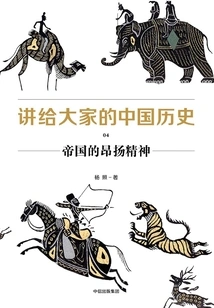
讲给大家的中国历史04:帝国的昂扬精神
Yang Zhao
The "Chinese History for Everyone" series is a brand-new general history of China. It does not introduce readers to dry historical events and knowledge points, but explores the deep logic behind Chinese history and provides a new set of cognitive methods for understanding Chinese history. The series consists of 4 volumes and 13 volumes, presenting a panoramic view of the evolution of "China", a unique and tenacious life entity. Volume 4 "The High Spirit of the Empire" focuses on the "high spirit" to help everyone gain a deeper understanding of China's literature, thought, politics, and people's mentality during the Western Han Dynasty. You will see that: the Han Dynasty inherited the Qin system, and the imperial model and imperial model established by Qin grew more prosperous through the operation of the Han Dynasty; the 70th year of the early Han Dynasty was actually not the same as the Qin Dynasty There is a big difference, but the enforcement of the law is not so rigid; one of the characteristics of the Western Han Dynasty was self-confidence, which was reflected through gorgeous words and powerful actions; Dong Zhongshu's Confucianism was mixed with the alchemist's yin and yang, five elements and prophecies; when Sima Qian talked about the Xiongnu issue, he used three biographies, and the order was very particular...
The "Chinese History for Everyone" series is a brand-new general history of China. It does not introduce readers to dry historical events and knowledge points, but explores the deep logic behind Chinese history and provides a new set of cognitive methods for understanding Chinese history. The series consists of 4 volumes and 13 volumes, presenting a panoramic view of the evolution of "China", a unique and tenacious life entity. Volume 4 "The High Spirit of the Empire" focuses on the "high spirit" to help everyone gain a deeper understanding of China's literature, thought, politics, and people's mentality during the Western Han Dynasty. You will see that: the Han Dynasty inherited the Qin system, and the imperial model and imperial model established by Qin grew more prosperous through the operation of the Han Dynasty; the 70th year of the early Han Dynasty was actually not the same as the Qin Dynasty There is a big difference, but the enforcement of the law is not so rigid; one of the characteristics of the Western Han Dynasty was self-confidence, which was reflected through gorgeous words and powerful actions; Dong Zhongshu's Confucianism was mixed with the alchemist's yin and yang, five elements and prophecies; when Sima Qian talked about the Xiongnu issue, he used three biographies, and the order was very particular...
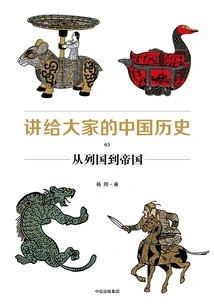
讲给大家的中国历史3:从列国到帝国
Yang Zhao
In the third volume of the series "From Nations to Empires", you will see: Suicide was very common in the Spring and Autumn Period, and there was a spirit that believed that many principles were more important than life; the Spring and Autumn Period focused on human relations and a sense of ritual, while the Warring States Period paid more attention to national relations, leaving only the game of interests; the Chu State was a heterogeneous country formed by the fusion of business culture and southern local culture, rich in "madmen" and ideological Free and uninhibited; after Confucianism developed to Xunzi, its relationship with Legalism became increasingly close, so much so that two outstanding students of Xunzi were actually Legalists; Mohism was a faction among hundreds of scholars that had been ignored for more than two thousand years, and did not see the light of day until the rise of textual criticism in the Qing Dynasty; the establishment of the Han Dynasty was something no one expected, so many nobles surrounded an ordinary pavilion chief to help him conquer the world...
In the third volume of the series "From Nations to Empires", you will see: Suicide was very common in the Spring and Autumn Period, and there was a spirit that believed that many principles were more important than life; the Spring and Autumn Period focused on human relations and a sense of ritual, while the Warring States Period paid more attention to national relations, leaving only the game of interests; the Chu State was a heterogeneous country formed by the fusion of business culture and southern local culture, rich in "madmen" and ideological Free and uninhibited; after Confucianism developed to Xunzi, its relationship with Legalism became increasingly close, so much so that two outstanding students of Xunzi were actually Legalists; Mohism was a faction among hundreds of scholars that had been ignored for more than two thousand years, and did not see the light of day until the rise of textual criticism in the Qing Dynasty; the establishment of the Han Dynasty was something no one expected, so many nobles surrounded an ordinary pavilion chief to help him conquer the world...
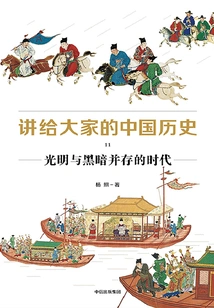
讲给大家的中国历史11:光明与黑暗并存的时代
Yang Zhao
The "Chinese History for Everyone" series is a brand-new general history of China. It does not introduce readers to dry historical events and knowledge points, but explores the deep logic behind Chinese history and provides a new set of cognitive methods for understanding Chinese history. The series consists of 4 volumes and 13 volumes, presenting a panoramic view of the evolution of "China", a unique and tenacious life entity. "Chinese History for Everyone 11: An Era of Light and Darkness" tells the story of China during the Ming Dynasty. The Ming Dynasty was an era full of contradictions, an era where light and darkness coexisted. While new things, new lives, and new enjoyments emerged in an endless stream, the palace, officialdom, and the scholar community were full of darkness and decay; Wang Yangming's ideological breakthrough provided the scholars with different ideals, but it was caused by dark political oppression and frustration; financial chaos, cliques of eunuchs and foreign ministers, and the emperor either inaction or acting haphazardly... However, under all kinds of high contradictions, why could the Ming Dynasty continue for so many years? This book also provides an answer to this key question. You will see: The whole country is crazy about showing off their clothes and food. To highlight one's identity, one must wear clothes that others cannot afford, and to show off what one eats, drinks, tableware and pomp. The rapidly growing population caused changes in all aspects of the Ming Dynasty, from economic production to social organization and bureaucracy. Great changes; encountered a series of setbacks and crises, Wang Yangming achieved an ideological and spiritual breakthrough in Longchang; Emperor Chongzhen actually used 50 cabinet ministers in less than 17 years of reign, with an average term of 4 months, which shows how difficult it is to serve the emperor of the Ming Dynasty...
The "Chinese History for Everyone" series is a brand-new general history of China. It does not introduce readers to dry historical events and knowledge points, but explores the deep logic behind Chinese history and provides a new set of cognitive methods for understanding Chinese history. The series consists of 4 volumes and 13 volumes, presenting a panoramic view of the evolution of "China", a unique and tenacious life entity. "Chinese History for Everyone 11: An Era of Light and Darkness" tells the story of China during the Ming Dynasty. The Ming Dynasty was an era full of contradictions, an era where light and darkness coexisted. While new things, new lives, and new enjoyments emerged in an endless stream, the palace, officialdom, and the scholar community were full of darkness and decay; Wang Yangming's ideological breakthrough provided the scholars with different ideals, but it was caused by dark political oppression and frustration; financial chaos, cliques of eunuchs and foreign ministers, and the emperor either inaction or acting haphazardly... However, under all kinds of high contradictions, why could the Ming Dynasty continue for so many years? This book also provides an answer to this key question. You will see: The whole country is crazy about showing off their clothes and food. To highlight one's identity, one must wear clothes that others cannot afford, and to show off what one eats, drinks, tableware and pomp. The rapidly growing population caused changes in all aspects of the Ming Dynasty, from economic production to social organization and bureaucracy. Great changes; encountered a series of setbacks and crises, Wang Yangming achieved an ideological and spiritual breakthrough in Longchang; Emperor Chongzhen actually used 50 cabinet ministers in less than 17 years of reign, with an average term of 4 months, which shows how difficult it is to serve the emperor of the Ming Dynasty...

重生虐渣,影后别放肆
Yang Zhao
The Golden Rooster Award, the Hundred Flowers Award, the Oscar, and the Best Actress crown don't seem to need some scumbag, throw it away, throw it away, throw it away, scheming against your best friend, throw it away, bad movie, throw it away. Life, how can it be calm, tearing up white lotus flowers when nothing happens, and occasionally torturing scum. Fan Ying, who has always been victorious in every battle, unexpectedly fell into the hands of the military-uniformed male god. Where is the royal sister style she promised? Why did you become a little fan girl in seconds! Feng Beigu just likes to tease Fanying, but he will never allow others to tease her (your friend, the wife-loving maniac, is online). If you dare to show any acting skills in front of him, he will definitely make Fanying pay the price!
The Golden Rooster Award, the Hundred Flowers Award, the Oscar, and the Best Actress crown don't seem to need some scumbag, throw it away, throw it away, throw it away, scheming against your best friend, throw it away, bad movie, throw it away. Life, how can it be calm, tearing up white lotus flowers when nothing happens, and occasionally torturing scum. Fan Ying, who has always been victorious in every battle, unexpectedly fell into the hands of the military-uniformed male god. Where is the royal sister style she promised? Why did you become a little fan girl in seconds! Feng Beigu just likes to tease Fanying, but he will never allow others to tease her (your friend, the wife-loving maniac, is online). If you dare to show any acting skills in front of him, he will definitely make Fanying pay the price!
讲给大家的中国历史(套装共6册)
Yang Zhao
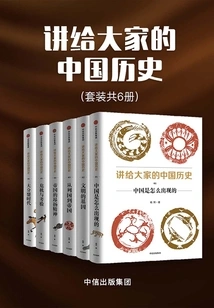
The "Chinese History for Everyone" series examines China's historical trajectory for thousands of years from the Neolithic Age to the end of the Qing Dynasty. It makes full use of the fruitful achievements of history and archaeology in the past century, and uses a wide range of social structures, social ideological trends, literature and art, and people's lives as entry points to present to ordinary readers one by one new knowledge and new methods that have been shelved in the academic ivory tower. This series of content breaks away from the traditional view of historical cognition, uses new materials, new results, and new writing methods to find the neglected historical logic, clear away the layers of fog, and return to the common sense of Chinese history.
The "Chinese History for Everyone" series examines China's historical trajectory for thousands of years from the Neolithic Age to the end of the Qing Dynasty. It makes full use of the fruitful achievements of history and archaeology in the past century, and uses a wide range of social structures, social ideological trends, literature and art, and people's lives as entry points to present to ordinary readers one by one new knowledge and new methods that have been shelved in the academic ivory tower. This series of content breaks away from the traditional view of historical cognition, uses new materials, new results, and new writing methods to find the neglected historical logic, clear away the layers of fog, and return to the common sense of Chinese history.
讲给大家的中国历史07:新帝国的试验
Yang Zhao
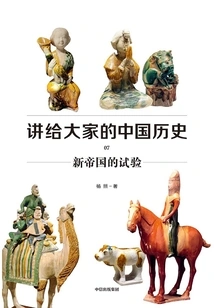
The "Chinese History for Everyone" series is a brand-new general history of China. It does not introduce readers to dry historical events and knowledge points, but explores the deep logic behind Chinese history and provides a new set of cognitive methods for understanding Chinese history. The series consists of 4 volumes and 13 volumes, presenting a panoramic view of the evolution of "China", a unique and tenacious life entity. Volume 7, "The Experiment of the New Empire," focuses on the "strongly divided character of medieval history" and leads everyone to re-examine the history of the Sui and Tang dynasties - under the appearance of unity, it is difficult to conceal the essence of division. You will see: Although everyone is accustomed to comparing "Han and Tang", there are actually huge differences between the two dynasties; The Tang Dynasty is not a consistent era, and all aspects can be divided into four stages: the Early Tang, the High Tang, the Middle Tang, and the Late Tang; Wu Zetian gathered many capable ministers around her. Did these ministers accept that there could be a female emperor? Tang poetry is difficult to write. Why were there so many poets and good poems in the Tang Dynasty? What does reading poetry, learning poetry, and writing poetry mean to literati? During the Sui and Tang Dynasties, Buddhism was further sinicized, and "Chinese Buddhism" with unique characteristics emerged...
The "Chinese History for Everyone" series is a brand-new general history of China. It does not introduce readers to dry historical events and knowledge points, but explores the deep logic behind Chinese history and provides a new set of cognitive methods for understanding Chinese history. The series consists of 4 volumes and 13 volumes, presenting a panoramic view of the evolution of "China", a unique and tenacious life entity. Volume 7, "The Experiment of the New Empire," focuses on the "strongly divided character of medieval history" and leads everyone to re-examine the history of the Sui and Tang dynasties - under the appearance of unity, it is difficult to conceal the essence of division. You will see: Although everyone is accustomed to comparing "Han and Tang", there are actually huge differences between the two dynasties; The Tang Dynasty is not a consistent era, and all aspects can be divided into four stages: the Early Tang, the High Tang, the Middle Tang, and the Late Tang; Wu Zetian gathered many capable ministers around her. Did these ministers accept that there could be a female emperor? Tang poetry is difficult to write. Why were there so many poets and good poems in the Tang Dynasty? What does reading poetry, learning poetry, and writing poetry mean to literati? During the Sui and Tang Dynasties, Buddhism was further sinicized, and "Chinese Buddhism" with unique characteristics emerged...
讲给大家的中国历史2:文明的基因
Yang Zhao
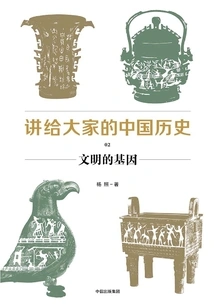
In the second volume of the series "The Gene of Civilization", you will see: An important factor that makes China China is writing; the royal official learning of the Zhou Dynasty became the ideological source of later Confucianism, Taoism, and Yin-Yangism; the concept of destiny, the feudal patriarchal system, the stable writing system and the concept of world, these are the rich legacies left by the Zhou Dynasty to China; Sima Qian's record of Laozi is a confusing account, and there are at least three versions of "Laozi" handed down in history, making it unclear...
In the second volume of the series "The Gene of Civilization", you will see: An important factor that makes China China is writing; the royal official learning of the Zhou Dynasty became the ideological source of later Confucianism, Taoism, and Yin-Yangism; the concept of destiny, the feudal patriarchal system, the stable writing system and the concept of world, these are the rich legacies left by the Zhou Dynasty to China; Sima Qian's record of Laozi is a confusing account, and there are at least three versions of "Laozi" handed down in history, making it unclear...
讲给大家的中国历史9:分裂与互动
Yang Zhao
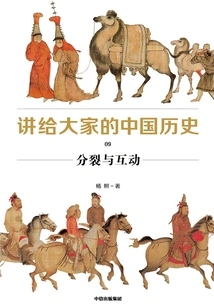
The "Chinese History for Everyone" series is a brand-new general history of China. It does not introduce readers to dry historical events and knowledge points, but explores the deep logic behind Chinese history and provides a new set of cognitive methods for understanding Chinese history. The series consists of 4 volumes and 13 volumes, presenting a panoramic view of the evolution of "China", a unique and tenacious life entity. "Chinese History for Everyone 9: Division and Interaction" tells the story of China during the Song and Yuan Dynasties. An important feature of this period was the confrontation and interaction between the two Song Dynasties and the northern nomadic regimes. The weakness of the Song Dynasty during this period was also analyzed in detail. Facing the threat of northern nomads, the Song Dynasty struggled to deal with it and often made strategic mistakes. However, at the same time, the cultural advantages of the Song Dynasty continued unabated, so that the grassland personality of the northern dynasty faded faster and faster in contact with the Song Dynasty. You will see: The culture of the Song Dynasty was developed and scholars were active, but their concern was still the threat from the north; the development of Song poetry benefited not only from the prosperity of cities and commerce, but also from the prosperity of literati culture; from the perspective of the northern grasslands, the Southern Central Plains Dynasty, the Song Dynasty was just an ordinary chapter in their lives, not very important; every time the Song people went to war with the Liao, Xixia, and Jin, they started the war without understanding the other party's intentions and strength, and they had no countermeasures after each defeat...
The "Chinese History for Everyone" series is a brand-new general history of China. It does not introduce readers to dry historical events and knowledge points, but explores the deep logic behind Chinese history and provides a new set of cognitive methods for understanding Chinese history. The series consists of 4 volumes and 13 volumes, presenting a panoramic view of the evolution of "China", a unique and tenacious life entity. "Chinese History for Everyone 9: Division and Interaction" tells the story of China during the Song and Yuan Dynasties. An important feature of this period was the confrontation and interaction between the two Song Dynasties and the northern nomadic regimes. The weakness of the Song Dynasty during this period was also analyzed in detail. Facing the threat of northern nomads, the Song Dynasty struggled to deal with it and often made strategic mistakes. However, at the same time, the cultural advantages of the Song Dynasty continued unabated, so that the grassland personality of the northern dynasty faded faster and faster in contact with the Song Dynasty. You will see: The culture of the Song Dynasty was developed and scholars were active, but their concern was still the threat from the north; the development of Song poetry benefited not only from the prosperity of cities and commerce, but also from the prosperity of literati culture; from the perspective of the northern grasslands, the Southern Central Plains Dynasty, the Song Dynasty was just an ordinary chapter in their lives, not very important; every time the Song people went to war with the Liao, Xixia, and Jin, they started the war without understanding the other party's intentions and strength, and they had no countermeasures after each defeat...
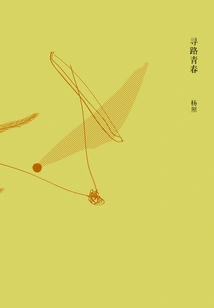
Finding Your Way to Youth
Literature寻路青春
Yang Zhao
Life is like morning dew, youth is eternal. Can I still understand the idealistic boy I once was? This is a "memory geography". Mr. Yang Zhao, who writes delicately and plainly, takes readers back to Taiwan more than thirty years ago by reorganizing the past events of his youth, showing that generation's thinking about life and the future as they grew up. The book has five parts, including "Eternity in the Old Time", "Lost in Music", "Unfinished Literary Youth", "Luxurious Poetry" and "Roaming Without Scenery". Whether it is the story of the author's interactions with his family in childhood, his insights into music learning as a teenager, or his ignorant love in adolescence, the author skillfully combines it with the place where the story takes place, showing readers a map of the activities of literary youths. In the seemingly plain words, they can comprehend countless wisdom and philosophies of life.
Life is like morning dew, youth is eternal. Can I still understand the idealistic boy I once was? This is a "memory geography". Mr. Yang Zhao, who writes delicately and plainly, takes readers back to Taiwan more than thirty years ago by reorganizing the past events of his youth, showing that generation's thinking about life and the future as they grew up. The book has five parts, including "Eternity in the Old Time", "Lost in Music", "Unfinished Literary Youth", "Luxurious Poetry" and "Roaming Without Scenery". Whether it is the story of the author's interactions with his family in childhood, his insights into music learning as a teenager, or his ignorant love in adolescence, the author skillfully combines it with the place where the story takes place, showing readers a map of the activities of literary youths. In the seemingly plain words, they can comprehend countless wisdom and philosophies of life.
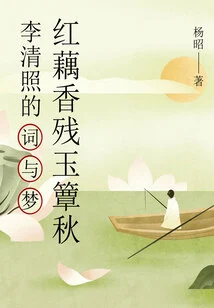
Autumn with the Fragrance of Red Lotus Roots and Lingering Jade: Li Qingzhao's Words and Dreams
Literature红藕香残玉簟秋:李清照的词与梦
Yang Zhao
This book uses Li Qingzhao's classic lyrics and life ups and downs as clues, combined with the historical background, to narrate the ups and downs of Li Qingzhao's life. It is hoped that readers can get a glimpse of the talent and personality charm of Li Qingzhao, the most talented woman throughout the ages, and remember this outstanding writer. It is worth mentioning that in addition to the lyrics and appreciation of his lyrics, this book also injects the author's reverie into the biography about Li Qingzhao in his later years, aiming to enrich the readability of the article and at the same time pay tribute to this great poet in another way.
This book uses Li Qingzhao's classic lyrics and life ups and downs as clues, combined with the historical background, to narrate the ups and downs of Li Qingzhao's life. It is hoped that readers can get a glimpse of the talent and personality charm of Li Qingzhao, the most talented woman throughout the ages, and remember this outstanding writer. It is worth mentioning that in addition to the lyrics and appreciation of his lyrics, this book also injects the author's reverie into the biography about Li Qingzhao in his later years, aiming to enrich the readability of the article and at the same time pay tribute to this great poet in another way.
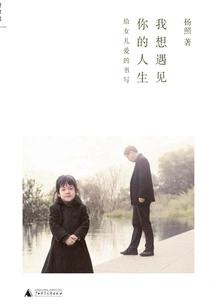
我想遇见你的人生:给女儿爱的书写
Yang Zhao
The father pays attention to how each step of his daughter's life unfolds, and how each step of his daughter's life in turn affects the father's perception and reflection on his own life. The mother provides photos of every moment in the life of the father and daughter, all of which constitute the most beautiful picture in the world. "I Want to Meet Your Life" uses prose poems similar to dialogues, diaries, and monologues to express the daily life and life insights of the father and daughter. This is not the creation of one person. It is a father, mother, daughter, and a family of three who jointly created a unique interactive text, with love at its core.
The father pays attention to how each step of his daughter's life unfolds, and how each step of his daughter's life in turn affects the father's perception and reflection on his own life. The mother provides photos of every moment in the life of the father and daughter, all of which constitute the most beautiful picture in the world. "I Want to Meet Your Life" uses prose poems similar to dialogues, diaries, and monologues to express the daily life and life insights of the father and daughter. This is not the creation of one person. It is a father, mother, daughter, and a family of three who jointly created a unique interactive text, with love at its core.
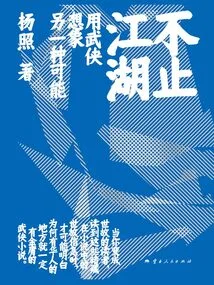
不止江湖:用武侠想象另一种可能
Yang Zhao
One sentence summarizes the greatness of Jin Yong's martial arts novels: He created works that influenced countless people, and imagined another China in the martial arts world and Jianghu society. Regardless of the key content or main features, this book reveals the hidden Jin Yong from the following three aspects, provides unexpected and natural interpretation methods, and gives readers a satisfying novel reading experience: The author of martial arts novels - The ups and downs of Jin Yong's life Experience, strong personality characteristics and conscious pursuit of writing; novel creation background - Jin Yong's special personal situation and complex era conditions when he was engaged in writing martial arts novels; martial arts novel text - the distinctive literary characteristics and rich textual connotations created by Jin Yong's pen. This book can be regarded as an excellent guide and mind map for understanding and understanding Jin Yong's martial arts novels.
One sentence summarizes the greatness of Jin Yong's martial arts novels: He created works that influenced countless people, and imagined another China in the martial arts world and Jianghu society. Regardless of the key content or main features, this book reveals the hidden Jin Yong from the following three aspects, provides unexpected and natural interpretation methods, and gives readers a satisfying novel reading experience: The author of martial arts novels - The ups and downs of Jin Yong's life Experience, strong personality characteristics and conscious pursuit of writing; novel creation background - Jin Yong's special personal situation and complex era conditions when he was engaged in writing martial arts novels; martial arts novel text - the distinctive literary characteristics and rich textual connotations created by Jin Yong's pen. This book can be regarded as an excellent guide and mind map for understanding and understanding Jin Yong's martial arts novels.
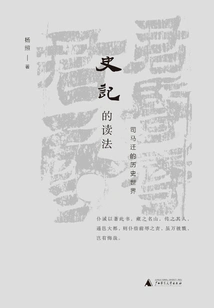
史记的读法:司马迁的历史世界
Yang Zhao
This book is a compilation of the ideal word-of-mouth program "Ancient and Modern: One Hundred Lectures on Yang Zhao's Historical Records". The author disrupts the original order of chapters in "Historical Records", uses "historical reading" to restore the social background of the time, explains the causes of major events, and uses "literary reading" to get closer to Sima Qian's perspective, attitude and philosophy, and brings the classic into today's time and space. He started with "Taishigong's Preface" and "Report to Ren An" to interpret Sima Qian's personal experiences, and then analyzed the history of the early Han Dynasty from chapters such as "The Chronicles of Xiang Yu", "The Chronicles of Gaozu", and "The Chronicles of Empress Lu", showing Sima Qian's sharp observation of the political operations of the early Han Dynasty. In the concept of multiple time dimensions, the "tables" and "books" in "Historical Records" can highlight Sima Qian's breakthrough creativity, and in the layout of the chronicles and biographies, we can also find who Sima Qian believed was a model worthy of being recorded in the history books, and what values were the driving force for him to devote all his energy to writing "Historical Records".
This book is a compilation of the ideal word-of-mouth program "Ancient and Modern: One Hundred Lectures on Yang Zhao's Historical Records". The author disrupts the original order of chapters in "Historical Records", uses "historical reading" to restore the social background of the time, explains the causes of major events, and uses "literary reading" to get closer to Sima Qian's perspective, attitude and philosophy, and brings the classic into today's time and space. He started with "Taishigong's Preface" and "Report to Ren An" to interpret Sima Qian's personal experiences, and then analyzed the history of the early Han Dynasty from chapters such as "The Chronicles of Xiang Yu", "The Chronicles of Gaozu", and "The Chronicles of Empress Lu", showing Sima Qian's sharp observation of the political operations of the early Han Dynasty. In the concept of multiple time dimensions, the "tables" and "books" in "Historical Records" can highlight Sima Qian's breakthrough creativity, and in the layout of the chronicles and biographies, we can also find who Sima Qian believed was a model worthy of being recorded in the history books, and what values were the driving force for him to devote all his energy to writing "Historical Records".
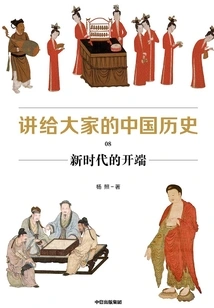
讲给大家的中国历史8:新时代的开端
Yang Zhao
The "Chinese History for Everyone" series is a brand-new general history of China. It does not introduce readers to dry historical events and knowledge points, but explores the deep logic behind Chinese history and provides a new set of cognitive methods for understanding Chinese history. The series consists of 4 volumes and 13 volumes, presenting a panoramic view of the evolution of "China", a unique and tenacious life entity.
The "Chinese History for Everyone" series is a brand-new general history of China. It does not introduce readers to dry historical events and knowledge points, but explores the deep logic behind Chinese history and provides a new set of cognitive methods for understanding Chinese history. The series consists of 4 volumes and 13 volumes, presenting a panoramic view of the evolution of "China", a unique and tenacious life entity.
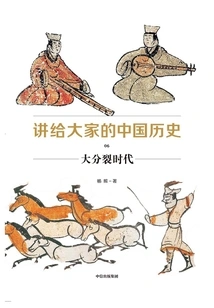
讲给大家的中国历史06:大分裂时代
Yang Zhao
The "Chinese History for Everyone" series is a brand-new general history of China. It does not introduce readers to dry historical events and knowledge points, but explores the deep logic behind Chinese history and provides a new set of cognitive methods for understanding Chinese history. The series consists of 4 volumes and 13 volumes, presenting a panoramic view of the evolution of "China", a unique and tenacious life entity. The sixth volume, "The Great Schism Era", focuses on the "cultural vitality of the era of classification" to help everyone re-understand the so-called "Wei, Jin, Southern and Northern Dynasties" as a period of division. You will see: The widely circulated statement in Chinese history that "the Five Husties disrupted China" cannot withstand scrutiny; "Characters" and "Shishuo Xinyu" are two wonderful books that brilliantly present the custom of evaluating characters in the Six Dynasties; the literature of the Southern and Northern Dynasties has outstanding achievements in poetic innovation and rhyme structure, paving the way for Tang poetry; The Northern Wei Dynasty was the key to connecting the two empires of the Qin and Han Dynasties and the Sui and Tang Dynasties. To understand the Sui and Tang Dynasties, one must first understand the institutional innovations of the Northern Wei Dynasty; Emperor Wu of the Liang Dynasty worked hard to gain the power of monasteries in order to compete with the family estates, but failed...
The "Chinese History for Everyone" series is a brand-new general history of China. It does not introduce readers to dry historical events and knowledge points, but explores the deep logic behind Chinese history and provides a new set of cognitive methods for understanding Chinese history. The series consists of 4 volumes and 13 volumes, presenting a panoramic view of the evolution of "China", a unique and tenacious life entity. The sixth volume, "The Great Schism Era", focuses on the "cultural vitality of the era of classification" to help everyone re-understand the so-called "Wei, Jin, Southern and Northern Dynasties" as a period of division. You will see: The widely circulated statement in Chinese history that "the Five Husties disrupted China" cannot withstand scrutiny; "Characters" and "Shishuo Xinyu" are two wonderful books that brilliantly present the custom of evaluating characters in the Six Dynasties; the literature of the Southern and Northern Dynasties has outstanding achievements in poetic innovation and rhyme structure, paving the way for Tang poetry; The Northern Wei Dynasty was the key to connecting the two empires of the Qin and Han Dynasties and the Sui and Tang Dynasties. To understand the Sui and Tang Dynasties, one must first understand the institutional innovations of the Northern Wei Dynasty; Emperor Wu of the Liang Dynasty worked hard to gain the power of monasteries in order to compete with the family estates, but failed...
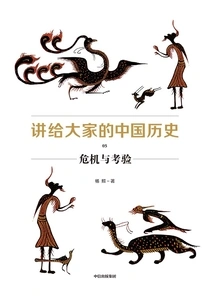
讲给大家的中国历史05:危机与考验
Yang Zhao
The "Chinese History for Everyone" series is a brand-new general history of China. It does not introduce readers to dry historical events and knowledge points, but explores the deep logic behind Chinese history and provides a new set of cognitive methods for understanding Chinese history. The series consists of 4 volumes and 13 volumes, presenting a panoramic view of the evolution of "China", a unique and tenacious life entity. Volume 5 "Crisis and Test" focuses on the unique operating methods of the Eastern Han Empire, helping us understand that China's transition from Qin and Han to Sui and Tang Dynasties has an interesting historical evolution model. You will see: Although the Eastern Han and Western Han are both "Han", the basis of the Eastern Han Dynasty's regime is the co-governance of the emperor and aristocratic families; the three forces of relatives, eunuchs and noble families repeatedly fought in the court, and finally disintegrated the Han Empire; The source of the split between the Wei, Jin, Southern and Northern Dynasties can be found in the Eastern Han Dynasty, which was the land policy that did not suppress annexation; Cao Cao's rise was not due to "holding the emperor to order the princes", but the strong power that came from the implementation of farming; Wang Chong was a very special thinker, and inadvertently became a key figure in the transformation of Confucianism in the Han Dynasty to metaphysics in the Wei and Jin Dynasties...
The "Chinese History for Everyone" series is a brand-new general history of China. It does not introduce readers to dry historical events and knowledge points, but explores the deep logic behind Chinese history and provides a new set of cognitive methods for understanding Chinese history. The series consists of 4 volumes and 13 volumes, presenting a panoramic view of the evolution of "China", a unique and tenacious life entity. Volume 5 "Crisis and Test" focuses on the unique operating methods of the Eastern Han Empire, helping us understand that China's transition from Qin and Han to Sui and Tang Dynasties has an interesting historical evolution model. You will see: Although the Eastern Han and Western Han are both "Han", the basis of the Eastern Han Dynasty's regime is the co-governance of the emperor and aristocratic families; the three forces of relatives, eunuchs and noble families repeatedly fought in the court, and finally disintegrated the Han Empire; The source of the split between the Wei, Jin, Southern and Northern Dynasties can be found in the Eastern Han Dynasty, which was the land policy that did not suppress annexation; Cao Cao's rise was not due to "holding the emperor to order the princes", but the strong power that came from the implementation of farming; Wang Chong was a very special thinker, and inadvertently became a key figure in the transformation of Confucianism in the Han Dynasty to metaphysics in the Wei and Jin Dynasties...