Library
Browse and search books
3 novels found
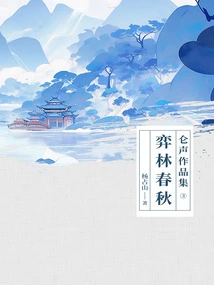
仑声作品集3:弈林春秋
Yang Zhanshan
Most of what is written in this book is the author's personal experience. It is said that the Spring and Autumn Period should be history. If it is the history of Go, the 1999 edition of the Chinese Go history published by China Statistics and co-authored by Cai Zhongmin, Zhao Zhiyun, Zheng Huaide, Shao Futang, Wang Kai, Chen Kezhong, Liu Shancheng, Yang Guanghui and others is authoritative. The writing team of this book spent ten years completing the first draft since it was established in 1986. This book writes about some key figures of Go, focusing on their contribution to the survival of Go, and also writes some unknown anecdotes about celebrities. This article also tells about my changes and emotions with them. Some of the poems and essays are my exercises, and I hope to develop and prosper together with Go. Why is the small town of Chengde such a prominent figure in it? This is not only because I am one of them, but more importantly, after China experienced the disastrous Cultural Revolution, I took the lead in withstanding the pressure and overcame many difficulties to hold several national competitions in succession, which can be said to have made a contribution. This article puts forward different opinions on the unanswered questions such as the origin of Go and hopes that the vast number of Go enthusiasts can explore it together. It mentions the origins of many historical figures, especially the great masters in poetry and poetry, and Go: "Without Go, there would be no Jinshi." Go is inseparable from culture.
Most of what is written in this book is the author's personal experience. It is said that the Spring and Autumn Period should be history. If it is the history of Go, the 1999 edition of the Chinese Go history published by China Statistics and co-authored by Cai Zhongmin, Zhao Zhiyun, Zheng Huaide, Shao Futang, Wang Kai, Chen Kezhong, Liu Shancheng, Yang Guanghui and others is authoritative. The writing team of this book spent ten years completing the first draft since it was established in 1986. This book writes about some key figures of Go, focusing on their contribution to the survival of Go, and also writes some unknown anecdotes about celebrities. This article also tells about my changes and emotions with them. Some of the poems and essays are my exercises, and I hope to develop and prosper together with Go. Why is the small town of Chengde such a prominent figure in it? This is not only because I am one of them, but more importantly, after China experienced the disastrous Cultural Revolution, I took the lead in withstanding the pressure and overcame many difficulties to hold several national competitions in succession, which can be said to have made a contribution. This article puts forward different opinions on the unanswered questions such as the origin of Go and hopes that the vast number of Go enthusiasts can explore it together. It mentions the origins of many historical figures, especially the great masters in poetry and poetry, and Go: "Without Go, there would be no Jinshi." Go is inseparable from culture.
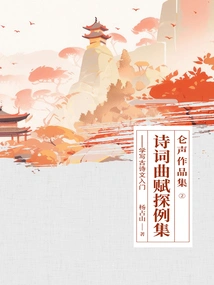
仑声作品集2:诗词曲赋探例集
Yang Zhanshan
Poetry, lyrics and music are the essence of ancient culture and ancient literature. These creations, expressions and descriptions are exquisite. Explore and explore examples to learn better. In the form of examples, this article summarizes the inherent laws of various literary styles so that people today can use them as reference tools when learning to write ancient poems. Since the author's level is not high, there must be many biased views and misunderstandings, and I hope readers can correct them. Of these four genres, poetry comes first, lyrics and music come last. From being demanding on the number of words, spacing between lines, and consistent rhyme and rhythm, later on, the word lines were irregular, and one article had multiple rhymes. Today, the world of free verse and vernacular prose is dominated. Poetry developed from the two-character short sentences of ancient ballads to the four-character style of the Western Zhou Dynasty and Spring and Autumn Period, and then to the Sao style of the Warring States Period - the seven and eight auspicious poems of "Chu Ci". Then in the Southern and Northern Dynasties, duality was used, and the "four tones", "eight diseases" and so on began to be standardized. In the Sui and Tang dynasties, rhythmic poetry was sung by both the elegant and the popular, with fixed specifications. Fu is a literary style that is close to "Chu Ci". It is said: "Those that are not scattered but connected are called Fu." There is a saying in ancient times that Fu comes from poetry. I think it is inappropriate. Poetry and Fu are two different things. Ci flourished in temples and flourished in the Song Dynasty. It is closely related to music and poetry, and absorbs elegant music. Qingle and Yanle. Fill in the lyrics according to the tones of the tones. In short, the diversity and interest of Ci are richer and more colorful than that of Qing Jiang, from the Song Dynasty to the early Yuan Dynasty. Moreover, dialects and folk music are more closely related than poetry, and can be enjoyed by all. Moreover, dialects and sounds from Goulanli Lane can be included in the music. Since there is no limit on the number of lining words, it is more interesting to sing. This article excludes the ancients. In addition to the famous works of the sages, I have some exercises among them.
Poetry, lyrics and music are the essence of ancient culture and ancient literature. These creations, expressions and descriptions are exquisite. Explore and explore examples to learn better. In the form of examples, this article summarizes the inherent laws of various literary styles so that people today can use them as reference tools when learning to write ancient poems. Since the author's level is not high, there must be many biased views and misunderstandings, and I hope readers can correct them. Of these four genres, poetry comes first, lyrics and music come last. From being demanding on the number of words, spacing between lines, and consistent rhyme and rhythm, later on, the word lines were irregular, and one article had multiple rhymes. Today, the world of free verse and vernacular prose is dominated. Poetry developed from the two-character short sentences of ancient ballads to the four-character style of the Western Zhou Dynasty and Spring and Autumn Period, and then to the Sao style of the Warring States Period - the seven and eight auspicious poems of "Chu Ci". Then in the Southern and Northern Dynasties, duality was used, and the "four tones", "eight diseases" and so on began to be standardized. In the Sui and Tang dynasties, rhythmic poetry was sung by both the elegant and the popular, with fixed specifications. Fu is a literary style that is close to "Chu Ci". It is said: "Those that are not scattered but connected are called Fu." There is a saying in ancient times that Fu comes from poetry. I think it is inappropriate. Poetry and Fu are two different things. Ci flourished in temples and flourished in the Song Dynasty. It is closely related to music and poetry, and absorbs elegant music. Qingle and Yanle. Fill in the lyrics according to the tones of the tones. In short, the diversity and interest of Ci are richer and more colorful than that of Qing Jiang, from the Song Dynasty to the early Yuan Dynasty. Moreover, dialects and folk music are more closely related than poetry, and can be enjoyed by all. Moreover, dialects and sounds from Goulanli Lane can be included in the music. Since there is no limit on the number of lining words, it is more interesting to sing. This article excludes the ancients. In addition to the famous works of the sages, I have some exercises among them.
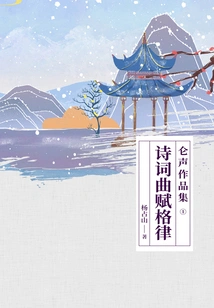
仑声作品集1:诗词曲赋格律
Yang Zhanshan
Poetry today seems to be considered to be seen and read. It is a pity that the ancient poetry style has been passed down, but the music score has not. The essence of the rhythm of poetry is precisely the rhythm. For example, the lyrics of Erhuang and Xipi Liushui in Peking Opera can be arbitrary, but the tune is the same. The words can be changed at will, but the tune cannot be changed. Since the tune has not been handed down, later people can only memorize and recite the text format. There are only two requirements for rhythm: the first is rhyme, and the second is tone. The ancients gave top priority to the rules of level and level. If there is no level of level and level, we should not talk about the rhythm of poetry. This article focuses on the rules of ping and lei, and the four forms of poetry, lyrics, music and fu. The rhythms of poetry and fu seem to be somewhat related, but the poetry is really rigorous. The music mostly follows the lyrics. Regarding Ping and Ze, I have clarified my views in this book. It is good for amateurs not to be too demanding about Ping and Ze. Moreover, the pronunciation of characters in ancient times was not based on today's northern dialects, with Beijing dialect as the standard. At that time, there were also dialects with different pronunciations. As for professionals and scholars, it's a different matter. They must pursue truth, accuracy, and beauty.
Poetry today seems to be considered to be seen and read. It is a pity that the ancient poetry style has been passed down, but the music score has not. The essence of the rhythm of poetry is precisely the rhythm. For example, the lyrics of Erhuang and Xipi Liushui in Peking Opera can be arbitrary, but the tune is the same. The words can be changed at will, but the tune cannot be changed. Since the tune has not been handed down, later people can only memorize and recite the text format. There are only two requirements for rhythm: the first is rhyme, and the second is tone. The ancients gave top priority to the rules of level and level. If there is no level of level and level, we should not talk about the rhythm of poetry. This article focuses on the rules of ping and lei, and the four forms of poetry, lyrics, music and fu. The rhythms of poetry and fu seem to be somewhat related, but the poetry is really rigorous. The music mostly follows the lyrics. Regarding Ping and Ze, I have clarified my views in this book. It is good for amateurs not to be too demanding about Ping and Ze. Moreover, the pronunciation of characters in ancient times was not based on today's northern dialects, with Beijing dialect as the standard. At that time, there were also dialects with different pronunciations. As for professionals and scholars, it's a different matter. They must pursue truth, accuracy, and beauty.