Library
Browse and search books
1 novel found
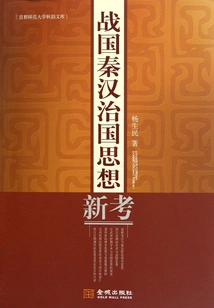
战国秦汉治国思想新考
Yang Shengmin
"A New Examination of the Thoughts on State Governance in the Warring States, Qin and Han Dynasties" written by Yang Shengmin is a monograph that systematically studies the thoughts on state governance in the Warring States, Qin and Han Dynasties. It examines the successes and failures in governing the country with the ideological and cultural schools of the Warring States, Qin and Han Dynasties. Historically, the Western Zhou Dynasty used rituals to govern the country. At the end of the Spring and Autumn Period, school thought and school culture emerged, which can be seen in the records of Taoism, Confucianism, and military strategists. During the Warring States Period, some countries began to use school ideas to guide their governance, such as the "ruling by law" in Wei and Qin. In the early years of the Western Han Dynasty, the ruling class governed the country based on Taoist Huang Laowei's ideas, but it included Legalist ideas. Afterwards, the Han Dynasty used Fa, Taoism, and Confucianism to guide the governance of the country. In addition to the three schools of law, Taoism and Confucianism, Yin-Yang thought, Dong Zhongshu's theory of human induction and prophecy thought also played one or another role in the social history of the Warring States, Qin and Han Dynasties. "A New Examination of the Governance Thoughts of the Warring States, Qin and Han Dynasties" also discusses this impact and puts forward new insights into Dong Zhongshu's evaluation.
"A New Examination of the Thoughts on State Governance in the Warring States, Qin and Han Dynasties" written by Yang Shengmin is a monograph that systematically studies the thoughts on state governance in the Warring States, Qin and Han Dynasties. It examines the successes and failures in governing the country with the ideological and cultural schools of the Warring States, Qin and Han Dynasties. Historically, the Western Zhou Dynasty used rituals to govern the country. At the end of the Spring and Autumn Period, school thought and school culture emerged, which can be seen in the records of Taoism, Confucianism, and military strategists. During the Warring States Period, some countries began to use school ideas to guide their governance, such as the "ruling by law" in Wei and Qin. In the early years of the Western Han Dynasty, the ruling class governed the country based on Taoist Huang Laowei's ideas, but it included Legalist ideas. Afterwards, the Han Dynasty used Fa, Taoism, and Confucianism to guide the governance of the country. In addition to the three schools of law, Taoism and Confucianism, Yin-Yang thought, Dong Zhongshu's theory of human induction and prophecy thought also played one or another role in the social history of the Warring States, Qin and Han Dynasties. "A New Examination of the Governance Thoughts of the Warring States, Qin and Han Dynasties" also discusses this impact and puts forward new insights into Dong Zhongshu's evaluation.