Library
Browse and search books
1 novel found
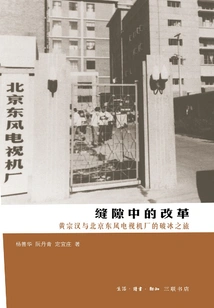
缝隙中的改革:黄宗汉与北京东风电视机厂的破冰之旅
Yang Shanhua Ruan Danqing Dingyizhuang
Huang Zonghan, the youngest of the Huang brothers and sisters (Huang Zongjiang, Huang Zonghuai, Huang Zongying, Huang Zongluo, Huang Zonghan), was an old revolutionary who joined the underground party in 1948. At the end of 1978, he took the initiative to be appointed as the director of Beifeng Television Factory, an old factory under the planned economy system that suffered serious losses. However, he did not expect that his sentence "When you are a factory director, you have to make money for the country" would have profound political significance. Huang Zonghan adopted a series of reform measures in Dongfeng Factory, which caused great influence across the country. However, reform will inevitably damage the interests of vested interest groups under the planned economic system. Many conflicts were finally ignited by a reportage titled "Hope is in the World" written by the writer Li Ji in 1981. It took high-level intervention to finally solve the problem. The so-called "ice-breaking journey" aims to break the "hard ice" that hinders reform from the planned economic system and related social structures, ideologies, and vested interest groups. The "gap" refers to the flexible side of the system, which allows the large and rigid administrative system to have a certain degree of free political space, and its flexibility makes initial reforms possible.
Huang Zonghan, the youngest of the Huang brothers and sisters (Huang Zongjiang, Huang Zonghuai, Huang Zongying, Huang Zongluo, Huang Zonghan), was an old revolutionary who joined the underground party in 1948. At the end of 1978, he took the initiative to be appointed as the director of Beifeng Television Factory, an old factory under the planned economy system that suffered serious losses. However, he did not expect that his sentence "When you are a factory director, you have to make money for the country" would have profound political significance. Huang Zonghan adopted a series of reform measures in Dongfeng Factory, which caused great influence across the country. However, reform will inevitably damage the interests of vested interest groups under the planned economic system. Many conflicts were finally ignited by a reportage titled "Hope is in the World" written by the writer Li Ji in 1981. It took high-level intervention to finally solve the problem. The so-called "ice-breaking journey" aims to break the "hard ice" that hinders reform from the planned economic system and related social structures, ideologies, and vested interest groups. The "gap" refers to the flexible side of the system, which allows the large and rigid administrative system to have a certain degree of free political space, and its flexibility makes initial reforms possible.