Library
Browse and search books
7 novels found
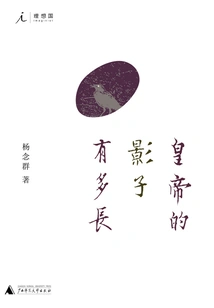
皇帝的影子有多长
Yang Nianqun
History can also be emotional, and reading and studying history can also be a form of aesthetics. The author is determined to change the current situation in which historical research is focused on being divorced from the secular world, and advocates an emotional history, hoping that history will become a living history of people that exudes warmth. Therefore, reading and studying history can also be an aesthetic, a taste, and a kind of useless learning, which can nourish our lives subtly.
History can also be emotional, and reading and studying history can also be a form of aesthetics. The author is determined to change the current situation in which historical research is focused on being divorced from the secular world, and advocates an emotional history, hoping that history will become a living history of people that exudes warmth. Therefore, reading and studying history can also be an aesthetic, a taste, and a kind of useless learning, which can nourish our lives subtly.
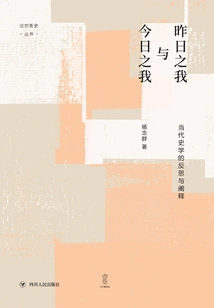
昨日之我与今日之我:当代史学的反思与阐释
Yang Nianqun
This book is a collection of contemporary historical research papers that comprehensively reflects on and explains the application of various Western historical trends in Chinese history. The author also proposes that new ideas for expanding the advancement of history need to draw on the "middle-range theory" of sociology from an interdisciplinary perspective. This book is not only the quintessence of the author's continuous thinking on this issue in the past two decades, but also a fruitful attempt by the historians to establish a new research paradigm. By reflecting on and interpreting contemporary historical research, the author shares with more scholars the research literacy with a global perspective, the research ideas that analyze the dynamics and complexity of things, and the research methods that transcend the barriers of disciplines and specialties. This is reflected in the macro perspective of thinking about political dynamics and social development under the changes in contemporary ideological trends, and the micro perspective of going deep into society to observe life with a sense of problem, in order to hone historians' problem awareness and insight beyond local events.
This book is a collection of contemporary historical research papers that comprehensively reflects on and explains the application of various Western historical trends in Chinese history. The author also proposes that new ideas for expanding the advancement of history need to draw on the "middle-range theory" of sociology from an interdisciplinary perspective. This book is not only the quintessence of the author's continuous thinking on this issue in the past two decades, but also a fruitful attempt by the historians to establish a new research paradigm. By reflecting on and interpreting contemporary historical research, the author shares with more scholars the research literacy with a global perspective, the research ideas that analyze the dynamics and complexity of things, and the research methods that transcend the barriers of disciplines and specialties. This is reflected in the macro perspective of thinking about political dynamics and social development under the changes in contemporary ideological trends, and the micro perspective of going deep into society to observe life with a sense of problem, in order to hone historians' problem awareness and insight beyond local events.
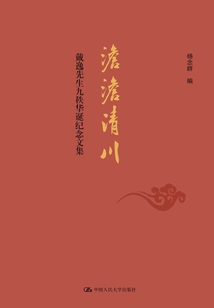
Dandan Qingchuan
History澹澹清川
Yang Nianqun
Mr. Dai Yi is the founder of Qing history research in New China and the founder of the history discipline and Qing history major at Renmin University of China. He currently serves as the director of the National Qing History Compilation Committee and is working diligently on the compilation of the new "Qing History", the largest cultural project since the founding of the People's Republic of China. On the one hand, he has inherited the tradition of research on Qing history since the Republic of China, and has profound and original insights into the politics, economy, ideology, culture, and border ethnic issues of the Qing Dynasty. On the other hand, he is also committed to grasping the macro trend of Qing history from a new perspective. He has put forward the important insight that the rise and fall is the overall evolution law of the Qing Dynasty, which has profoundly affected the development direction of Qing history research. On the occasion of his 90th birthday, disciples who have studied under him and colleagues from the Institute of Qing History at Renmin University of China have written articles to express their birthday wishes. The content of the collection covers the Qing Dynasty's unique institutional structure, state governance strategy, border management, foreign relations, cultural thoughts and other aspects. It strives to comprehensively analyze the major issues currently faced in the study of Qing history. It also reflects Mr. Wang's unique thinking in the study of Qing history from the perspective of long-term development. The birthday paper contains both microscopic details and macroscopic theoretical analysis. The coverage attempts to cover several important historical dimensions and phenomena in the early, middle and late Qing Dynasties, effectively respond to the increasingly international trend of new Qing history exploration, and try to panoramically demonstrate the Chinese style and scholarly style of Qing history research under Mr.'S influence and guidance.
Mr. Dai Yi is the founder of Qing history research in New China and the founder of the history discipline and Qing history major at Renmin University of China. He currently serves as the director of the National Qing History Compilation Committee and is working diligently on the compilation of the new "Qing History", the largest cultural project since the founding of the People's Republic of China. On the one hand, he has inherited the tradition of research on Qing history since the Republic of China, and has profound and original insights into the politics, economy, ideology, culture, and border ethnic issues of the Qing Dynasty. On the other hand, he is also committed to grasping the macro trend of Qing history from a new perspective. He has put forward the important insight that the rise and fall is the overall evolution law of the Qing Dynasty, which has profoundly affected the development direction of Qing history research. On the occasion of his 90th birthday, disciples who have studied under him and colleagues from the Institute of Qing History at Renmin University of China have written articles to express their birthday wishes. The content of the collection covers the Qing Dynasty's unique institutional structure, state governance strategy, border management, foreign relations, cultural thoughts and other aspects. It strives to comprehensively analyze the major issues currently faced in the study of Qing history. It also reflects Mr. Wang's unique thinking in the study of Qing history from the perspective of long-term development. The birthday paper contains both microscopic details and macroscopic theoretical analysis. The coverage attempts to cover several important historical dimensions and phenomena in the early, middle and late Qing Dynasties, effectively respond to the increasingly international trend of new Qing history exploration, and try to panoramically demonstrate the Chinese style and scholarly style of Qing history research under Mr.'S influence and guidance.
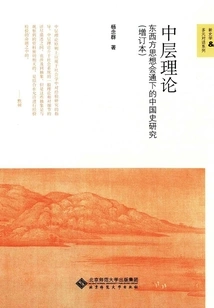
中层理论:东西方思想会通下的中国史研究(增订本)
Yang Nianqun
The significance of the construction of middle-range theory to the study of Chinese history can be seen in at least two aspects: First, it can help us get rid of the entanglement of grand narratives as much as possible. At present, many historical works are always grand but not detailed in their narratives. General judgments abound, and essentialist judgments are hastily formed. Only traces of people in daily life cannot be seen in them. People have become cold symbolic representations of trends and laws. The second is to discuss how to change the craftsman-style way of conducting history in the field of history, which only pulls the cart without looking at the road. The author's new publication has a long preface, which includes his reflections over the past ten years, tending towards a more integrated historical narrative.
The significance of the construction of middle-range theory to the study of Chinese history can be seen in at least two aspects: First, it can help us get rid of the entanglement of grand narratives as much as possible. At present, many historical works are always grand but not detailed in their narratives. General judgments abound, and essentialist judgments are hastily formed. Only traces of people in daily life cannot be seen in them. People have become cold symbolic representations of trends and laws. The second is to discuss how to change the craftsman-style way of conducting history in the field of history, which only pulls the cart without looking at the road. The author's new publication has a long preface, which includes his reflections over the past ten years, tending towards a more integrated historical narrative.
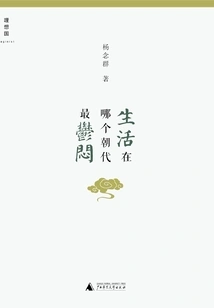
生活在哪个朝代最郁闷
Yang Nianqun
History does not repeat, it just rhymes. The lesson that history teaches us is that people never know how to learn from history. This book is a collection of column essays by historian Yang Nianqun. Although the title of the book is "Which dynasty was the most depressing to live in", the author's intention is not to discuss the gains and losses of the past dynasties, but to delay history and discuss the dark side of history hidden in history books, as well as the various strange current situations that he has heard and witnessed.
History does not repeat, it just rhymes. The lesson that history teaches us is that people never know how to learn from history. This book is a collection of column essays by historian Yang Nianqun. Although the title of the book is "Which dynasty was the most depressing to live in", the author's intention is not to discuss the gains and losses of the past dynasties, but to delay history and discuss the dark side of history hidden in history books, as well as the various strange current situations that he has heard and witnessed.
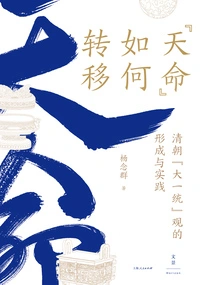
“天命”如何转移:清朝“大一统”观的形成与实践
Yang Nianqun
The famous historian Professor Yang Nianqun has been engaged in political history research for more than 20 years and is a masterpiece in political history. He uses "grand unification" as a method to open up a new perspective on understanding China. He draws a holographic image of the Qing Dynasty's establishment of special "legitimacy" and deeply reveals the nature of the imperial power of the Qing Dynasty. He reinterprets the core concepts of Chinese tradition and explores its continuing role in the turning process of modern history.
The famous historian Professor Yang Nianqun has been engaged in political history research for more than 20 years and is a masterpiece in political history. He uses "grand unification" as a method to open up a new perspective on understanding China. He draws a holographic image of the Qing Dynasty's establishment of special "legitimacy" and deeply reveals the nature of the imperial power of the Qing Dynasty. He reinterprets the core concepts of Chinese tradition and explores its continuing role in the turning process of modern history.
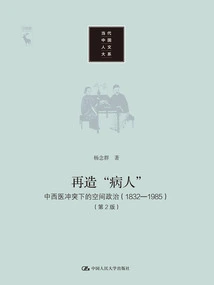
再造“病人”:中西医冲突下的空间政治1832—1985(第2版)
Yang Nianqun
The main purpose of this book is to explore the long history of how Chinese people since the late Qing Dynasty have changed from "normal" to "pathological", and how they have been observed, transformed and treated as "patients" in modern times. The title "Sick Man of East Asia" is not only a metaphor for the bullying of the Chinese people, but also a driving force for nationalistic social change. In this sense, "treatment" is no longer just a simple medical process, but has become the focus of political and social system changes, and individual treatment behaviors have thus become an integral part of group political movements. The author uses a novel and unique narrative technique to vividly reproduce another historical aspect of the magnificent changes in Chinese society through dozens of interconnected scenes. The figures active in these scenes include Western medicine missionaries, midwives and social reformers, as well as Chinese medicine practitioners who sit in the hall, use incense to see patients, and practice medicine on the go, as well as various politicians and barefoot doctors. This book strives to fully demonstrate the complex interactive game relationship between modern political evolution and traditional medical factors in a state of "contextualized writing".
The main purpose of this book is to explore the long history of how Chinese people since the late Qing Dynasty have changed from "normal" to "pathological", and how they have been observed, transformed and treated as "patients" in modern times. The title "Sick Man of East Asia" is not only a metaphor for the bullying of the Chinese people, but also a driving force for nationalistic social change. In this sense, "treatment" is no longer just a simple medical process, but has become the focus of political and social system changes, and individual treatment behaviors have thus become an integral part of group political movements. The author uses a novel and unique narrative technique to vividly reproduce another historical aspect of the magnificent changes in Chinese society through dozens of interconnected scenes. The figures active in these scenes include Western medicine missionaries, midwives and social reformers, as well as Chinese medicine practitioners who sit in the hall, use incense to see patients, and practice medicine on the go, as well as various politicians and barefoot doctors. This book strives to fully demonstrate the complex interactive game relationship between modern political evolution and traditional medical factors in a state of "contextualized writing".