Library
Browse and search books
1 novel found
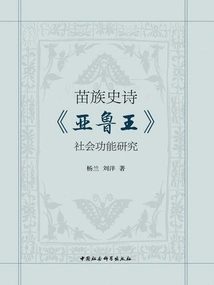
苗族史诗《亚鲁王》社会功能研究
Yang Lan Liu Yang
The Miao epic "King Yalu" is an important material that reflects the ancient Miao military activities, economic concepts, life rituals, productive labor, folk concepts, and daily life. It is the basis for the Masan Miao people to explore their ancestral origins. This book develops arguments along two lines. One line is a block study along the core functions, knowledge-derived functions and practice-derived functions of the epic, aiming to clarify how the social functions of the epic "King Yaru" affect social operation in a "center-periphery" context. The other line is a strip study along the functions of binding and maintaining reality, expanding and realizing cross-border functions, and constructing and expressing identity, aiming to respond to how the epic "King Yaru" implements in the game between tradition and modernity with a functional typology. The two clues jointly point to the four states of the epic "King Yalu", namely, historical reality and the state of the epic "past", cultural tradition and the state of the epic "the past that is not the past", regional culture and the state of the epic "the present that is not the past", and the internal structure and the state of the epic "the past is still the past".
The Miao epic "King Yalu" is an important material that reflects the ancient Miao military activities, economic concepts, life rituals, productive labor, folk concepts, and daily life. It is the basis for the Masan Miao people to explore their ancestral origins. This book develops arguments along two lines. One line is a block study along the core functions, knowledge-derived functions and practice-derived functions of the epic, aiming to clarify how the social functions of the epic "King Yaru" affect social operation in a "center-periphery" context. The other line is a strip study along the functions of binding and maintaining reality, expanding and realizing cross-border functions, and constructing and expressing identity, aiming to respond to how the epic "King Yaru" implements in the game between tradition and modernity with a functional typology. The two clues jointly point to the four states of the epic "King Yalu", namely, historical reality and the state of the epic "past", cultural tradition and the state of the epic "the past that is not the past", regional culture and the state of the epic "the present that is not the past", and the internal structure and the state of the epic "the past is still the past".