Library
Browse and search books
5 novels found
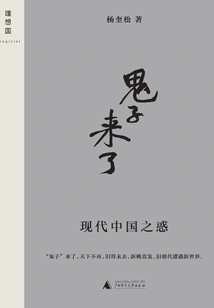
“鬼子”来了:现代中国之惑
Yang Kuisong
Professor Yang Kuisong's first column is collected to face the "fear and confusion" in China's modernization process. Why are many people not patriotic? In different contexts, what are the advantages and disadvantages of "nationalism"? What is the difference between "nation-state" and "national-state"? Who should be the teacher for China's modern development, and why do teachers always bully students? Why is the War of Resistance Against Japan the key to national rejuvenation? Who is "transforming" whom between "middle school" and "Western learning"? Is there a terminal point of happiness in this world? There is one and only one way out for China, and that is China's modernization. The world trend is vast. From the perspective of joining the ranks of modern countries, "the devil is coming" may not be a bad thing.
Professor Yang Kuisong's first column is collected to face the "fear and confusion" in China's modernization process. Why are many people not patriotic? In different contexts, what are the advantages and disadvantages of "nationalism"? What is the difference between "nation-state" and "national-state"? Who should be the teacher for China's modern development, and why do teachers always bully students? Why is the War of Resistance Against Japan the key to national rejuvenation? Who is "transforming" whom between "middle school" and "Western learning"? Is there a terminal point of happiness in this world? There is one and only one way out for China, and that is China's modernization. The world trend is vast. From the perspective of joining the ranks of modern countries, "the devil is coming" may not be a bad thing.
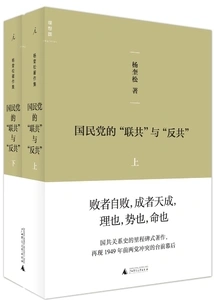
国民党的“联共”与“反共”
Yang Kuisong
There were two revolutionary parties in modern China: the Kuomintang and the Communist Party. The direction in which the Chinese revolution will take depends on the strength and competition between the Kuomintang and the Communist Party. This contest lasted for nearly thirty years. In the end, the young and weak Communist Party defeated the Kuomintang and shaped the subsequent history of China. The two revolutionary parties have been separated and reunited for a long time. You have me in you, and you have me in you. Why did the Kuomintang lose and the Communist Party win? For the first time, this book uses various archival documents and other historical materials from both the Kuomintang and the Communist Party to conduct a comprehensive and in-depth investigation and research on a series of major issues related to the development of relations between the Kuomintang and the Communist Party.
There were two revolutionary parties in modern China: the Kuomintang and the Communist Party. The direction in which the Chinese revolution will take depends on the strength and competition between the Kuomintang and the Communist Party. This contest lasted for nearly thirty years. In the end, the young and weak Communist Party defeated the Kuomintang and shaped the subsequent history of China. The two revolutionary parties have been separated and reunited for a long time. You have me in you, and you have me in you. Why did the Kuomintang lose and the Communist Party win? For the first time, this book uses various archival documents and other historical materials from both the Kuomintang and the Communist Party to conduct a comprehensive and in-depth investigation and research on a series of major issues related to the development of relations between the Kuomintang and the Communist Party.
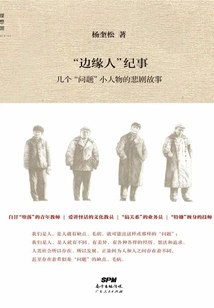
“边缘人”纪事:几个“问题”小人物的悲剧故事
Yang Kuisong
Reconstruct the life experiences of the "four types of elements" and see how the political and social ecology affects the fate of ordinary people! This book focuses on an impressive group of "marginal people". They are very ordinary, there are many of them, and most of their experiences are bumpy and complicated. Professor Yang Kuisong used eight "problem figures" with different origins, regions, occupations, and experiences as cases to reconstruct their personal experiences and observe and experience the impact of the political ecology of that era on ordinary people from the closest distance.
Reconstruct the life experiences of the "four types of elements" and see how the political and social ecology affects the fate of ordinary people! This book focuses on an impressive group of "marginal people". They are very ordinary, there are many of them, and most of their experiences are bumpy and complicated. Professor Yang Kuisong used eight "problem figures" with different origins, regions, occupations, and experiences as cases to reconstruct their personal experiences and observe and experience the impact of the political ecology of that era on ordinary people from the closest distance.
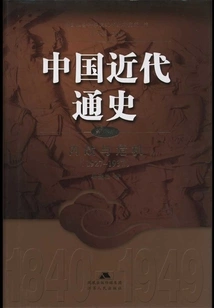
中国近代通史·第八卷:内战与危机(1927-1937)
Yang Kuisong
This book uses the major events in Chinese history from 1927 to 1937 as clues to describe this complicated and special period of modern society. After the Nanjing National Government completed the nominal unification of China, it implemented various efforts and attempts from implementing political training and constitutional government to strengthening the military, national defense, education, and economic foundation. Under the guidance of the Comintern, the CCP implemented rural armed separatism, established the Soviet Republic, and developed the difficult process of the Red Army. The manuscript reflects the tortuous negotiations between the two governments (the Nanjing National Government and the Chinese Soviet Government) and the two parties (the Kuomintang and the Communist Party) on the Chinese historical stage during this period with detailed and credible historical materials. It reproduces the clear historical context of the changes in the policies of the two parties since the September 18th Incident, the formation of the CCP's united front, and the realization of the cooperation between the KMT and the CPC.
This book uses the major events in Chinese history from 1927 to 1937 as clues to describe this complicated and special period of modern society. After the Nanjing National Government completed the nominal unification of China, it implemented various efforts and attempts from implementing political training and constitutional government to strengthening the military, national defense, education, and economic foundation. Under the guidance of the Comintern, the CCP implemented rural armed separatism, established the Soviet Republic, and developed the difficult process of the Red Army. The manuscript reflects the tortuous negotiations between the two governments (the Nanjing National Government and the Chinese Soviet Government) and the two parties (the Kuomintang and the Communist Party) on the Chinese historical stage during this period with detailed and credible historical materials. It reproduces the clear historical context of the changes in the policies of the two parties since the September 18th Incident, the formation of the CCP's united front, and the realization of the cooperation between the KMT and the CPC.
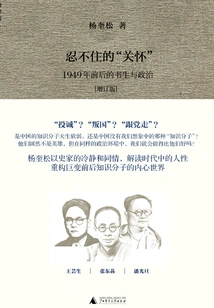
忍不住的“关怀”:1949年前后的书生与政治(增订版)
Yang Kuisong
Scholars and politics around 1949. For China's intellectuals in the 20th century, one of the greatest historical tragedies is that they were the first group of people to devote themselves to saving the country and the people. They thought they understood the political trends best, but in the end they were at a loss in the political field, easily blamed, and despised by others. The three people discussed in this book are Zhang Dongsun, a professor of philosophy at Yenching University, who has been immersed in political activities for a long time, and served as a member of the Government Affairs Council after 1949; Wang Yunsheng, a newspaperman, is good at political commentary and has been the chief writer of Ta Kung Pao for many years; and Pan Guangdan, a professor at Tsinghua University, was born in science, but even as a political layman, he actively wanted to make suggestions for Chinese politics. All three of them had performed outstandingly in different fields before 1949. However, after 1949, they encountered Waterloo one after another, and their lives and careers never recovered.
Scholars and politics around 1949. For China's intellectuals in the 20th century, one of the greatest historical tragedies is that they were the first group of people to devote themselves to saving the country and the people. They thought they understood the political trends best, but in the end they were at a loss in the political field, easily blamed, and despised by others. The three people discussed in this book are Zhang Dongsun, a professor of philosophy at Yenching University, who has been immersed in political activities for a long time, and served as a member of the Government Affairs Council after 1949; Wang Yunsheng, a newspaperman, is good at political commentary and has been the chief writer of Ta Kung Pao for many years; and Pan Guangdan, a professor at Tsinghua University, was born in science, but even as a political layman, he actively wanted to make suggestions for Chinese politics. All three of them had performed outstandingly in different fields before 1949. However, after 1949, they encountered Waterloo one after another, and their lives and careers never recovered.