Library
Browse and search books
2 novels found
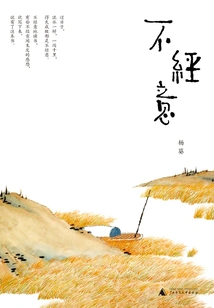
Inadvertently
Literature不经意
Yang Kui
At the beginning of spring, copy a page of "Entering the Bodhisattva's Journey" in small regular script; at the beginning of the summer, make a bowl of twenty-year-old tea cakes; at the summer solstice, shoot a movie in the alley late at night; at the beginning of autumn, recall the fragrance of chrysanthemums in Chengdu that year; at the end of the summer, listen to the old man playing the guqin song "Remembering the Old Friend"; at Bailu, learn the piano from Yushan Wu School Master Yu ; During the heavy snow, I closed my door and read the Japanese classical literature "In vain"; it was like sweeping tombs during the Qingming Festival, watching the rain at the beginning of summer, listening to the wind in the cold dew, and watching the piano during the frost... These daily necessities, wind, flowers, snow and moon in life constitute the background of the two major themes of reading and writing, which are closer to the original meaning of "accidental". Just as the author said: "Life is like running water, flowing thousands of miles, and gains and losses are all accidental." Reading, tasting tea, writing, and playing the piano cross the "boundary" and step into "life" to capture inadvertent touching moments in daily life; in the noisy and impetuous modern society, maintain a relaxed and easy-going state of mind, and live in your heart without dwelling.
At the beginning of spring, copy a page of "Entering the Bodhisattva's Journey" in small regular script; at the beginning of the summer, make a bowl of twenty-year-old tea cakes; at the summer solstice, shoot a movie in the alley late at night; at the beginning of autumn, recall the fragrance of chrysanthemums in Chengdu that year; at the end of the summer, listen to the old man playing the guqin song "Remembering the Old Friend"; at Bailu, learn the piano from Yushan Wu School Master Yu ; During the heavy snow, I closed my door and read the Japanese classical literature "In vain"; it was like sweeping tombs during the Qingming Festival, watching the rain at the beginning of summer, listening to the wind in the cold dew, and watching the piano during the frost... These daily necessities, wind, flowers, snow and moon in life constitute the background of the two major themes of reading and writing, which are closer to the original meaning of "accidental". Just as the author said: "Life is like running water, flowing thousands of miles, and gains and losses are all accidental." Reading, tasting tea, writing, and playing the piano cross the "boundary" and step into "life" to capture inadvertent touching moments in daily life; in the noisy and impetuous modern society, maintain a relaxed and easy-going state of mind, and live in your heart without dwelling.
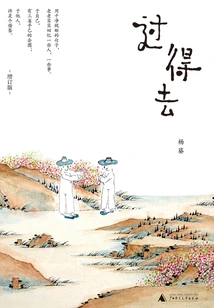
Passable
Literature过得去
Yang Kui
"Memory" is the theme and tone of "Getting By". The updated edition adds two new articles, "Notes from Northern Jiangsu" and "No. 19, Xinjiekouwai Street", recalling childhood and youth. Yang Kui said that the standard for a good article is "not pretentious", so I just write some memories honestly. Real people and real things are all my own experiences, which have had an impact on the formation of my outlook on life and the world. Yang Kui was born in a family of literature and art. He was born in northern Jiangsu in 1968. In 1979, he moved back to Beijing with his parents to implement the policy. He lived in the cadre dormitories of the Chinese Writers Association and the China Federation of Literary and Art Circles, living next to the older generation of senior literary and art cadres such as Lu Ling, Shu Qun, and Li Zhun. He studied at Beijing Normal University in the late 1980s, and worked as a book editor at Writers Publishing House in the 1990s. During his more than ten years of editing career, he has dealt with hundreds of authors such as Bing Xin, Acheng, and Wang Anyi. Yang Kui's rich personal experience makes his writing rich in material. However, he is modest and restrained, and does not write in a cathartic style. He only pursues the beauty and power of words, and what he writes from his heart. The stories he chooses to record are not based on the person's reputation or the depth of his personal relationship, but only on whether the story is interesting.
"Memory" is the theme and tone of "Getting By". The updated edition adds two new articles, "Notes from Northern Jiangsu" and "No. 19, Xinjiekouwai Street", recalling childhood and youth. Yang Kui said that the standard for a good article is "not pretentious", so I just write some memories honestly. Real people and real things are all my own experiences, which have had an impact on the formation of my outlook on life and the world. Yang Kui was born in a family of literature and art. He was born in northern Jiangsu in 1968. In 1979, he moved back to Beijing with his parents to implement the policy. He lived in the cadre dormitories of the Chinese Writers Association and the China Federation of Literary and Art Circles, living next to the older generation of senior literary and art cadres such as Lu Ling, Shu Qun, and Li Zhun. He studied at Beijing Normal University in the late 1980s, and worked as a book editor at Writers Publishing House in the 1990s. During his more than ten years of editing career, he has dealt with hundreds of authors such as Bing Xin, Acheng, and Wang Anyi. Yang Kui's rich personal experience makes his writing rich in material. However, he is modest and restrained, and does not write in a cathartic style. He only pursues the beauty and power of words, and what he writes from his heart. The stories he chooses to record are not based on the person's reputation or the depth of his personal relationship, but only on whether the story is interesting.