Library
Browse and search books
2 novels found
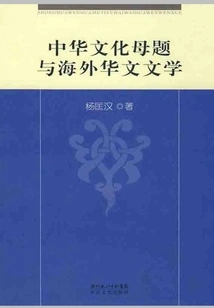
中华文学母题和海外华文文学
Yang Kuanghan
A key research project of the Institute of Contemporary Literature, Chinese Academy of Social Sciences. This article explains it from four aspects: "the significance and value of motifs in literature; double marginality and the voice of motherhood; cultural motifs in overseas Chinese literature; and artistic variations of motifs." Following the four perspectives, focusing on tradition, focusing on the whole, focusing on the text, and focusing on "harmony without difference", a new theoretical interpretation of the conceptual characteristics of the motif is made by combining Chinese contemporary literature and overseas Chinese literature. It is a practice of interdisciplinary and cross-genre research to break the long-standing habitual research status of holding on to one section of literature and one style of literature.
A key research project of the Institute of Contemporary Literature, Chinese Academy of Social Sciences. This article explains it from four aspects: "the significance and value of motifs in literature; double marginality and the voice of motherhood; cultural motifs in overseas Chinese literature; and artistic variations of motifs." Following the four perspectives, focusing on tradition, focusing on the whole, focusing on the text, and focusing on "harmony without difference", a new theoretical interpretation of the conceptual characteristics of the motif is made by combining Chinese contemporary literature and overseas Chinese literature. It is a practice of interdisciplinary and cross-genre research to break the long-standing habitual research status of holding on to one section of literature and one style of literature.
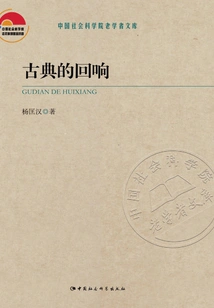
Classical Echo
Literature古典的回响
Yang Kuanghan
In the process of opening up to the wisdom of all mankind, contemporary Chinese literature must not only "think beyond the bounds" and draw from the vast ocean to seek new knowledge, but it also needs to have a clear-headed stance and critical attitude of "thinking about the past" and drawing on the past to enrich the present. In fact, contemporary literature contains the traditional roots of Chinese literature and the classical factors of artistic aesthetics, and has an inseparable flesh-and-blood connection with thousands of years of glorious classical literature, classical aesthetics, and classical literary theory. The inherent logical relationship between the two has rarely seen rigorous academic explanations and eloquent scientific judgments. Based on re-reading history, re-reading texts, re-examining issues, and re-investigating meanings, this book adheres to the academic proposition and original spirit of "respecting tradition and opening up gaps". It explores the development path of contemporary Chinese literature from the connection of traditional Chinese literary resources and the localization strategy of contemporary creation through four major chapters: "Connecting Tradition," "Continuation and Recall," "Wing Feng Zao" and "Sharing Time and Space." And aesthetic experience: from the integration of ancient and modern academic connotations, it interprets important propositions such as "Chinese character thinking", "landscape spirit", "classification" and "pursuit of the sublime", and embodies the "classical echo" through the analysis of typical cases: from the concern of the community of destiny for contemporary Chinese literature, it studies the literary phenomenon in Taiwan that follows the predecessors, so that they share the literary time and space of the great nation. This book pays attention to the integrity of cultural thinking and the richness of ancient and modern dialogues. It has a broad vision, a mixture of "virtual" and "real", and an elegant and smart writing style, making it a highly readable academic monograph.
In the process of opening up to the wisdom of all mankind, contemporary Chinese literature must not only "think beyond the bounds" and draw from the vast ocean to seek new knowledge, but it also needs to have a clear-headed stance and critical attitude of "thinking about the past" and drawing on the past to enrich the present. In fact, contemporary literature contains the traditional roots of Chinese literature and the classical factors of artistic aesthetics, and has an inseparable flesh-and-blood connection with thousands of years of glorious classical literature, classical aesthetics, and classical literary theory. The inherent logical relationship between the two has rarely seen rigorous academic explanations and eloquent scientific judgments. Based on re-reading history, re-reading texts, re-examining issues, and re-investigating meanings, this book adheres to the academic proposition and original spirit of "respecting tradition and opening up gaps". It explores the development path of contemporary Chinese literature from the connection of traditional Chinese literary resources and the localization strategy of contemporary creation through four major chapters: "Connecting Tradition," "Continuation and Recall," "Wing Feng Zao" and "Sharing Time and Space." And aesthetic experience: from the integration of ancient and modern academic connotations, it interprets important propositions such as "Chinese character thinking", "landscape spirit", "classification" and "pursuit of the sublime", and embodies the "classical echo" through the analysis of typical cases: from the concern of the community of destiny for contemporary Chinese literature, it studies the literary phenomenon in Taiwan that follows the predecessors, so that they share the literary time and space of the great nation. This book pays attention to the integrity of cultural thinking and the richness of ancient and modern dialogues. It has a broad vision, a mixture of "virtual" and "real", and an elegant and smart writing style, making it a highly readable academic monograph.