Library
Browse and search books
2 novels found
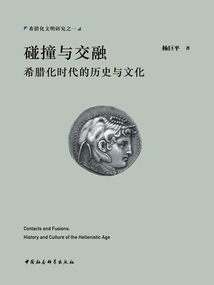
碰撞与交融:希腊化时代的历史与文化
Yang Juping
In 334 BC, Alexander, the King of Macedonia and the commander-in-chief of the Greek coalition, launched his eastern expedition, ushering in the first major collision, exchange, and convergence of ancient Eastern and Western civilizations. Although Alexander died young and his empire quickly fell apart, the Hellenistic world he created lasted for about three centuries across the vast land from the Eastern Mediterranean to the Indus River. Facing the oriental civilization with a long history and profound traditions, the Greek conquerors had to maintain their political rule and cultural advantages while respecting the local culture and absorbing, transforming and utilizing it conditionally. Thus, together with some Hellenistic locals, they created a mixed culture that was mainly Greek elements and compatible with Eastern elements - Hellenistic culture. This culture has a long history and influenced the development direction of European culture through the Roman Empire. It also had a certain degree of contact and integration with Chinese civilization in the Far East through the Silk Road.
In 334 BC, Alexander, the King of Macedonia and the commander-in-chief of the Greek coalition, launched his eastern expedition, ushering in the first major collision, exchange, and convergence of ancient Eastern and Western civilizations. Although Alexander died young and his empire quickly fell apart, the Hellenistic world he created lasted for about three centuries across the vast land from the Eastern Mediterranean to the Indus River. Facing the oriental civilization with a long history and profound traditions, the Greek conquerors had to maintain their political rule and cultural advantages while respecting the local culture and absorbing, transforming and utilizing it conditionally. Thus, together with some Hellenistic locals, they created a mixed culture that was mainly Greek elements and compatible with Eastern elements - Hellenistic culture. This culture has a long history and influenced the development direction of European culture through the Roman Empire. It also had a certain degree of contact and integration with Chinese civilization in the Far East through the Silk Road.
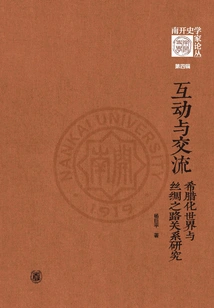
互动与交流:希腊化世界与丝绸之路关系研究
Yang Juping
The word "Hellenism" first appeared in the Greek Bible organized and compiled during the reign of Ptolemy II in the 3rd century BC. It refers to non-Greeks speaking Greek and living Greek lives. The Hellenistic world refers to a new world formed on the basis of Alexander's empire that was politically dominated by the Greek-Macedonians, culturally dominated by Greek culture, and also accommodated local Eastern cultural factors. Its scope ranges from the Mediterranean Sea in the east, to Central Asia and the Indus River in the west, to the northern grasslands in the north, and to the Indian Ocean in the south. The existence time roughly began with Alexander's Eastern Campaign in 334 BC and ended in 2 BC. The Hellenistic world was the most important legacy left by Alexander's Eastern Campaign. After his death, his tribe divided the world into three parts. In a vast area, Greek culture and Eastern culture had long-term contact, adapted and integrated with each other, thus giving birth to Hellenistic civilization. The opening of the Silk Road enabled the heritage of Hellenistic civilization to not only be spread, accepted, and transformed in the Hellenistic world, but also spread to the distant interior of the Central Plains, and eventually integrated into the development of Chinese civilization. In some respects, Alexander played an equally important role as Zhang Qian in the opening of the Silk Road. Previous Chinese works on the Silk Road mostly started from the perspective of the Central Plains, but this book focuses on the other end of the Silk Road - the Hellenistic world. Part 1 is divided into 3 chapters, which demonstrates the role of Alexander's Eastern Expeditions and the Hellenistic world in the opening of the Silk Road; Part 2 is the focus of the book, and is divided into 5 chapters, which are case studies, respectively discussing the spread and acceptance of Hellenistic civilization heritage in countries and regions along the Silk Road; Part 3, with 3 chapters, discusses the legacy and influence of Hellenistic civilization information in China. Each chapter is both independent and internally connected, which can comprehensively, systematically and three-dimensionally reflect the relationship between Hellenistic civilization and the Silk Road. This publication includes appendices of 5 English papers published in authoritative foreign journals.
The word "Hellenism" first appeared in the Greek Bible organized and compiled during the reign of Ptolemy II in the 3rd century BC. It refers to non-Greeks speaking Greek and living Greek lives. The Hellenistic world refers to a new world formed on the basis of Alexander's empire that was politically dominated by the Greek-Macedonians, culturally dominated by Greek culture, and also accommodated local Eastern cultural factors. Its scope ranges from the Mediterranean Sea in the east, to Central Asia and the Indus River in the west, to the northern grasslands in the north, and to the Indian Ocean in the south. The existence time roughly began with Alexander's Eastern Campaign in 334 BC and ended in 2 BC. The Hellenistic world was the most important legacy left by Alexander's Eastern Campaign. After his death, his tribe divided the world into three parts. In a vast area, Greek culture and Eastern culture had long-term contact, adapted and integrated with each other, thus giving birth to Hellenistic civilization. The opening of the Silk Road enabled the heritage of Hellenistic civilization to not only be spread, accepted, and transformed in the Hellenistic world, but also spread to the distant interior of the Central Plains, and eventually integrated into the development of Chinese civilization. In some respects, Alexander played an equally important role as Zhang Qian in the opening of the Silk Road. Previous Chinese works on the Silk Road mostly started from the perspective of the Central Plains, but this book focuses on the other end of the Silk Road - the Hellenistic world. Part 1 is divided into 3 chapters, which demonstrates the role of Alexander's Eastern Expeditions and the Hellenistic world in the opening of the Silk Road; Part 2 is the focus of the book, and is divided into 5 chapters, which are case studies, respectively discussing the spread and acceptance of Hellenistic civilization heritage in countries and regions along the Silk Road; Part 3, with 3 chapters, discusses the legacy and influence of Hellenistic civilization information in China. Each chapter is both independent and internally connected, which can comprehensively, systematically and three-dimensionally reflect the relationship between Hellenistic civilization and the Silk Road. This publication includes appendices of 5 English papers published in authoritative foreign journals.