Library
Browse and search books
3 novels found
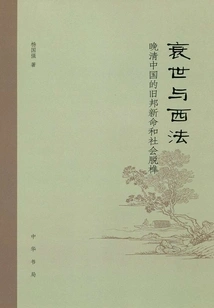
衰世与西法:晚清中国的旧邦新命和社会脱榫
Yang Guoqiang
This book is a new topic that the author has researched in recent years, covering fourteen special topics. That is: the extension of the study of world management and the historical starting point of China's modernization, the historical experience of the Chinese people and the world outside of historical experience. The gentry and gentry power in China in the late 19th century, donations, recommendations, and official irregularities in the late Qing Dynasty, "Ding Wu Qi Huang": natural disasters and relief in China in the late 19th century, transportation between China and the West, and foreigners who entered Chinese history. The treaty system: the transformation and being transformed between the Western world and China in the late Qing Dynasty, the conflict between China and the West: missionary work and lesson plans in China in the late Qing Dynasty, the beginning and dilemma of the military industry in the late Qing Dynasty, the period of the First World War and the Second World War: the resurgence and drastic changes of the Qing Dynasty. The Western Tide and the Return: A history of thought in the late Qing Dynasty and the early Republic of China, two concepts in modern China and their historical causes and effects throughout the century, Confucianism in history, historical reflections on the imperial examination system, attached: Chinese society and politics before and after the Revolution of 1911---an interview with "Oriental Morning Post".
This book is a new topic that the author has researched in recent years, covering fourteen special topics. That is: the extension of the study of world management and the historical starting point of China's modernization, the historical experience of the Chinese people and the world outside of historical experience. The gentry and gentry power in China in the late 19th century, donations, recommendations, and official irregularities in the late Qing Dynasty, "Ding Wu Qi Huang": natural disasters and relief in China in the late 19th century, transportation between China and the West, and foreigners who entered Chinese history. The treaty system: the transformation and being transformed between the Western world and China in the late Qing Dynasty, the conflict between China and the West: missionary work and lesson plans in China in the late Qing Dynasty, the beginning and dilemma of the military industry in the late Qing Dynasty, the period of the First World War and the Second World War: the resurgence and drastic changes of the Qing Dynasty. The Western Tide and the Return: A history of thought in the late Qing Dynasty and the early Republic of China, two concepts in modern China and their historical causes and effects throughout the century, Confucianism in history, historical reflections on the imperial examination system, attached: Chinese society and politics before and after the Revolution of 1911---an interview with "Oriental Morning Post".
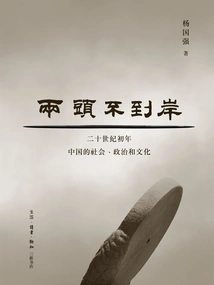
两头不到岸:二十世纪初年中国的社会、政治和文化
Yang Guoqiang
The latest masterpiece of modern historian Professor Yang Guoqiang. With his meaningful writing style, he leads readers into the historical scenes of the early 20th century, recreating the thoughts, politics, and society of the transitional era from the late Qing Dynasty to the early Republic of China: China has been fragmented through layers of decomposition over thousands of years of history; the New Law and the Western Law, which people have adapted to the times and have each expanded, have failed miserably in real China. During this period, major issues such as the suspension of the imperial examinations, the constitutional reform, the Revolution of 1911, and the New Culture Movement appeared one after another, creating a "quick modernization" on an unprecedented scale. Through the contradictions, complexity, changes in characters and chaos of world affairs in this period of history, the author explores the origin, connotation and consequences of this radical change, which has unprecedented intensity and depth, causing rupture, disconnection, destruction and even disintegration.
The latest masterpiece of modern historian Professor Yang Guoqiang. With his meaningful writing style, he leads readers into the historical scenes of the early 20th century, recreating the thoughts, politics, and society of the transitional era from the late Qing Dynasty to the early Republic of China: China has been fragmented through layers of decomposition over thousands of years of history; the New Law and the Western Law, which people have adapted to the times and have each expanded, have failed miserably in real China. During this period, major issues such as the suspension of the imperial examinations, the constitutional reform, the Revolution of 1911, and the New Culture Movement appeared one after another, creating a "quick modernization" on an unprecedented scale. Through the contradictions, complexity, changes in characters and chaos of world affairs in this period of history, the author explores the origin, connotation and consequences of this radical change, which has unprecedented intensity and depth, causing rupture, disconnection, destruction and even disintegration.
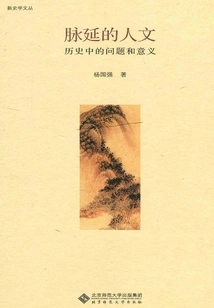
脉延的人文:历史中的问题和意义
Yang Guoqiang
Modern China has witnessed great changes, and political and social changes have undergone tremendous changes, which are worthy of re-examination. The author believes that understanding history begins with historical facts, and therefore we must start by seeing the individual parts and fragments before understanding the whole. Therefore, the fragmentation and disintegration known as fragments today are a necessary and necessary part of this process. However, the ultimate goal of recognizing history is to understand and explain history. Therefore, this kind of historical facts that exist in individual and fragmentary forms have no cause and effect, no upward and downward connections, and no origin and trace, so they become isolated facts that can neither explain themselves nor others. Therefore, fragments of historical facts need to be connected with each other to reproduce the cause and effect, up and down connections, and origins between them. Only then can the facts in history become meaningful facts. This book is the author's research on the social changes in modern China based on this research path. It is of great academic value and readability.
Modern China has witnessed great changes, and political and social changes have undergone tremendous changes, which are worthy of re-examination. The author believes that understanding history begins with historical facts, and therefore we must start by seeing the individual parts and fragments before understanding the whole. Therefore, the fragmentation and disintegration known as fragments today are a necessary and necessary part of this process. However, the ultimate goal of recognizing history is to understand and explain history. Therefore, this kind of historical facts that exist in individual and fragmentary forms have no cause and effect, no upward and downward connections, and no origin and trace, so they become isolated facts that can neither explain themselves nor others. Therefore, fragments of historical facts need to be connected with each other to reproduce the cause and effect, up and down connections, and origins between them. Only then can the facts in history become meaningful facts. This book is the author's research on the social changes in modern China based on this research path. It is of great academic value and readability.