Library
Browse and search books
9 novels found
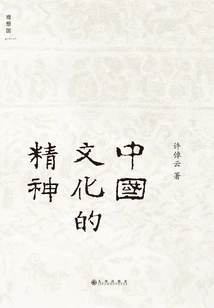
中国文化的精神
Xu Zhuoyun
Chinese people attach great importance to diversity and harmony in their daily lives in terms of diet, medicine, and housing. They seek uniformity but avoid deviation, and strive for neutrality but not excess. Various concepts can still be seen in the thoughts and behaviors of Chinese people. The beautiful and noble spirit and true humanity of generations of Chinese people are mostly not found in the Four Books, Five Classics and Twenty-Four Histories, but in the streets and alleys, in the mountains and countryside, where they talk on the street and talk about mulberry and hemp... From the creation of the world to the heroes of the world, from the affairs of men and women to the phenomenon of monsters, they cover a wide range and represent the likes, dislikes, praises and criticisms of ordinary Chinese people. Their view of history is a set of evaluation systems that connect these stories together.
Chinese people attach great importance to diversity and harmony in their daily lives in terms of diet, medicine, and housing. They seek uniformity but avoid deviation, and strive for neutrality but not excess. Various concepts can still be seen in the thoughts and behaviors of Chinese people. The beautiful and noble spirit and true humanity of generations of Chinese people are mostly not found in the Four Books, Five Classics and Twenty-Four Histories, but in the streets and alleys, in the mountains and countryside, where they talk on the street and talk about mulberry and hemp... From the creation of the world to the heroes of the world, from the affairs of men and women to the phenomenon of monsters, they cover a wide range and represent the likes, dislikes, praises and criticisms of ordinary Chinese people. Their view of history is a set of evaluation systems that connect these stories together.
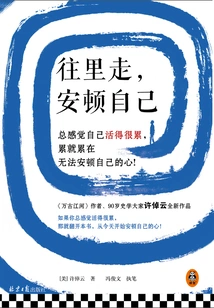
Go Inside and Settle Down
Literature往里走,安顿自己
Xu Zhuoyun
I was born disabled and couldn't walk until I was eight years old and couldn't do anything for a long time. I watched a bunch of ants come out of the nest. Each ant picked a piece from a big leaf and carried it on its back. They lined up in a single line and walked back to the nest. I watched this scene for an hour, it was like watching a very interesting drama, and I could also discover the wisdom of ants. This method is called "self-dispatching" and finding a place to settle by yourself. To be honest, I have had a hard time in this life. I was born with a disability, and I have been sick for decades when I am old. If I had not moved forward, I would not have survived to this day... If we can build our own hearts and no longer pursue the short-lived "fast" of happiness, and no longer pursue the short-lived "fun" of vanity, our actions and emotions can reach the world and the soul. Xu Zhuoyun, a 90-year-old historian, tells us from his personal experience: Only by going inside can you settle yourself. If you always feel tired from living, then open this book and start settling your mind today.
I was born disabled and couldn't walk until I was eight years old and couldn't do anything for a long time. I watched a bunch of ants come out of the nest. Each ant picked a piece from a big leaf and carried it on its back. They lined up in a single line and walked back to the nest. I watched this scene for an hour, it was like watching a very interesting drama, and I could also discover the wisdom of ants. This method is called "self-dispatching" and finding a place to settle by yourself. To be honest, I have had a hard time in this life. I was born with a disability, and I have been sick for decades when I am old. If I had not moved forward, I would not have survived to this day... If we can build our own hearts and no longer pursue the short-lived "fast" of happiness, and no longer pursue the short-lived "fun" of vanity, our actions and emotions can reach the world and the soul. Xu Zhuoyun, a 90-year-old historian, tells us from his personal experience: Only by going inside can you settle yourself. If you always feel tired from living, then open this book and start settling your mind today.
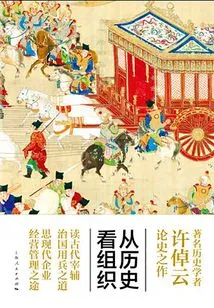
从历史看组织
Xu Zhuoyun
The book "Looking at Organization from History" is an oral record of the famous scholar Xu Zhuoyun talking about the organizational system in Chinese history and the merits and deeds of various dynasties. It covers the period from the pre-Qin Dynasty to the Qing Dynasty. The author uses easy-to-understand language to explain the organizational experience and management techniques of various dynasties. As a book that connects the past and the present, by reading this book, we can draw reference and experience from the history of ancient country governance, and it is also of great benefit to today's business operators and managers.
The book "Looking at Organization from History" is an oral record of the famous scholar Xu Zhuoyun talking about the organizational system in Chinese history and the merits and deeds of various dynasties. It covers the period from the pre-Qin Dynasty to the Qing Dynasty. The author uses easy-to-understand language to explain the organizational experience and management techniques of various dynasties. As a book that connects the past and the present, by reading this book, we can draw reference and experience from the history of ancient country governance, and it is also of great benefit to today's business operators and managers.
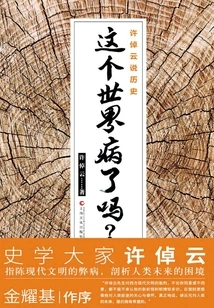
许倬云说历史:这个世界病了吗?
Xu Zhuoyun
Mr. Xu Zhuoyun, with his profound and broad historian's vision, keenly discerned that the third period of modern civilization centered on the United States is declining. "Modern civilization is entering autumn, and the cold winter is not far away." Starting from the three pillars of capitalist economy, sovereign state, and science and technology, this book briefly explains the development history and realistic situation of modern civilization, points out the various crises it faces, and finally attempts to introduce the new element of "values of life phenomena" outside of Western tradition as the basis for a new common civilization structure of mankind.
Mr. Xu Zhuoyun, with his profound and broad historian's vision, keenly discerned that the third period of modern civilization centered on the United States is declining. "Modern civilization is entering autumn, and the cold winter is not far away." Starting from the three pillars of capitalist economy, sovereign state, and science and technology, this book briefly explains the development history and realistic situation of modern civilization, points out the various crises it faces, and finally attempts to introduce the new element of "values of life phenomena" outside of Western tradition as the basis for a new common civilization structure of mankind.
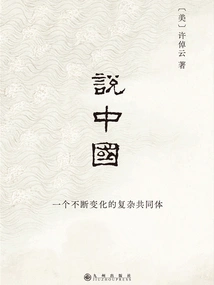
说中国:一个不断变化的复杂共同体(2024版)
Xu Zhuoyun
How did China become China? Is its identity based on blood, national boundaries, or culture? Swords and swords cut boundaries, but food and clothing flowed between each other; Confucianism, Buddhism, and Taoism were mixed; nationalities merged... How did these originally scattered and complex cultures gradually converge and shape a country called "China\u002F Huaxia"? In the future, can this community still attract the descendants of the original members and continue to be recognized as belonging physically and mentally? The famous historian Xu Zhuoyun started from the Neolithic Age to the eve of the end of the Qing Dynasty, describing how the complex community of "Chinese China" continued to evolve. The book does not lay out details or cumbersome arguments. It adopts a broad historical perspective and selects the key points in politics, economy, society, and culture of each era to outline the appearance of each era. In the era of globalization, if you can examine your own ethnic identity principles, you will not be easily hijacked by the arrogance of intolerant ethnic groups and lose your way.
How did China become China? Is its identity based on blood, national boundaries, or culture? Swords and swords cut boundaries, but food and clothing flowed between each other; Confucianism, Buddhism, and Taoism were mixed; nationalities merged... How did these originally scattered and complex cultures gradually converge and shape a country called "China\u002F Huaxia"? In the future, can this community still attract the descendants of the original members and continue to be recognized as belonging physically and mentally? The famous historian Xu Zhuoyun started from the Neolithic Age to the eve of the end of the Qing Dynasty, describing how the complex community of "Chinese China" continued to evolve. The book does not lay out details or cumbersome arguments. It adopts a broad historical perspective and selects the key points in politics, economy, society, and culture of each era to outline the appearance of each era. In the era of globalization, if you can examine your own ethnic identity principles, you will not be easily hijacked by the arrogance of intolerant ethnic groups and lose your way.
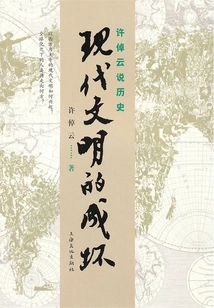
许倬云说历史:现代文明的成坏
Xu Zhuoyun
With a broad vision and popular language, Mr. Xu Zhuoyun paints a panoramic view of modern civilization from a high position: from the religious revolution to the rise of nation-states, from the Enlightenment to the industrial revolution to the great development of modern capitalism. With a clear outline and a clear outline, he outlines the formation and development of modern society, reflects on the gains and losses of civilization and progress, and looks forward to the prospects of mankind.
With a broad vision and popular language, Mr. Xu Zhuoyun paints a panoramic view of modern civilization from a high position: from the religious revolution to the rise of nation-states, from the Enlightenment to the industrial revolution to the great development of modern capitalism. With a clear outline and a clear outline, he outlines the formation and development of modern society, reflects on the gains and losses of civilization and progress, and looks forward to the prospects of mankind.
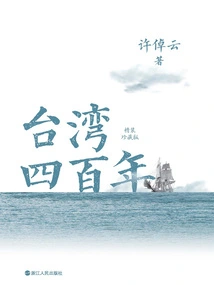
台湾四百年:精装珍藏版(2024版)
Xu Zhuoyun
Xu Zhuoyun, a great historian, uses his grand historian's vision and emotional language to describe for us the historical context and the ups and downs of Taiwan over the past four hundred years: Starting from the Age of Discovery in the 16th century, Taiwan experienced Dutch colonization, the Zheng Group, the Qing government, Japanese colonization and the rule of the Kuomintang regime, and has never been free from the entanglement of local, mainland and world factors. He analyzed the advantages and disadvantages of Taiwan's development from the aspects of geographical environment, political economy, humanities and society, and cross-strait relations, and expressed the concerns and expectations of a generation of scholars for the future of both sides of the Taiwan Strait. "This book is not an information book, but a book about the spirit and predicament of Taiwanese people today." Unlike Xu Zhuoyun's other historical writings, what he states in this book is not others, but himself. This book can be described as a "passionate work" written by a 94-year-old man to compatriots on both sides of the Taiwan Strait.
Xu Zhuoyun, a great historian, uses his grand historian's vision and emotional language to describe for us the historical context and the ups and downs of Taiwan over the past four hundred years: Starting from the Age of Discovery in the 16th century, Taiwan experienced Dutch colonization, the Zheng Group, the Qing government, Japanese colonization and the rule of the Kuomintang regime, and has never been free from the entanglement of local, mainland and world factors. He analyzed the advantages and disadvantages of Taiwan's development from the aspects of geographical environment, political economy, humanities and society, and cross-strait relations, and expressed the concerns and expectations of a generation of scholars for the future of both sides of the Taiwan Strait. "This book is not an information book, but a book about the spirit and predicament of Taiwanese people today." Unlike Xu Zhuoyun's other historical writings, what he states in this book is not others, but himself. This book can be described as a "passionate work" written by a 94-year-old man to compatriots on both sides of the Taiwan Strait.
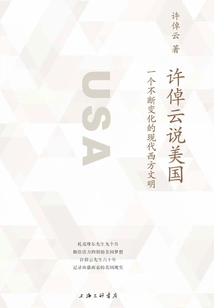
许倬云说美国
Xu Zhuoyun
Having lived in the United States for more than sixty years, Xu Zhuoyun, a great Chinese historian, shares his personal experiences. With a keen perspective that combines history and sociology, he vividly presents the people, events, places, and things that were deeply impressive and worth recalling during his stay in the United States. Before our eyes, and placed back into the cultural, institutional and social context to which they belong, we trace the historical background and historical origins behind these experiences, telling the development of the United States from the Mayflower to Trump, as well as the decline, conflicts and problems in recent years.
Having lived in the United States for more than sixty years, Xu Zhuoyun, a great Chinese historian, shares his personal experiences. With a keen perspective that combines history and sociology, he vividly presents the people, events, places, and things that were deeply impressive and worth recalling during his stay in the United States. Before our eyes, and placed back into the cultural, institutional and social context to which they belong, we trace the historical background and historical origins behind these experiences, telling the development of the United States from the Mayflower to Trump, as well as the decline, conflicts and problems in recent years.
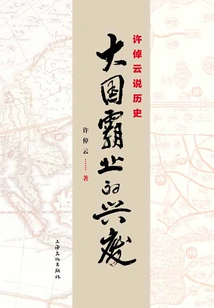
许倬云说历史:大国霸业的兴废
Xu Zhuoyun
In the Chinese history section, the book begins with the Qin and Han Empires, and outlines and outlines the impact of the dispersion and aggregation of the organizational structures of Chinese dynasties on their survival, concisely outlining the general context of Chinese history. In terms of world history, the book focuses on analyzing the causes of the success and failure of the Roman Empire, and then compares it with modern powers such as the Netherlands and the British Empire. Finally, it reflects on the loss of the Christian spirit in the United States today.
In the Chinese history section, the book begins with the Qin and Han Empires, and outlines and outlines the impact of the dispersion and aggregation of the organizational structures of Chinese dynasties on their survival, concisely outlining the general context of Chinese history. In terms of world history, the book focuses on analyzing the causes of the success and failure of the Roman Empire, and then compares it with modern powers such as the Netherlands and the British Empire. Finally, it reflects on the loss of the Christian spirit in the United States today.