Library
Browse and search books
4 novels found
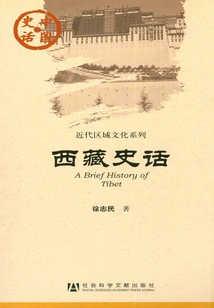
西藏史话(中国史话·近代区域文化系列)
Xu Zhimin
Although this book starts from the ancient history of Tibet, it focuses on the vicissitudes of Tibet's history over the past century. That is, the history of how Tibet in modern China moved from a semi-colony coveted and encroached upon by imperialist powers to one that completely expelled imperialist forces and fully integrated into the big family of the motherland; how it moved from a political system where religion and politics were ruled by gods and Buddhas to a national regional autonomy in which the people are the masters; and how it moved from a dark, cruel, backward feudal serfdom society that lasted for thousands of years to a bright road to a socialist society. History has proven, and will continue to prove, that without the Communist Party of China, there would be no new Tibet with a socialist society and no new happy life for the people of all ethnic groups in Tibet.
Although this book starts from the ancient history of Tibet, it focuses on the vicissitudes of Tibet's history over the past century. That is, the history of how Tibet in modern China moved from a semi-colony coveted and encroached upon by imperialist powers to one that completely expelled imperialist forces and fully integrated into the big family of the motherland; how it moved from a political system where religion and politics were ruled by gods and Buddhas to a national regional autonomy in which the people are the masters; and how it moved from a dark, cruel, backward feudal serfdom society that lasted for thousands of years to a bright road to a socialist society. History has proven, and will continue to prove, that without the Communist Party of China, there would be no new Tibet with a socialist society and no new happy life for the people of all ethnic groups in Tibet.
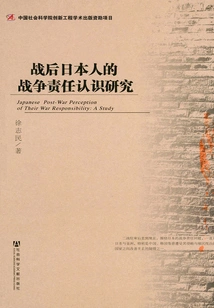
战后日本人的战争责任认识研究
Xu Zhimin
The postwar Japanese understanding of war responsibility was complex and dynamic. Even after the war, there are considerable differences and changes in the understanding of war responsibilities of a certain social class in Japan, or of different social groups in the same class. Even the same Japanese has different understandings of war responsibilities at different times and on different occasions. In order to comprehensively grasp the overview and characteristics of the Japanese people's understanding of war responsibility after the war, this book uses the continuity of the postwar Japanese emperor, government, conservatives, progressives, and ordinary people's understanding of war responsibility as the "warp", and its stages in response to the current situation at home and abroad as the "weft", focusing on elucidating It describes the history of changes in their understanding of war responsibility from the postwar period to the present, and explores the key relationship between the Japanese people's understanding of war responsibility and the understanding of history between China and Japan, thereby enhancing mutual understanding, strengthening mutual trust between China and Japan, and eliminating ideological obstacles and historical factors that affect peace, stability and prosperity in East Asia.
The postwar Japanese understanding of war responsibility was complex and dynamic. Even after the war, there are considerable differences and changes in the understanding of war responsibilities of a certain social class in Japan, or of different social groups in the same class. Even the same Japanese has different understandings of war responsibilities at different times and on different occasions. In order to comprehensively grasp the overview and characteristics of the Japanese people's understanding of war responsibility after the war, this book uses the continuity of the postwar Japanese emperor, government, conservatives, progressives, and ordinary people's understanding of war responsibility as the "warp", and its stages in response to the current situation at home and abroad as the "weft", focusing on elucidating It describes the history of changes in their understanding of war responsibility from the postwar period to the present, and explores the key relationship between the Japanese people's understanding of war responsibility and the understanding of history between China and Japan, thereby enhancing mutual understanding, strengthening mutual trust between China and Japan, and eliminating ideological obstacles and historical factors that affect peace, stability and prosperity in East Asia.
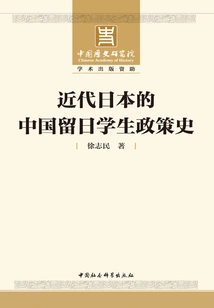
近代日本的中国留日学生政策史
Xu Zhimin
In modern times, the number of Chinese students studying in Japan was large, large-scale and far-reaching, and they had extremely close relations with China and Japan. Modern Japan's policy towards Chinese students studying in Japan, from its initial formation in the late Meiji period, to adjustments and improvements in the Taisho period, to the negotiations between China and Japan on the policy for students studying in Japan in the early Showa era, especially after Japan launched a war of aggression against China, it strengthened the investigation and monitoring of students studying in Japan, and nakedly brainwashed students studying in Japan under the puppet regime, all reflecting the strategies and purposes of its invasion and expansion policy. The original purpose of overseas education was to spread scientific and cultural knowledge and promote world peace and development, but it was mixed with too many political conspiracies and aggressive ambitions, and the results were counterproductive and counterproductive.
In modern times, the number of Chinese students studying in Japan was large, large-scale and far-reaching, and they had extremely close relations with China and Japan. Modern Japan's policy towards Chinese students studying in Japan, from its initial formation in the late Meiji period, to adjustments and improvements in the Taisho period, to the negotiations between China and Japan on the policy for students studying in Japan in the early Showa era, especially after Japan launched a war of aggression against China, it strengthened the investigation and monitoring of students studying in Japan, and nakedly brainwashed students studying in Japan under the puppet regime, all reflecting the strategies and purposes of its invasion and expansion policy. The original purpose of overseas education was to spread scientific and cultural knowledge and promote world peace and development, but it was mixed with too many political conspiracies and aggressive ambitions, and the results were counterproductive and counterproductive.
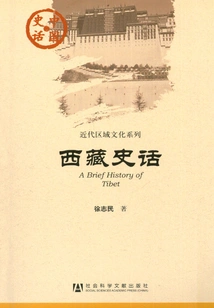
Tibetan History
History西藏史话
Xu Zhimin
Although this book starts from the ancient history of Tibet, it focuses on the vicissitudes of Tibet's history over the past century. That is, the history of how Tibet in modern China moved from a semi-colony coveted and encroached upon by imperialist powers to one that completely expelled imperialist forces and fully integrated into the big family of the motherland; how it moved from a political system where religion and politics were ruled by gods and Buddhas to a national regional autonomy in which the people are the masters; and how it moved from a dark, cruel, backward feudal serfdom society that lasted for thousands of years to a bright road to a socialist society. History has proven, and will continue to prove, that without the Communist Party of China, there would be no new Tibet with a socialist society and no new happy life for the people of all ethnic groups in Tibet.
Although this book starts from the ancient history of Tibet, it focuses on the vicissitudes of Tibet's history over the past century. That is, the history of how Tibet in modern China moved from a semi-colony coveted and encroached upon by imperialist powers to one that completely expelled imperialist forces and fully integrated into the big family of the motherland; how it moved from a political system where religion and politics were ruled by gods and Buddhas to a national regional autonomy in which the people are the masters; and how it moved from a dark, cruel, backward feudal serfdom society that lasted for thousands of years to a bright road to a socialist society. History has proven, and will continue to prove, that without the Communist Party of China, there would be no new Tibet with a socialist society and no new happy life for the people of all ethnic groups in Tibet.