Library
Browse and search books
1 novel found
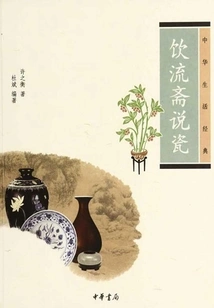
饮流斋说瓷(中华生活经典)
Xu Zhiheng
Xu Zhiheng's family name was Yin Liu Zhai, and he called himself the master of Yin Liu Zhai, so his book "Shuo Porcelain" was titled "Yin Liu Zhai Shuo Porcelain". This book is a monograph on the history of Chinese ceramics based on summarizing previous knowledge and personal experiences. The author used methods such as classification and comparison to collect information from the Expo and describe in an orderly manner. He collected a large number of scientific and common names for ancient ceramics and preserved many historical terms and antique terminology for future generations, which are still used in the field of museums and cultural relics at home and abroad. There are ten volumes in the book, which are in order: overview, kiln, glaze, color, flower painting, style identification, bottles and jars, cups and plates, miscellaneous utensils, defects and counterfeiting. Each chapter discusses the historical changes vertically and the types of designs and colors horizontally. It traces back to its origins and advances layer by layer to analyze the details. It is the basis for beginners and a must-read book for porcelain scholars.
Xu Zhiheng's family name was Yin Liu Zhai, and he called himself the master of Yin Liu Zhai, so his book "Shuo Porcelain" was titled "Yin Liu Zhai Shuo Porcelain". This book is a monograph on the history of Chinese ceramics based on summarizing previous knowledge and personal experiences. The author used methods such as classification and comparison to collect information from the Expo and describe in an orderly manner. He collected a large number of scientific and common names for ancient ceramics and preserved many historical terms and antique terminology for future generations, which are still used in the field of museums and cultural relics at home and abroad. There are ten volumes in the book, which are in order: overview, kiln, glaze, color, flower painting, style identification, bottles and jars, cups and plates, miscellaneous utensils, defects and counterfeiting. Each chapter discusses the historical changes vertically and the types of designs and colors horizontally. It traces back to its origins and advances layer by layer to analyze the details. It is the basis for beginners and a must-read book for porcelain scholars.