Library
Browse and search books
6 novels found
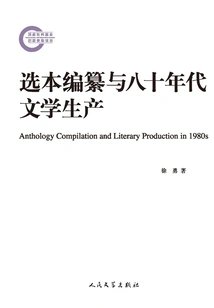
选本编纂与八十年代文学生产
Xu Yong
With the end of the "Cultural Revolution", a series of aspects of the book selection operation, including selection qualifications, selection criteria, selected works, and determination of publishers, have changed accordingly. This change is linked to the changing status of literary criticism. This work strives to reconstruct the literary coordinates of the 1980s from the perspective of anthologies, fully explore the role of anthologies in the formation of critical standards, the renewal of literary history concepts, the construction of cultural identity, the creation of public space and the cohesion of consensus in the new era, and fully explore its unique value in the history of literature, culture and thought.
With the end of the "Cultural Revolution", a series of aspects of the book selection operation, including selection qualifications, selection criteria, selected works, and determination of publishers, have changed accordingly. This change is linked to the changing status of literary criticism. This work strives to reconstruct the literary coordinates of the 1980s from the perspective of anthologies, fully explore the role of anthologies in the formation of critical standards, the renewal of literary history concepts, the construction of cultural identity, the creation of public space and the cohesion of consensus in the new era, and fully explore its unique value in the history of literature, culture and thought.
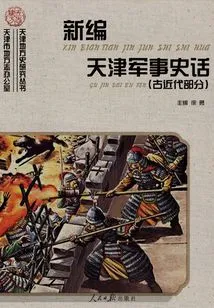
新编天津军事史话
Xu Yong
This book is the first in a series of "Tianjin Encyclopedia History" planned and published by the Tianjin Municipal Local Chronicles Office. It selects more than 150 events (entries) that are closely related to the military in ancient and modern Tianjin and are the most important or unavoidable in history. In principle, they are arranged in chronological order and vertically, taking into account the integrity of the relevant events. This book collects the latest historical materials and research results, and to a certain extent fills the gap in the lack of military history in Tianjin. The book has about 240,000 words and nearly 30 pictures.
This book is the first in a series of "Tianjin Encyclopedia History" planned and published by the Tianjin Municipal Local Chronicles Office. It selects more than 150 events (entries) that are closely related to the military in ancient and modern Tianjin and are the most important or unavoidable in history. In principle, they are arranged in chronological order and vertically, taking into account the integrity of the relevant events. This book collects the latest historical materials and research results, and to a certain extent fills the gap in the lack of military history in Tianjin. The book has about 240,000 words and nearly 30 pictures.
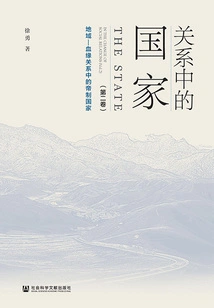
关系中的国家(第2卷):地域—血缘关系中的帝制国家
Xu Yong
With the theme of "Region-Imperial State in Blood Relations", this book explains that after Qin Shihuang unified China, China's state and national governance went beyond the dominance of blood relations and transformed into the dominance of regional relations, forming a super-large regional territorial state. The imperial system that maintained this country included a series of new institutional factors such as centralization represented by imperial power, county bureaucracy, administrative cities, household integration, and national laws and regulations. The book consists of fifteen chapters, which explore the country and its governance process and internal dominance relationships from the unification of China by Qin Shihuang to the late Qing Dynasty in the form of special topics.
With the theme of "Region-Imperial State in Blood Relations", this book explains that after Qin Shihuang unified China, China's state and national governance went beyond the dominance of blood relations and transformed into the dominance of regional relations, forming a super-large regional territorial state. The imperial system that maintained this country included a series of new institutional factors such as centralization represented by imperial power, county bureaucracy, administrative cities, household integration, and national laws and regulations. The book consists of fifteen chapters, which explore the country and its governance process and internal dominance relationships from the unification of China by Qin Shihuang to the late Qing Dynasty in the form of special topics.
My Love Village
Modern Romance我的情浓村庄
Xu Yong
Fenghuang Village has a population of 3,000 in the countryside. It is not a big village, but it is also small. Zhao Baoshun is famous in the village for being honest and honest. He does not like to talk and has no friends, but he has no enemies in the village. Generally speaking, he is a good person. He is the youngest of the four sisters. After getting married, my wife was also an honest person and would not be too mean-spirited. However, one thing was that when she did good deeds, she was misunderstood. She had to obey her in everything. When talking in front of the neighbors, if anyone said something bad to her, he would keep a straight face and act like he owed her 200 yuan. Then he went home and told Zhao Baoshun that he had a son, Zhao Zhihai, in the second year of marriage. As Zhihai grew up day by day, the terrible nightmare finally came. It was always trivial things that caused the originally harmonious family, father and son to break up, and brothers to become enemies. Zhao Baoshun, who was originally honest and honest, was able to support the family in a war-torn environment. Little Zhihai, who was less than 8 years old, lived in confusion in this kind of family war with no beauty and domestic violence.
Fenghuang Village has a population of 3,000 in the countryside. It is not a big village, but it is also small. Zhao Baoshun is famous in the village for being honest and honest. He does not like to talk and has no friends, but he has no enemies in the village. Generally speaking, he is a good person. He is the youngest of the four sisters. After getting married, my wife was also an honest person and would not be too mean-spirited. However, one thing was that when she did good deeds, she was misunderstood. She had to obey her in everything. When talking in front of the neighbors, if anyone said something bad to her, he would keep a straight face and act like he owed her 200 yuan. Then he went home and told Zhao Baoshun that he had a son, Zhao Zhihai, in the second year of marriage. As Zhihai grew up day by day, the terrible nightmare finally came. It was always trivial things that caused the originally harmonious family, father and son to break up, and brothers to become enemies. Zhao Baoshun, who was originally honest and honest, was able to support the family in a war-torn environment. Little Zhihai, who was less than 8 years old, lived in confusion in this kind of family war with no beauty and domestic violence.
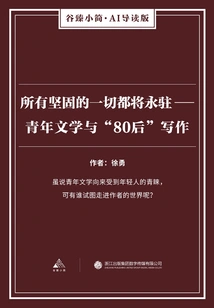
所有坚固的一切都将永驻:青年文学与“80后”写作(谷臻小简·AI导读版)
Xu Yong
Although youth literature has always been favored by young people, who has tried to enter the author's world? This book divides writers born in the 1970s and 1980s into several types: traditional writers born in the 1970s and 1980s, youth writers born in the 1970s and 1980s, and alternative writers born in the 1970s and 1980s. Let's step into their world.
Although youth literature has always been favored by young people, who has tried to enter the author's world? This book divides writers born in the 1970s and 1980s into several types: traditional writers born in the 1970s and 1980s, youth writers born in the 1970s and 1980s, and alternative writers born in the 1970s and 1980s. Let's step into their world.
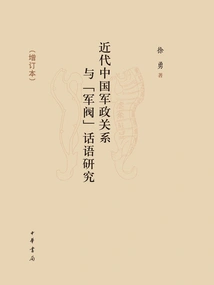
A Study of Military-political Relations and "warlord" Discourse in Modern China (updated Edition)
History近代中国军政关系与“军阀”话语研究(增订本)
Xu Yong
The warlords' discourse is interesting, useful and full of academic research value. For more than a hundred years, relevant research at home and abroad has continued. At the end of the 20th century, the author used emerging electronic retrieval technology and overseas study visits to study various historical materials and advanced research. He found that in the chain of ancient and modern usage examples, Chinese warlords were originally in the context of military merit. In the modern Japanese "anti-warlord" democratic movement, they were converted into critical and derogatory meanings, and then returned to China. They served all walks of life and revolutionary parties in the use of culture to control military forces and the integration of military-political and military-party relations. The cross-regional transmission of the word warlord and its escaping function are common issues in the history and culture of modern China, East Asia and the world. The author's preliminary research has been revised this time, and he looks forward to sharing his encouragement with readers.
The warlords' discourse is interesting, useful and full of academic research value. For more than a hundred years, relevant research at home and abroad has continued. At the end of the 20th century, the author used emerging electronic retrieval technology and overseas study visits to study various historical materials and advanced research. He found that in the chain of ancient and modern usage examples, Chinese warlords were originally in the context of military merit. In the modern Japanese "anti-warlord" democratic movement, they were converted into critical and derogatory meanings, and then returned to China. They served all walks of life and revolutionary parties in the use of culture to control military forces and the integration of military-political and military-party relations. The cross-regional transmission of the word warlord and its escaping function are common issues in the history and culture of modern China, East Asia and the world. The author's preliminary research has been revised this time, and he looks forward to sharing his encouragement with readers.