Library
Browse and search novels
1 novel found
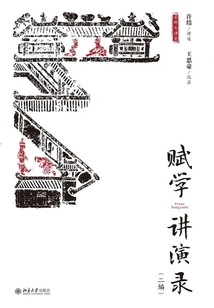
Lectures on Fu Studies (part 2)
Literature赋学讲演录(二编)
Xu Jie Wang Sihao Records
This book is compiled based on the class recordings of the "Chinese Fu Studies" course taught by the author to graduate students. There are ten lectures in total: Fu rhyme, Fu method, Fu Ci, Fu Yi, Fu family, Fu preface, Fu annotations, Fu categories, Fu test, and Fu study. Based on the principles of stylistic theory, the author conducts an in-depth and detailed exploration and description of the rhythm, grammatical techniques, rhetorical style and spatial art of Fu in order to demonstrate the basic characteristics and spiritual outlook of Fu literature. An academic perspective highlighted in the book is the emergence of the Chu-Han Fu family as the first generation of signed scribes and their connection with the cultural construction of the Han Empire. This book also opens up new horizons for peripheral research on some fu texts, such as prefaces, annotations, and the "generalization" of fu dynasty-like books and fu creations. As for the relationship between literature and institutions involved in the examination of Fu, Xi Fu's requirements for creative techniques are not only the guidance of today's writing of Fu, but also integrated into the narrator's academic theory and taste, giving people a pleasant reading mood.
This book is compiled based on the class recordings of the "Chinese Fu Studies" course taught by the author to graduate students. There are ten lectures in total: Fu rhyme, Fu method, Fu Ci, Fu Yi, Fu family, Fu preface, Fu annotations, Fu categories, Fu test, and Fu study. Based on the principles of stylistic theory, the author conducts an in-depth and detailed exploration and description of the rhythm, grammatical techniques, rhetorical style and spatial art of Fu in order to demonstrate the basic characteristics and spiritual outlook of Fu literature. An academic perspective highlighted in the book is the emergence of the Chu-Han Fu family as the first generation of signed scribes and their connection with the cultural construction of the Han Empire. This book also opens up new horizons for peripheral research on some fu texts, such as prefaces, annotations, and the "generalization" of fu dynasty-like books and fu creations. As for the relationship between literature and institutions involved in the examination of Fu, Xi Fu's requirements for creative techniques are not only the guidance of today's writing of Fu, but also integrated into the narrator's academic theory and taste, giving people a pleasant reading mood.