Library
Browse and search books
5 novels found
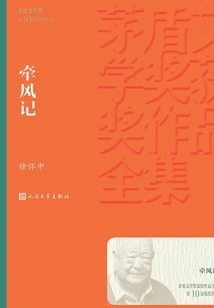
Story of the Wind
General Fiction牵风记
Xu Huaizhong
Wang Keyuo, a young student who defected to Yan'an, passed by the station of the "Night Tiger Regiment". He met the regiment leader Qi Jing because of a guqin song "Mountains and Flowing Water" and became a cultural teacher under him. Wang Keyu is smart, smart, innocent, and Qi Jing is both civilized and military, elegant and talkative. Just as the romantic and exciting battlefield love song is about to be played, an unpredictable incident occurs... In the flames of war as the Shanxi, Hebei, Lu and Henan armies advance thousands of miles into the Dabie Mountains, how will the fate of Wang Keyu, Qi Jing and others evolve? The novel is bloody and beautiful, ethereal and strange, and expands the creative space of war literature.
Wang Keyuo, a young student who defected to Yan'an, passed by the station of the "Night Tiger Regiment". He met the regiment leader Qi Jing because of a guqin song "Mountains and Flowing Water" and became a cultural teacher under him. Wang Keyu is smart, smart, innocent, and Qi Jing is both civilized and military, elegant and talkative. Just as the romantic and exciting battlefield love song is about to be played, an unpredictable incident occurs... In the flames of war as the Shanxi, Hebei, Lu and Henan armies advance thousands of miles into the Dabie Mountains, how will the fate of Wang Keyu, Qi Jing and others evolve? The novel is bloody and beautiful, ethereal and strange, and expands the creative space of war literature.
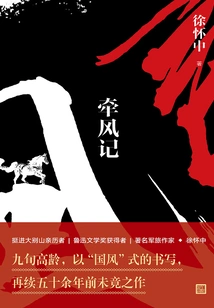
Story of the Wind
General Fiction牵风记
Xu Huaizhong
The winning work of the 10th Mao Dun Literature Award. The novel takes the Shanxi-Hebei-Shandong-Henan Field Army's advance into the Dabie Mountains as the historical background in 1947. It tells the heroic story of the heroine Wang Keyu's pursuit of a bright future, but her life ended at the age of 19. The novel revolves around three people and a horse, describing the joys and sorrows of the war, highlighting the beauty's transcendence of war. The novel not only describes heroic sentiments, but also expresses human nature. It also highlights the special manifestations of human nature under special circumstances, creating a new image for contemporary military literature. The story is poignant and legendary, and the language is ethereal and sophisticated. Since many of the stories are based on the author's personal experiences, the novel has strong historical authenticity.
The winning work of the 10th Mao Dun Literature Award. The novel takes the Shanxi-Hebei-Shandong-Henan Field Army's advance into the Dabie Mountains as the historical background in 1947. It tells the heroic story of the heroine Wang Keyu's pursuit of a bright future, but her life ended at the age of 19. The novel revolves around three people and a horse, describing the joys and sorrows of the war, highlighting the beauty's transcendence of war. The novel not only describes heroic sentiments, but also expresses human nature. It also highlights the special manifestations of human nature under special circumstances, creating a new image for contemporary military literature. The story is poignant and legendary, and the language is ethereal and sophisticated. Since many of the stories are based on the author's personal experiences, the novel has strong historical authenticity.
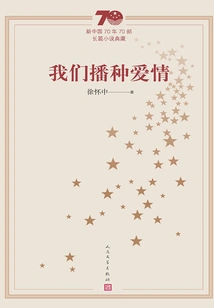
我们播种爱情(新中国70年70部长篇小说典藏)
Xu Huaizhong
The novel describes the story of an agricultural technology extension station that worked hard to create a new life with the local people in that majestic land after the peaceful liberation of Tibet. The novel is full of complex struggles between various forces, full of the romance of life, full of passion for life, and very rich in local flavor. It is an excellent work describing life in Tibet since the founding of the People's Republic of China.
The novel describes the story of an agricultural technology extension station that worked hard to create a new life with the local people in that majestic land after the peaceful liberation of Tibet. The novel is full of complex struggles between various forces, full of the romance of life, full of passion for life, and very rich in local flavor. It is an excellent work describing life in Tibet since the founding of the People's Republic of China.
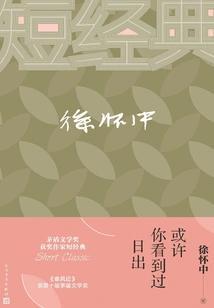
Maybe You Have Seen the Sunrise
General Fiction或许你看到过日出
Xu Huaizhong
It has been more than thirty years since the Mao Dun Literature Award was established, and nearly forty writers have participated in the award-winning works. Most of these writers have been working in the literary world for many years. In addition to novels, they have also made outstanding achievements in the fields of "short" genres such as novellas, short stories and essays. This time, from an artistic perspective, we selected the first batch of classic works of novellas, short stories and essays by some award-winning writers, compiled them into a collection of about 200,000 words, and assembled them into this set of "Short Classics of Mao Dun Literature Award Winning Writers". Xu Huaizhong, winner of the 10th Mao Dun Literature Award, and editor-in-chief Hu Yuping jointly edited and selected this book.
It has been more than thirty years since the Mao Dun Literature Award was established, and nearly forty writers have participated in the award-winning works. Most of these writers have been working in the literary world for many years. In addition to novels, they have also made outstanding achievements in the fields of "short" genres such as novellas, short stories and essays. This time, from an artistic perspective, we selected the first batch of classic works of novellas, short stories and essays by some award-winning writers, compiled them into a collection of about 200,000 words, and assembled them into this set of "Short Classics of Mao Dun Literature Award Winning Writers". Xu Huaizhong, winner of the 10th Mao Dun Literature Award, and editor-in-chief Hu Yuping jointly edited and selected this book.
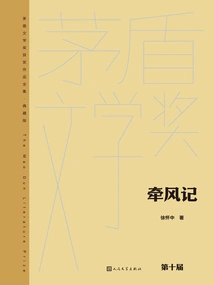
Story of the Wind
General Fiction牵风记
Xu Huaizhong
Wang Keyuo, a young student who defected to Yan'an, passed by the station of the "Night Tiger Regiment". He met the regiment leader Qi Jing because of a guqin song "Mountains and Flowing Water" and became a cultural teacher under him. Wang Keyuo is smart, smart, innocent, and Qi Jing is both civilized and military, elegant and talkative. Just when the romantic and exciting battlefield love song is about to be played, an unpredictable incident occurs... The cavalry correspondent Cao Shui'er is tall, powerful, brave and decisive, and is valued by Qi Jing, and is also popular among women. In the flames of war, he often lost control of himself, which eventually led to tragedy... In the flames of war as the Shanxi, Hebei, Shandong and Henan armies advanced thousands of miles into the Dabie Mountains, how did the fate of Wang Keyu, Qi Jing, Cao Shuier and others evolve? How can that spiritually miraculous and considerate old army horse accomplish its merits and die without regrets? The novel is bloody and beautiful, ethereal and strange. It not only contains profound thoughts on war and human nature, but also expresses the magical relationship between man and nature, both real and imaginary, which expands the creative space of war literature.
Wang Keyuo, a young student who defected to Yan'an, passed by the station of the "Night Tiger Regiment". He met the regiment leader Qi Jing because of a guqin song "Mountains and Flowing Water" and became a cultural teacher under him. Wang Keyuo is smart, smart, innocent, and Qi Jing is both civilized and military, elegant and talkative. Just when the romantic and exciting battlefield love song is about to be played, an unpredictable incident occurs... The cavalry correspondent Cao Shui'er is tall, powerful, brave and decisive, and is valued by Qi Jing, and is also popular among women. In the flames of war, he often lost control of himself, which eventually led to tragedy... In the flames of war as the Shanxi, Hebei, Shandong and Henan armies advanced thousands of miles into the Dabie Mountains, how did the fate of Wang Keyu, Qi Jing, Cao Shuier and others evolve? How can that spiritually miraculous and considerate old army horse accomplish its merits and die without regrets? The novel is bloody and beautiful, ethereal and strange. It not only contains profound thoughts on war and human nature, but also expresses the magical relationship between man and nature, both real and imaginary, which expands the creative space of war literature.