Library
Browse and search books
2 novels found
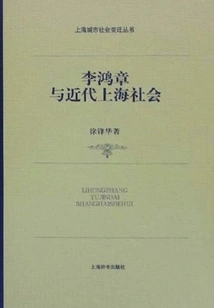
李鸿章与近代上海社会(上海城市社会变迁丛书)
Xu Fenghua
"Shanghai Urban Social Change Series" is an in-depth review of Shanghai's urban social changes. The complete set of books covers all aspects of Shanghai's urban social changes. The author is an expert and scholar in relevant research fields from the Institute of History of the Shanghai Academy of Social Sciences, the School of Foreign Languages of Shanghai University, and the School of Humanities of Tongji University. He has rich experience and in-depth research in the history of Shanghai's urban social life. By reading this specific history of urban social changes in Shanghai, you will get more vivid information, which can either solve inherent problems or trigger new thinking. In short, you can deepen your understanding of the cultural heritage of the city of Shanghai. It is also of certain value for deepening and promoting the study of the entire modern history of China. The main content of "Shanghai Urban Social Change Series: Li Hongzhang and Modern Shanghai Society" is: Li Hongzhang led the Huai Army to Shanghai in 1862, successfully resisted the attack of the Taiping Army, and protected the security of Shanghai. On this basis, he "used Shanghai to pacify Wu" and successively recovered various parts of Sunan. He established his martial arts skills in one fell swoop and cleared the way for the final conquest of Nanjing. As a local official in Shanghai and governor of Jiangsu Province, Li Hongzhang removed the old and established the new politically, and built a personal network of relationships; he devoted himself to local officials and people's livelihood, raised pay and purchased grain for the Hunan-Huaihe army, and tried his best in negotiating foreign "barbarian affairs." Li Hongzhang successively founded the Third Bomb Bureau and the Jiangnan Manufacturing Bureau in Shanghai, which kicked off the "Tongzhi ZTE" in the late Qing Dynasty. He also opened a series of civilian enterprises such as a steamship investment bureau, a machine weaving layout, and a telegraph bureau. He also petitioned to open a Cantonese dialect museum, participated in the preparation of the Gezhi Academy, and selected young children to study in the United States. He made great contributions to Shanghai's socioeconomic and cultural construction. Shanghai is the starting point of Li Hongzhang's glorious life. Without Shanghai, there would be no Li Hongzhang, an important official in the late Qing Dynasty.
"Shanghai Urban Social Change Series" is an in-depth review of Shanghai's urban social changes. The complete set of books covers all aspects of Shanghai's urban social changes. The author is an expert and scholar in relevant research fields from the Institute of History of the Shanghai Academy of Social Sciences, the School of Foreign Languages of Shanghai University, and the School of Humanities of Tongji University. He has rich experience and in-depth research in the history of Shanghai's urban social life. By reading this specific history of urban social changes in Shanghai, you will get more vivid information, which can either solve inherent problems or trigger new thinking. In short, you can deepen your understanding of the cultural heritage of the city of Shanghai. It is also of certain value for deepening and promoting the study of the entire modern history of China. The main content of "Shanghai Urban Social Change Series: Li Hongzhang and Modern Shanghai Society" is: Li Hongzhang led the Huai Army to Shanghai in 1862, successfully resisted the attack of the Taiping Army, and protected the security of Shanghai. On this basis, he "used Shanghai to pacify Wu" and successively recovered various parts of Sunan. He established his martial arts skills in one fell swoop and cleared the way for the final conquest of Nanjing. As a local official in Shanghai and governor of Jiangsu Province, Li Hongzhang removed the old and established the new politically, and built a personal network of relationships; he devoted himself to local officials and people's livelihood, raised pay and purchased grain for the Hunan-Huaihe army, and tried his best in negotiating foreign "barbarian affairs." Li Hongzhang successively founded the Third Bomb Bureau and the Jiangnan Manufacturing Bureau in Shanghai, which kicked off the "Tongzhi ZTE" in the late Qing Dynasty. He also opened a series of civilian enterprises such as a steamship investment bureau, a machine weaving layout, and a telegraph bureau. He also petitioned to open a Cantonese dialect museum, participated in the preparation of the Gezhi Academy, and selected young children to study in the United States. He made great contributions to Shanghai's socioeconomic and cultural construction. Shanghai is the starting point of Li Hongzhang's glorious life. Without Shanghai, there would be no Li Hongzhang, an important official in the late Qing Dynasty.
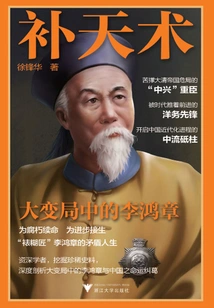
补天术:大变局中的李鸿章
Xu Fenghua
In the late Qing Dynasty, China encountered great changes unseen in thousands of years. Amidst the ups and downs, the Qing Dynasty lingered on for decades. During this period, what did Li Hongzhang do as a member of the imperial court? How could he single-handedly extend the life of the decaying dynasty? What power did he rely on to slowly push China into modernization? China's complex situation cannot be controlled by the strength of one person. Li Hongzhang's efforts are often wasted by ignorant court leaders and bureaucrats at all levels. Fortunately, he is proficient in a sky-repairing technique called "Westernization", and can borrow power from the West to fill the ever-collapsing sky of this old Eastern empire. In addition to many important Westernization enterprises and the cultivation of a large number of talents, Li Hongzhang left China with the memory of modernization for the people of the 20th century. This memory will deeply mark China's modernization path with Li Hongzhang's imprint.
In the late Qing Dynasty, China encountered great changes unseen in thousands of years. Amidst the ups and downs, the Qing Dynasty lingered on for decades. During this period, what did Li Hongzhang do as a member of the imperial court? How could he single-handedly extend the life of the decaying dynasty? What power did he rely on to slowly push China into modernization? China's complex situation cannot be controlled by the strength of one person. Li Hongzhang's efforts are often wasted by ignorant court leaders and bureaucrats at all levels. Fortunately, he is proficient in a sky-repairing technique called "Westernization", and can borrow power from the West to fill the ever-collapsing sky of this old Eastern empire. In addition to many important Westernization enterprises and the cultivation of a large number of talents, Li Hongzhang left China with the memory of modernization for the people of the 20th century. This memory will deeply mark China's modernization path with Li Hongzhang's imprint.