Library
Browse and search books
2 novels found
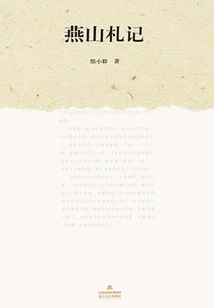
Notes from Yanshan
Literature燕山札记
Xing Xiaoqun
The content of "Notes from Yanshan" is, firstly, travel notes. Since 2005, my husband and I have been traveling to other countries around the world at our own expense every year for twelve years. Exotic customs and scenery are naturally fascinating, but what we pay more attention to is the development and evolution of local economy, culture, civilization and history. It can be said that we have traveled thousands of miles and read with our feet. I always want to write down the things that particularly touch me. The second is to remember people. I have interacted with some people in the past, some are teachers who have inspired me, some are good friends who have been with me for many years, some are fellow villagers who have helped me, and some are students who have touched me. I kept thinking about it and wrote it down. The third is bookkeeping. After retirement, I read a lot of books, especially biographies and historical essays, and I have read very few novels. I remember a friend said that you should have different perspectives when reading different types of books. For example, when reading a novel, you should read it page by page; when reading a certain type of book, you should scan it piece by piece; but for prose essays, you should read it sentence by sentence. Many years ago, he recited to me Huang Yongyu's letter to Cao Yu: "I don't like your plays after liberation. I don't like any of them. Your heart is not in the play, you have lost your great psychic gem, you have been misled by the situation! You have shrunk from an ocean to a stream." Such criticism and expression can be said to be deeply emotional and penetrate the back of the paper, and it is really memorable. I think that the beauty of prose essays naturally lies in the elegance and clarity of the sentences, and it is also more suitable for spiritual and cultural exchanges. While reading, there is often a feeling of spiritual connection or resonance and even an urge to have a conversation.
The content of "Notes from Yanshan" is, firstly, travel notes. Since 2005, my husband and I have been traveling to other countries around the world at our own expense every year for twelve years. Exotic customs and scenery are naturally fascinating, but what we pay more attention to is the development and evolution of local economy, culture, civilization and history. It can be said that we have traveled thousands of miles and read with our feet. I always want to write down the things that particularly touch me. The second is to remember people. I have interacted with some people in the past, some are teachers who have inspired me, some are good friends who have been with me for many years, some are fellow villagers who have helped me, and some are students who have touched me. I kept thinking about it and wrote it down. The third is bookkeeping. After retirement, I read a lot of books, especially biographies and historical essays, and I have read very few novels. I remember a friend said that you should have different perspectives when reading different types of books. For example, when reading a novel, you should read it page by page; when reading a certain type of book, you should scan it piece by piece; but for prose essays, you should read it sentence by sentence. Many years ago, he recited to me Huang Yongyu's letter to Cao Yu: "I don't like your plays after liberation. I don't like any of them. Your heart is not in the play, you have lost your great psychic gem, you have been misled by the situation! You have shrunk from an ocean to a stream." Such criticism and expression can be said to be deeply emotional and penetrate the back of the paper, and it is really memorable. I think that the beauty of prose essays naturally lies in the elegance and clarity of the sentences, and it is also more suitable for spiritual and cultural exchanges. While reading, there is often a feeling of spiritual connection or resonance and even an urge to have a conversation.
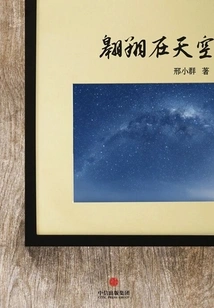
Soar in the Sky
Literature翱翔在天空
Xing Xiaoqun
Liu Xinjian, director of the Political Department of the Air Force, senior colonel. Now retired. Recalling the growth history of the Chinese Air Force. From August 1964 to the end of 1969, the Kuomintang's U. S.-Made drones invaded mainland airspace 97 times, and were shot down by our army 20 times. Among them, the Air Force aviation shot down 14, the surface-to-air missile force shot down 3, and the Navy aviation shot down 3. The Air Force is a powerful weapon to defend the country. For many years since the founding of the People's Republic of China, the Chinese Air Force has been soaring in the sky.
Liu Xinjian, director of the Political Department of the Air Force, senior colonel. Now retired. Recalling the growth history of the Chinese Air Force. From August 1964 to the end of 1969, the Kuomintang's U. S.-Made drones invaded mainland airspace 97 times, and were shot down by our army 20 times. Among them, the Air Force aviation shot down 14, the surface-to-air missile force shot down 3, and the Navy aviation shot down 3. The Air Force is a powerful weapon to defend the country. For many years since the founding of the People's Republic of China, the Chinese Air Force has been soaring in the sky.