Library
Browse and search books
3 novels found
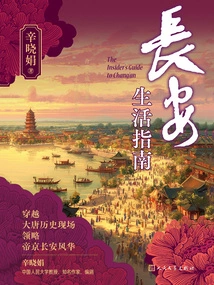
Chang'an Life Guide
History长安生活指南
Xin Xiaojuan
The capital city is a symbol of an era and a link between ancient and modern times. Chang'an, the capital of the Tang Dynasty, was the largest and most developed capital at that time. It typically reflected the grandeur and inclusive spirit of the Tang Dynasty. Chang'an was not only a city, but also a holy place that people of all ethnic groups longed for at that time. It was a symbol of the capital culture of the Tang Dynasty. There were five capitals in the Tang Dynasty. This book "Life Guide to Chang'an" starts with Chang'an and also includes the four capitals of Luoyang, Chengdu, Taiyuan and Fengxiang. The five capitals had different appearances and temperaments, which deeply affected the culture and literature of the Tang Dynasty. There were five capital cities in the Tang Dynasty, four of which are still the first-tier cities in China today. The city's rivers, ponds, gardens, palaces, towers, ruins, and stories and legends are still affecting people in the real world. Therefore, this book looks at these thousand-year-old capitals from the perspective of poets. While constructing a grand historical picture, it also presents the rich life details of the Tang people. This book "discusses the present through the past" uses the close connection between people and the capital as a medium to connect history and the present and answer the questions of the times. As readers visit famous places, they gradually understand "how to live poetically in Tangdu" and then think about "how people should live today". Thereby stimulating common emotions, common memories, common aesthetics, and gaining cultural enjoyment.
The capital city is a symbol of an era and a link between ancient and modern times. Chang'an, the capital of the Tang Dynasty, was the largest and most developed capital at that time. It typically reflected the grandeur and inclusive spirit of the Tang Dynasty. Chang'an was not only a city, but also a holy place that people of all ethnic groups longed for at that time. It was a symbol of the capital culture of the Tang Dynasty. There were five capitals in the Tang Dynasty. This book "Life Guide to Chang'an" starts with Chang'an and also includes the four capitals of Luoyang, Chengdu, Taiyuan and Fengxiang. The five capitals had different appearances and temperaments, which deeply affected the culture and literature of the Tang Dynasty. There were five capital cities in the Tang Dynasty, four of which are still the first-tier cities in China today. The city's rivers, ponds, gardens, palaces, towers, ruins, and stories and legends are still affecting people in the real world. Therefore, this book looks at these thousand-year-old capitals from the perspective of poets. While constructing a grand historical picture, it also presents the rich life details of the Tang people. This book "discusses the present through the past" uses the close connection between people and the capital as a medium to connect history and the present and answer the questions of the times. As readers visit famous places, they gradually understand "how to live poetically in Tangdu" and then think about "how people should live today". Thereby stimulating common emotions, common memories, common aesthetics, and gaining cultural enjoyment.
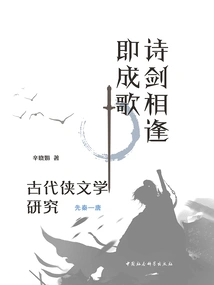
诗剑相逢即成歌:古代侠文学研究(先秦—唐)
Xin Xiaojuan
This book systematically sorts out the changes in the image of knight-errants in literary works from the Pre-Qin Dynasty to the Tang Dynasty, and explores the impact of knight-errant culture on ancient Chinese literature, the social atmosphere of the time, and the mentality of scholars. Sima Qian was the first to write a biography of the knight-errant, establishing the classic image of the knight-errant. Starting from Cao Zhi, the image of the chivalrous man has been combined with patriotism. The heroic feats of young chivalrous men who "sacrifice themselves to fight for the country's calamity and regard death as a sudden return" has inspired generations of passionate men. The image of knights in chivalrous poems and legendary novels of the Tang Dynasty is also a representative of the tolerant, open-minded, positive and high-spirited ethos of the times in the Tang Dynasty. Chivalrous literature is rooted in the rich soil of traditional culture and embodies the Chinese nation's pursuit of truth, goodness and beauty, so it has vigorous vitality. Contemporary college students are at an age where they admire heroes and need to establish a correct view of heroes and values. This book combs and elucidates the image of chivalry in excellent ancient literary works, absorbs the essence, eliminates the dross, and combines it with the new era's view of heroes to build a hero system with national characteristics and enhance college students' cultural confidence and patriotic sentiment.
This book systematically sorts out the changes in the image of knight-errants in literary works from the Pre-Qin Dynasty to the Tang Dynasty, and explores the impact of knight-errant culture on ancient Chinese literature, the social atmosphere of the time, and the mentality of scholars. Sima Qian was the first to write a biography of the knight-errant, establishing the classic image of the knight-errant. Starting from Cao Zhi, the image of the chivalrous man has been combined with patriotism. The heroic feats of young chivalrous men who "sacrifice themselves to fight for the country's calamity and regard death as a sudden return" has inspired generations of passionate men. The image of knights in chivalrous poems and legendary novels of the Tang Dynasty is also a representative of the tolerant, open-minded, positive and high-spirited ethos of the times in the Tang Dynasty. Chivalrous literature is rooted in the rich soil of traditional culture and embodies the Chinese nation's pursuit of truth, goodness and beauty, so it has vigorous vitality. Contemporary college students are at an age where they admire heroes and need to establish a correct view of heroes and values. This book combs and elucidates the image of chivalry in excellent ancient literary works, absorbs the essence, eliminates the dross, and combines it with the new era's view of heroes to build a hero system with national characteristics and enhance college students' cultural confidence and patriotic sentiment.
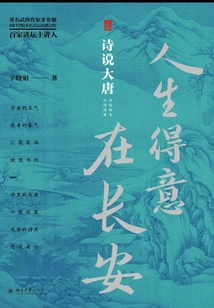
人生得意在长安:诗说大唐
Xin Xiaojuan
This book was born out of the "Poetry on the Tang Dynasty" series of CCTV's "Hundred Schools of Forum" program. Using 21 famous poems by Tang Dynasty poets such as Chen Ziang, Du Fu, Meng Haoran, and Wang Zhihuan as clues, it presents multiple aspects of life in the Tang Dynasty. For example, it includes the economic history with Chang'an commodity prices as the incision, the institutional history with the imperial examination activities as the representative, the literary history with the fate of poets such as Li Du as the core, etc., As well as the Tang Dynasty food, Tang Dynasty music and dance, Tang Dynasty makeup and costumes, etc.
This book was born out of the "Poetry on the Tang Dynasty" series of CCTV's "Hundred Schools of Forum" program. Using 21 famous poems by Tang Dynasty poets such as Chen Ziang, Du Fu, Meng Haoran, and Wang Zhihuan as clues, it presents multiple aspects of life in the Tang Dynasty. For example, it includes the economic history with Chang'an commodity prices as the incision, the institutional history with the imperial examination activities as the representative, the literary history with the fate of poets such as Li Du as the core, etc., As well as the Tang Dynasty food, Tang Dynasty music and dance, Tang Dynasty makeup and costumes, etc.