Library
Browse and search books
7 novels found
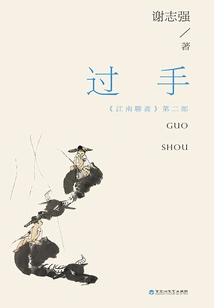
Passed By: "jiangnan Liaozhai" Part 2
General Fiction过手:《江南聊斋》第二部
Xie Zhiqiang
"Passing Hands" is a collection of micro-novel in a new notebook style. The author Xie Zhiqiang has collected excellent traditional cultural resources such as Zhejiang folk tales for decades. The so-called "Passing Hands" sublimates the whole book with its imagery, which means to explore and refine traditional folk literature resources from a contemporary perspective and the spirit of the times, through the hands of the writer. Transformed into Jiangnan New Note style novels, injecting new ideas, strengthening its lightness, enhancing readability, creating a group of lovely and amiable characters with Chinese virtues and humanistic spirit, with realistic texture and aesthetically oriented poetry, they are a scoop of "living water" in the long river of traditional folk culture. It is a tribute to Pu Songling's "Strange Stories from a Chinese Studio", Lu Xun's "New Stories" and Wang Zengqi's "New Meanings from a Chinese Studio".
"Passing Hands" is a collection of micro-novel in a new notebook style. The author Xie Zhiqiang has collected excellent traditional cultural resources such as Zhejiang folk tales for decades. The so-called "Passing Hands" sublimates the whole book with its imagery, which means to explore and refine traditional folk literature resources from a contemporary perspective and the spirit of the times, through the hands of the writer. Transformed into Jiangnan New Note style novels, injecting new ideas, strengthening its lightness, enhancing readability, creating a group of lovely and amiable characters with Chinese virtues and humanistic spirit, with realistic texture and aesthetically oriented poetry, they are a scoop of "living water" in the long river of traditional folk culture. It is a tribute to Pu Songling's "Strange Stories from a Chinese Studio", Lu Xun's "New Stories" and Wang Zengqi's "New Meanings from a Chinese Studio".
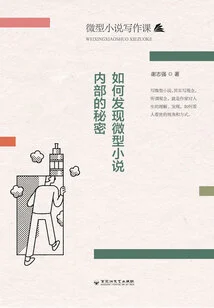
如何发现微型小说内部的秘密(微型小说写作课)
Xie Zhiqiang
"How to Discover the Secrets Inside Micro-Novel" is one of the "Micro-Novel Writing Courses" series. It is a collection of works by the famous micro-novel writer Xie Zhiqiang. The content includes the interpretation of micro-novel works, the author's own thoughts on the genre of micro-novel, and some views on the current literary situation. It helps micro-novel lovers understand the genre of micro-novel and provides some writing methods.
"How to Discover the Secrets Inside Micro-Novel" is one of the "Micro-Novel Writing Courses" series. It is a collection of works by the famous micro-novel writer Xie Zhiqiang. The content includes the interpretation of micro-novel works, the author's own thoughts on the genre of micro-novel, and some views on the current literary situation. It helps micro-novel lovers understand the genre of micro-novel and provides some writing methods.
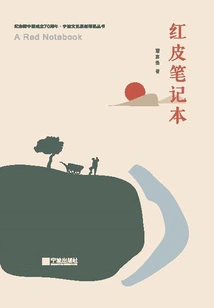
Red Leather Notebook
General Fiction红皮笔记本
Xie Zhiqiang
This book tells the story of the living conditions of a group of Shanghai youths from the 1960s to the 1980s, struggling in the gaps between individuals and times, individuals and groups. It has a certain cultural significance based on literary significance.
This book tells the story of the living conditions of a group of Shanghai youths from the 1960s to the 1980s, struggling in the gaps between individuals and times, individuals and groups. It has a certain cultural significance based on literary significance.
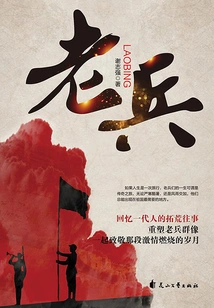
Veteran
General Fiction老兵
Xie Zhiqiang
This book is a collection of short stories by writer Xie Zhiqiang. It includes more than fifty short stories he has written and published in newspapers and periodicals over the years, including famous works such as "Father" and "Old Guan's Warehouse". These works vividly reflect the touching stories of the local soldiers and civilians in Xinjiang guarding the border and jointly developing the northwest of the motherland in the early days of the founding of New China. The story includes people and events that the author has personally experienced, as well as interviews with people who have experienced them.
This book is a collection of short stories by writer Xie Zhiqiang. It includes more than fifty short stories he has written and published in newspapers and periodicals over the years, including famous works such as "Father" and "Old Guan's Warehouse". These works vividly reflect the touching stories of the local soldiers and civilians in Xinjiang guarding the border and jointly developing the northwest of the motherland in the early days of the founding of New China. The story includes people and events that the author has personally experienced, as well as interviews with people who have experienced them.
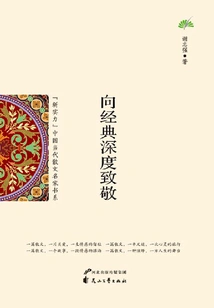
A Tribute to Classic Depth
Literature向经典深度致敬
Xie Zhiqiang
In this collection of essays, the author, as a loyal reader and a sensitive writer, skillfully enters the text with the dual vision of macroscopic grasp and microscopic discovery, and adopts the method of narrative commentary to convey the inner secrets of literature: How to use novel elements? How to handle the details? How to grasp the characters? How can language be interesting? How is the structure laid out? Etc. The selected novels are all classic writers in the contemporary world literature, including Raymond Carver, Alice Munro, Paul Auster, Mario Benedetti, Calvino, Kafka, Borges, Mo Yan, Kawarui Yasunari, Cortázar, Vonnegut, Danilo Chis and a series of other writers, which appropriately express the deep tribute to the classics.
In this collection of essays, the author, as a loyal reader and a sensitive writer, skillfully enters the text with the dual vision of macroscopic grasp and microscopic discovery, and adopts the method of narrative commentary to convey the inner secrets of literature: How to use novel elements? How to handle the details? How to grasp the characters? How can language be interesting? How is the structure laid out? Etc. The selected novels are all classic writers in the contemporary world literature, including Raymond Carver, Alice Munro, Paul Auster, Mario Benedetti, Calvino, Kafka, Borges, Mo Yan, Kawarui Yasunari, Cortázar, Vonnegut, Danilo Chis and a series of other writers, which appropriately express the deep tribute to the classics.
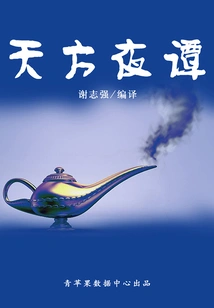
Arabian Nights
Literature天方夜谭
Xie Zhiqiang
Arabian Nights, also known as "One Thousand and One Nights", is a collection of Arabic folk tales. According to legend, there was a Sasan Kingdom between India and China in ancient times. King Shanruyar was cruel and jealous by nature. He killed his queen because of her misbehavior. After that, he married a girl every day and killed her the next morning as revenge. In order to save the innocent woman, Scheherazade, the daughter of the prime minister, voluntarily married the king and attracted the king by telling stories. She told the most exciting part every night. It was just dawn and the king couldn't bear to kill her, so he allowed her to continue telling the story the next night. Her story has been told for one thousand and one nights, and the king was finally moved and grew old together with her.
Arabian Nights, also known as "One Thousand and One Nights", is a collection of Arabic folk tales. According to legend, there was a Sasan Kingdom between India and China in ancient times. King Shanruyar was cruel and jealous by nature. He killed his queen because of her misbehavior. After that, he married a girl every day and killed her the next morning as revenge. In order to save the innocent woman, Scheherazade, the daughter of the prime minister, voluntarily married the king and attracted the king by telling stories. She told the most exciting part every night. It was just dawn and the king couldn't bear to kill her, so he allowed her to continue telling the story the next night. Her story has been told for one thousand and one nights, and the king was finally moved and grew old together with her.
Veteran
General Fiction老兵
Xie Zhiqiang
The source of my memory remains a black dog and a watermelon. The black dog is called Heizi. He is as black as the night, without a single hair, and his eyes are like stars in the desert night sky. When the stars appeared, Mom and Dad had not come back yet. I can see the stars from one of the skylights in the diwozi. The flower-skinned watermelon looks like melon vines woven into a green ring. As soon as I smelled it, I felt it was edible. Dad rolled the watermelon out from under the bed and said, "Play with it, don't hit it with a stick." I can't hold the watermelon. It's too big. I can't ride on it. When it moves, I fall down and it refuses to let me ride. Many years later, I heard the phrase "draped in stars and worn in the moon" in a aria in a model opera, and I thought of my parents, who always came home after the stars came out.
The source of my memory remains a black dog and a watermelon. The black dog is called Heizi. He is as black as the night, without a single hair, and his eyes are like stars in the desert night sky. When the stars appeared, Mom and Dad had not come back yet. I can see the stars from one of the skylights in the diwozi. The flower-skinned watermelon looks like melon vines woven into a green ring. As soon as I smelled it, I felt it was edible. Dad rolled the watermelon out from under the bed and said, "Play with it, don't hit it with a stick." I can't hold the watermelon. It's too big. I can't ride on it. When it moves, I fall down and it refuses to let me ride. Many years later, I heard the phrase "draped in stars and worn in the moon" in a aria in a model opera, and I thought of my parents, who always came home after the stars came out.