Library
Browse and search books
1 novel found
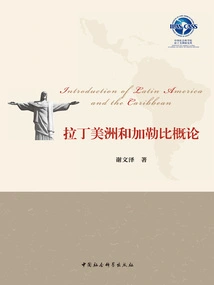
拉丁美洲和加勒比概论
Xie Wenze
This book proposes a "1+2+3+4+5+6" knowledge framework about Latin America and the Caribbean, which is to regard the region as a whole and divide the countries in the region into two groups (Latin American countries and Caribbean countries). From the spatial dimension, the region is divided into three sub-geographical regions (Central America, the Caribbean, and South America) according to geographical location. From the time dimension, the development process of Latin America and the Caribbean is divided into four historical stages (the period of the formation of ancient indigenous agricultural civilization and land ownership, the period of colonial rule and the formation of large estates, the period of Caudillo's administration and the prosperity of primary product exports, and the period of populism and development transformation). For major Latin American countries, this book focuses on five aspects: economy, natural environment, society, politics, and international relations, while highlighting the respective characteristics of different countries. Land ownership, large estates, Caudilloism, populism, structuralism, and neoliberalism are six important historical and realistic clues that influence the development of Latin America and the Caribbean.
This book proposes a "1+2+3+4+5+6" knowledge framework about Latin America and the Caribbean, which is to regard the region as a whole and divide the countries in the region into two groups (Latin American countries and Caribbean countries). From the spatial dimension, the region is divided into three sub-geographical regions (Central America, the Caribbean, and South America) according to geographical location. From the time dimension, the development process of Latin America and the Caribbean is divided into four historical stages (the period of the formation of ancient indigenous agricultural civilization and land ownership, the period of colonial rule and the formation of large estates, the period of Caudillo's administration and the prosperity of primary product exports, and the period of populism and development transformation). For major Latin American countries, this book focuses on five aspects: economy, natural environment, society, politics, and international relations, while highlighting the respective characteristics of different countries. Land ownership, large estates, Caudilloism, populism, structuralism, and neoliberalism are six important historical and realistic clues that influence the development of Latin America and the Caribbean.