Library
Browse and search books
2 novels found
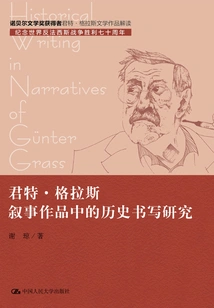
君特·格拉斯叙事作品中的历史书写研究
Xie Qiong
This book is the most comprehensive monograph in China that introduces, analyzes and comments on Glass's works. The author divides Glass's works into periods, including the 1950s, 1960s, 1970s, 1980s, 1990s, and the latest works after 2000. There is an overall overview of each period, pointing out the outstanding points of his writing, and focusing on one of the representative works for discussion. "The Tin Drum" in the 1950s used small characters to express big history, thereby liquidating the history of the Third Reich and the human weaknesses in history; "Cat and Jerry" in the 1960s continued to face the Nazi history full of militarism and heroism, focusing on describing the tragic fate of individuals under collective pressure; "The Snail Diary" in the 1970s not only showed the tragic fate of the Danzig Jews during the Third Reich, but also expressed the author's thinking about the real politics of Germany; "Mouse" in the 1980s showed that human beings over-advocate the power of reason and technology, which led to an irrational explosion. This irrationality caused by extreme rationality is very similar to the mass murder of modernity products in Nazi history; "My Century" in the 1990s reviewed Germany's glorious and terrifying 20th century through different characters "I" in the historical process. Centennial History is like a panorama and cross-section of 20th century German history sketched by literary means; "Crab Walk", published in 2002, warned of the danger of the resurgence of neo-Nazism by writing about the little-known "Gustloff" shipwreck in German history and its real-life impact, indicating and confirming Grass's view of the cyclical nature of history.
This book is the most comprehensive monograph in China that introduces, analyzes and comments on Glass's works. The author divides Glass's works into periods, including the 1950s, 1960s, 1970s, 1980s, 1990s, and the latest works after 2000. There is an overall overview of each period, pointing out the outstanding points of his writing, and focusing on one of the representative works for discussion. "The Tin Drum" in the 1950s used small characters to express big history, thereby liquidating the history of the Third Reich and the human weaknesses in history; "Cat and Jerry" in the 1960s continued to face the Nazi history full of militarism and heroism, focusing on describing the tragic fate of individuals under collective pressure; "The Snail Diary" in the 1970s not only showed the tragic fate of the Danzig Jews during the Third Reich, but also expressed the author's thinking about the real politics of Germany; "Mouse" in the 1980s showed that human beings over-advocate the power of reason and technology, which led to an irrational explosion. This irrationality caused by extreme rationality is very similar to the mass murder of modernity products in Nazi history; "My Century" in the 1990s reviewed Germany's glorious and terrifying 20th century through different characters "I" in the historical process. Centennial History is like a panorama and cross-section of 20th century German history sketched by literary means; "Crab Walk", published in 2002, warned of the danger of the resurgence of neo-Nazism by writing about the little-known "Gustloff" shipwreck in German history and its real-life impact, indicating and confirming Grass's view of the cyclical nature of history.
佛系少女在末世
Xie Qiong
A Buddhist zombie was accidentally reborn into the apocalypse and became an ordinary person. A story about starting a counterattack in the apocalypse. If you don't work hard, you will be eaten by zombies. You are forced to work hard and support yourself.
A Buddhist zombie was accidentally reborn into the apocalypse and became an ordinary person. A story about starting a counterattack in the apocalypse. If you don't work hard, you will be eaten by zombies. You are forced to work hard and support yourself.